Skip to content

Alectrona

Commercial battery

What drives the cost of a commercial battery storage system?

A commercial battery is priced from what it has to do on your site, not from a headline rate, so the honest answer to cost is a survey, not a from-price per kilowatt-hour.

  • Commercial scale, over 50 kWp
  • Brand-agnostic, the right fit
  • Sized to your real load
Reviews

The feedback we work to earn

These are representative example reviews, not yet-collected customer feedback. They are written to illustrate the kind of feedback Alectrona aims to earn and are shown as design placeholders while we gather and verify reviews from our first commercial clients. Alectrona is the commercial solar trading brand of RVTC LTD.

What set Alectrona apart was the documented design pack. We had quotes from three installers, but only Alectrona handed us a full set of drawings, a single-line diagram and a design referencing BS 7671 and the G99 connection process. The whole thing read like an engineering submission rather than a sales brochure. Our M&E consultant reviewed it and signed it off without a single query. That gave the board the confidence to release the capital.

Estates Manager, academy trust (Yorkshire)

Other firms priced our roof off a satellite image and a desktop guess. Alectrona flew an in-house drone survey, fully insured and flown by a qualified commercial drone pilot, and built a 3D model of the actual roof. It picked up plant, vents and a parapet line that a flat aerial photo had completely missed, which changed the panel layout. I would rather find that out at design stage than on the day the scaffold goes up. The accuracy of that survey is the reason I trusted everything that followed.

Facilities Manager, distribution centre (East Midlands)

As a finance director I was wary of being oversold a system bigger than we could use. Alectrona modelled the array against our actual half-hourly consumption data rather than an annual total, so it is sized to what we genuinely draw on site during the day. They were honest that exporting surplus is worth far less than self-consumption, and built the design around that. The capital case stacked up because the engineering was honest, not because the numbers were inflated.

Finance Director, logistics group (North West)

We were undecided between buying outright, leasing and a PPA. Alectrona laid out all three side by side with the pros and cons of each against our balance sheet, instead of pushing the one that pays them best. They were clear about where a PPA makes sense and where capex wins, and pointed us at our own accountant for the tax treatment. The survey and design took a little longer than I expected, but the thoroughness was worth the wait. Genuinely consultative.

Property Director, retail park (West Midlands)

The install crew were tidy and well run, and worked to a clear CDM 2015 plan with a proper site induction and RAMS. What impressed me most was the handover. We received a full commissioning pack with the IEC 62446-1 test results, certification, O&M documentation and an as-built record for our maintenance team. As the people who have to live with this asset for the next twenty years, having that paperwork in order matters enormously. Nothing was left loose.

Operations Director, food manufacturer (Lincolnshire)

I expected the usual hard sell and got the opposite. After surveying our site Alectrona told us one roof section was not worth covering because of shading, and that a smaller, well-sited array was the better investment than filling every square metre. There was no commission-driven upselling and no pressure. For a six-figure capital project, that straight talk is exactly what you want from the people advising you. We will be using them again on our second site.

Managing Director, engineering firm (Sheffield)

Key facts
  • Biggest cost driver Usable energy in kWh, set by how much load you shift across the day
  • Priced separately Power rating in kW, sized from how fast you need to charge and discharge
  • Beyond the cells Power conversion, EMS integration, switchgear, install and any grid works
  • From-price None given: a per-kWh headline hides everything around the cells
  • Your figure Survey-led, from a drone survey and half-hourly PV*SOL load model

The first question a finance director asks about battery storage is what it costs. The honest answer is that there is no single number, because a commercial battery energy storage system is engineered to a specific load rather than bought off a shelf. Two sites with the same floor area can need very different systems once you look at how they actually draw power across the day.

This page is capex-first. It sets out what goes into the capital cost of a system, why the credible figure is survey-led, and where the tax position sits. It is a plain-English orientation for a commercial buyer, not formal financial or tax advice. We confirm the numbers for your site.

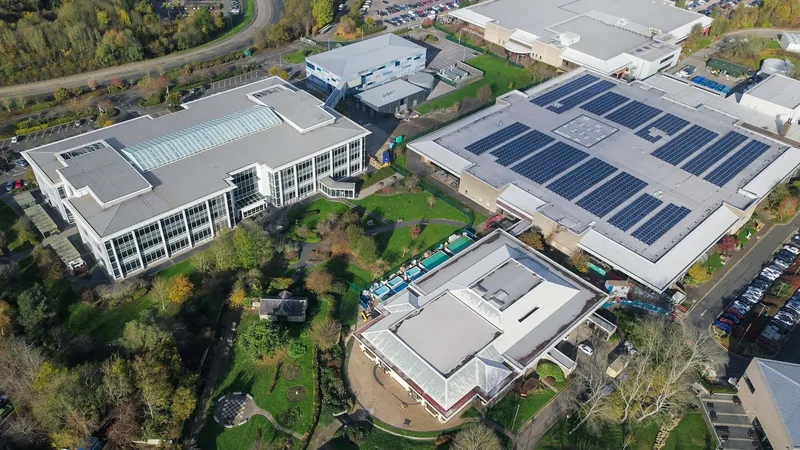
A commercial solar installation

Brand-agnostic: the bankable battery that fits the project.

What goes into the capital cost

The capital cost of a commercial battery is the sum of several engineered parts, not a single line item. Each one moves with the design, which is why a credible price needs the design to exist first.

  • Usable energy, measured in kWh. The store of energy the system actually delivers, after the headroom the chemistry keeps in reserve. This is the largest single cost driver, and it is set by how much energy you need to shift across the day.
  • Power rating, measured in kW. How fast the system can charge and discharge. A site that shaves a sharp half-hour peak needs more power for the same energy than one gently soaking up solar, and power and energy are priced separately.
  • Cell chemistry. The bankable commercial systems use lithium iron phosphate (LFP) cells for their safety and cycle life. Chemistry sets the cell cost, the usable depth, the thermal management and the warranted life.
  • Power conversion and EMS integration. The power-conversion system and the energy management system that decides when to charge and discharge. On a site that already has solar this has to be integrated with the existing inverters and metering, which is engineering, not a plug-in.
  • Installation, switchgear and any grid works. Civils and mounting, the protection and switchgear that ties the system into your distribution board, and any reinforcement or metering the network operator requires under the G99 connection. Grid works in particular vary widely by site.

Why there is no honest from-price per kWh

You will see batteries advertised at a headline rate per kilowatt-hour. For a commercial system that figure is close to meaningless, because it captures only the cell cost and hides everything around it. The power rating, the conversion and control electronics, the switchgear, the install and the grid connection can together rival the cells, and they do not scale with energy in a straight line.

The ratio of power to energy is the clearest example. A system sized to discharge hard for a short peak carries more conversion and power hardware per stored unit than one sized to discharge slowly for hours, so the same kWh costs more on the first site. Quoting a single rate across both would be dishonest. We would rather model your actual half-hourly load and price the system that fits it than print a from-price that no real project matches.

How we arrive at your figure

The credible number comes from the survey, not the brochure. We run an in-house insured drone survey of the roof or site and model your half-hourly consumption in PV*SOL, so the system is sized from how you really use power rather than from a rule of thumb. That sizing then sets the energy, the power and the integration work, which is what the capital cost is built from.

Because the system is specified to your load, the figure you get is yours, and it carries the assumptions that produced it. We are brand-agnostic on the hardware. The cells and the conversion electronics are specified from the bankable makers we lead with, and the system is engineered and assured to the non-MCS commercial standard: the component standards for the install, the G99 connection with your network operator, and CDM 2015 on site.

Cost, capital allowances and the tax position

Capital cost and the after-tax cost are not the same thing, and the gap is where capital allowances sit. For a commercial buyer the tax treatment of the spend changes the real cost of ownership, so it belongs in any honest costing conversation.

This is also where we have to be careful. The capital-allowances treatment of standalone battery storage is not settled in public HMRC guidance, so we will not assert a specific allowance against a battery on this page. Where storage forms part of a wider solar project the position can differ again. The right move is to size and price the system against your real load, then confirm the allowance position with your own tax adviser before you model the return.

What does a commercial battery cost over its whole life, beyond the purchase price?

The capital figure is the start of the cost story, not the whole of it. A commercial battery is an asset that runs for many years, so the honest way to cost it is over its working life: the capex, plus what it costs to keep running, plus what it costs to renew or retire at the end. Engineers call this the total cost of ownership, and it is the figure that should sit in a board paper rather than the headline capex alone.

Three running costs matter. The first is operations and maintenance: the inspection regime, the firmware and energy-management updates, and the upkeep of the thermal management and protection that keep the system safe and warranted. The second is the warranty itself. A bankable maker warrants both a capacity-retention curve and a throughput or cycle count, and reading those terms tells you how hard the battery can be worked before the warranty is the maker's problem rather than yours. The third is end-of-life. Lithium iron phosphate cells fade gradually rather than failing at a cliff, so a system can be augmented with added capacity or have modules renewed rather than wholesale replaced. We design the enclosure and the controls so that path is open, and we factor the cycle life the maker warrants into the lifetime cost rather than the nameplate. The way that warranted life feeds the return is set out on our ROI calculator page.

There is also a disposal and recycling obligation at the very end. Industrial batteries fall under the UK batteries regulations and the producer-responsibility regime the Environment Agency oversees, so end-of-life handling is a regulated cost, not a free disposal. We design for it, and we set out where that sits in your costing rather than leaving it to surface later.

Why do safety engineering and the grid connection move the price so much?

A large share of what separates a cheap headline from a real quote is the work that keeps the system safe, compliant and connected. None of it is optional on a commercial site, and all of it lands in the capital figure.

Safety engineering is the clearest example. A commercial battery is designed, tested and certified against the stationary-storage standards, principally IEC 62933 for the system and IEC 62619 for the cells, with the fire-protection design framed against guidance such as NFPA 855 and the relevant BS EN provisions. The fire strategy, the separation distances, the detection and the ventilation are engineered into the build, and the Health and Safety Executive's expectations for a workplace installation sit over all of it. We set out how that is engineered on our battery fire safety page, and it is a real line of cost rather than a label.

The grid connection is the other big variable. A system above the small-scale threshold connects under an Engineering Recommendation G99 application to your network operator, which for our region is Northern Powergrid. What that application returns drives the cost: a site with spare capacity at the point of connection needs little, while a constrained site can need protection upgrades, metering, or network reinforcement before it can export or even charge at the rate you want. The network operator sets that, not us, which is why we confirm it from the connection process before pricing rather than guessing. The same survey work that sizes the system also scopes this, which is why the figure we give you is whole and not a base price with surprises bolted on later.

What does a credible commercial quote actually include, and what does it not settle?

It helps to know what a credible commercial quote already contains, so you are comparing like with like. A complete figure from us covers the engineered hardware, the usable energy and the power rating, the power-conversion and energy-management integration with any existing solar, the switchgear and protection, the civils and mounting, the safety engineering, and the G99 connection works your network operator requires. It is built from the survey and the half-hourly model, so it reflects your real load rather than a representative system. The wider context for what a commercial scheme costs sits on our commercial solar cost guide.

It is worth being equally clear about what a capital figure does not settle. It is not the lifetime cost, because the running and end-of-life costs above sit on top of it. It is not the after-tax cost, because the capital-allowances position has to be confirmed with your own adviser. And it is not the return, because the value the battery stacks from peak shaving, time-of-use arbitrage and solar self-consumption is modelled separately against your tariff and routed through commercial finance. A cheaper headline that omits the safety engineering, the connection works or the integration buys a different and smaller scope, priced lower. The honest comparison is whole-scope against whole-scope, which is what the survey-led figure gives you.

The capital-allowances treatment of standalone battery storage is not settled in public HMRC guidance; confirm the position with your tax adviser.

FAQ

Costs: common questions

There is no single price, because the system is engineered to your load rather than sold off a shelf. The capital cost is driven by the usable energy in kWh, the power rating in kW, the chemistry, the power conversion and EMS integration, and the install, switchgear and any grid works. We model your half-hourly consumption and size the system to it, then price that, so the figure is yours rather than a from-price.

A per-kilowatt-hour headline captures only the cells and hides the power hardware, the conversion and control electronics, the switchgear, the install and the grid connection, which together can rival the cell cost. The power-to-energy ratio alone means the same kWh costs more on a site that discharges hard for a short peak than on one that discharges slowly. Quoting one rate across both would mislead, so we price the designed system instead.

Mostly the load shape and the grid connection. A sharp, short peak needs more power hardware per stored unit than a long, gentle discharge, so it costs more for the same energy. Beyond that, the switchgear and any reinforcement or metering your network operator requires under the G99 connection vary widely by site. We confirm both from the survey before pricing.

Possibly, but we will not assert a specific allowance here. The capital-allowances treatment of standalone battery storage is not settled in public HMRC guidance, and where storage forms part of a wider solar project the position can differ. Confirm it with your own tax adviser before you build it into a return, and size and price the system against your real load first.

From a survey, not a brochure. We run an in-house insured drone survey and model your half-hourly load in PV*SOL, which sizes the energy, power and integration work. That sizing is what the capital cost is built from, and the hardware is specified brand-agnostically from the bankable makers we lead with, assured to the non-MCS commercial standard.

There is no fixed timeline, because the cost-driving step is the grid connection. We survey and model your half-hourly load to produce a figure quickly, but the G99 application to your network operator, Northern Powergrid in our region, sets the real lead time. A site with spare capacity moves fast; a constrained one waits on protection, metering or reinforcement. We confirm that lead time from the connection process before committing dates.

Get a commercial quote

See what a battery would actually do on your site.

We model your half-hourly load and your solar against a battery sized from an on-site survey, so the figure you get is yours, not a from-price. Capex first, with the bankable brand that fits the project.

  • Sized from your half-hourly load, not a per-kWh rule of thumb
  • Brand-agnostic: the bankable battery that fits the project
  • Engineer-led, assured to the non-MCS standard (CDM 2015)