Skip to content

Alectrona

Audit service

An independent technical audit of your solar system

If you own, are buying, or are funding a commercial PV system, an engineer who is not selling it to you can check what it was designed to do, what it actually produces, and whether it is safe and compliant. We report what we find, good or bad.

  • Engineer-led, every step
  • In-house insured drone survey
  • Over 50 kWp, outside MCS
Reviews

The feedback we work to earn

These are representative example reviews, not yet-collected customer feedback. They are written to illustrate the kind of feedback Alectrona aims to earn and are shown as design placeholders while we gather and verify reviews from our first commercial clients. Alectrona is the commercial solar trading brand of RVTC LTD.

What set Alectrona apart was the documented design pack. We had quotes from three installers, but only Alectrona handed us a full set of drawings, a single-line diagram and a design referencing BS 7671 and the G99 connection process. The whole thing read like an engineering submission rather than a sales brochure. Our M&E consultant reviewed it and signed it off without a single query. That gave the board the confidence to release the capital.

Estates Manager, academy trust (Yorkshire)

Other firms priced our roof off a satellite image and a desktop guess. Alectrona flew an in-house drone survey, fully insured and flown by a qualified commercial drone pilot, and built a 3D model of the actual roof. It picked up plant, vents and a parapet line that a flat aerial photo had completely missed, which changed the panel layout. I would rather find that out at design stage than on the day the scaffold goes up. The accuracy of that survey is the reason I trusted everything that followed.

Facilities Manager, distribution centre (East Midlands)

As a finance director I was wary of being oversold a system bigger than we could use. Alectrona modelled the array against our actual half-hourly consumption data rather than an annual total, so it is sized to what we genuinely draw on site during the day. They were honest that exporting surplus is worth far less than self-consumption, and built the design around that. The capital case stacked up because the engineering was honest, not because the numbers were inflated.

Finance Director, logistics group (North West)

We were undecided between buying outright, leasing and a PPA. Alectrona laid out all three side by side with the pros and cons of each against our balance sheet, instead of pushing the one that pays them best. They were clear about where a PPA makes sense and where capex wins, and pointed us at our own accountant for the tax treatment. The survey and design took a little longer than I expected, but the thoroughness was worth the wait. Genuinely consultative.

Property Director, retail park (West Midlands)

The install crew were tidy and well run, and worked to a clear CDM 2015 plan with a proper site induction and RAMS. What impressed me most was the handover. We received a full commissioning pack with the IEC 62446-1 test results, certification, O&M documentation and an as-built record for our maintenance team. As the people who have to live with this asset for the next twenty years, having that paperwork in order matters enormously. Nothing was left loose.

Operations Director, food manufacturer (Lincolnshire)

I expected the usual hard sell and got the opposite. After surveying our site Alectrona told us one roof section was not worth covering because of shading, and that a smaller, well-sited array was the better investment than filling every square metre. There was no commission-driven upselling and no pressure. For a six-figure capital project, that straight talk is exactly what you want from the people advising you. We will be using them again on our second site.

Managing Director, engineering firm (Sheffield)

Key facts
  • Independence Carried out by an engineer who is not selling you the system
  • For Owners, buyers and funders of commercial PV
  • Scope Design and as-built review, performance check, safety and compliance
  • Brand-agnostic Any panel, any inverter, any original installer
  • Honest We report what we find, good or bad, with no invented figures

Most reports on a solar system come from the people who built it or want to sell you another one. An independent audit is different. It is a technical review carried out by an engineer with no stake in the answer, written for the owner, buyer or funder rather than for an installer.

The reason to commission one is usually money on the line. You are acquiring a building with an array on the roof, lending against a generating asset, or you simply suspect the system you own is not earning what it should. In every case you want the system checked against what it was meant to do, by someone whose only job is to tell you the truth. This service is brand-agnostic: we audit the system in front of us, whoever made the kit and whoever installed it.

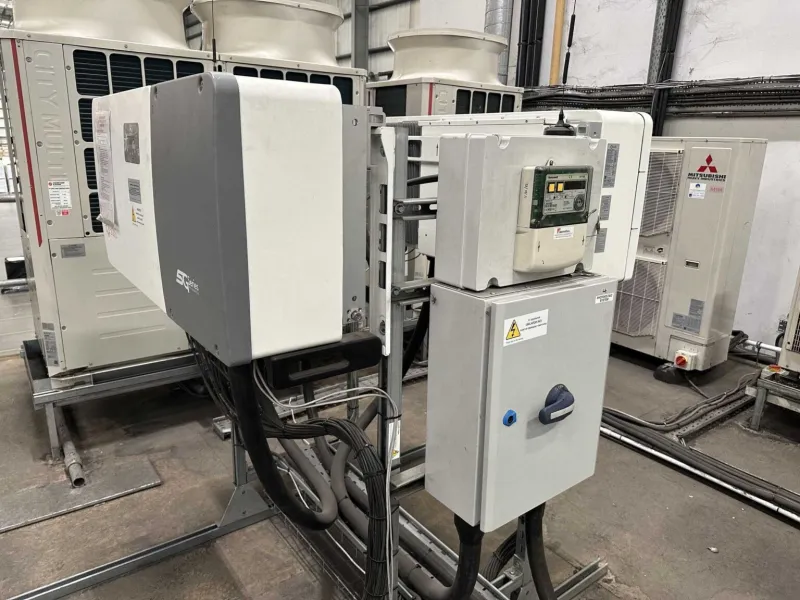
A commercial solar installation

On-site 3D drone survey before anything is specified.

Design and as-built review

The first question is whether the system was designed properly and whether it was actually built the way it was designed. Those are two different things, and the gap between them is where problems hide. We review the design intent against the installation as it stands today.

That means reading the documentation the system should have, then checking it against the roof. We look at how the array is sized for the site, the string layout and inverter selection, the cable and protection design, and whether the as-built installation matches the drawings and certificates. Where the paperwork is thin or missing, which is common on an orphaned system whose installer has moved on, we say so plainly, because a missing handover pack is itself a finding a buyer or funder needs to know about.

Performance check against what it should produce

An array can look fine on the roof and still under-earn. The performance check compares what the system is actually generating against what a correctly designed system on that roof, in that location, should produce.

We use the available evidence: metering and monitoring data where it exists, the inverter records, and our own half-hourly modelling of the site against its real orientation and shading. The output is an honest read on whether the system is performing to its potential or leaving generation on the table, and where it is short, the likely reasons, whether that is shading, a failed string, an under-sized or mis-configured inverter, soiling, or a design that never matched the site in the first place. We do not invent a figure to flatter or alarm; we report what the data supports.

Safety and compliance check

A solar array is an electrical generator that stays live in daylight, sits on a high-value building, and is something your insurer cares about. The safety review checks the parts that cause real-world failures and fires.

The check covers the points that matter most on a commercial roof:

  • Connectors and DC joints: field-made plug-and-socket connections are a recognised ignition source, so we look at how they were made, whether matched types were used, and whether they are protected against weather and UV.
  • DC protection and isolation: clear, correctly rated isolation, so the system can be made safe in an emergency despite the DC side staying live in daylight.
  • Earthing and bonding: protective earthing and equipotential bonding that are present and correct for the installation.
  • Documentation: the electrical certification to BS 7671, commissioning records to IEC 62446-1, the G99 connection paperwork and as-built drawings that prove the system was built to standard.

Because a commercial system sits above 50 kWp and outside the domestic MCS scheme, the benchmark is the engineering stack itself: BS 7671, IEC 62446-1, G99 and the relevant fire and construction-safety guidance rather than a domestic certificate.

Why our audit is worth trusting

Alectrona is an engineering company first. The same discipline we apply to our own installs, where the person who did the work never signs it off, is what makes us a credible auditor of someone else's. Our Qualifying Supervisor is a fully AM2-trained electrician, and independent review is how we catch problems on our own jobs before they reach a roof.

The audit draws on the diagnostic depth of our group. Alectrona designs and installs, and Solar Tech Support is our independent, brand-agnostic diagnostics and repair arm, the team that already fixes orphaned systems whose original installer walked away. That means an audit is backed by people who diagnose faults on real systems every week, rather than being a desk exercise. We report what we find, good or bad, and the report is yours to act on however you choose, including taking the findings to a third party.

How do we inspect the array without a scaffold?

Much of what an audit needs to see sits on a roof a person cannot safely walk, so the inspection is flown rather than climbed. The aerial survey is run by our own in-house pilot, who holds the A2 Certificate of Competency and a General Visual line-of-sight Operational Authorisation, and the flight is fully insured. Keeping the pilot in the group, rather than sub-contracting the one part of an audit that touches your building, means the person flying the roof answers to the same engineers writing the report.

From the air we capture the module-level detail that drives an honest performance read: cell and bypass-diode hot spots through thermography, cracked or delaminating modules, and the soiling, ponding and shading that a ground-level look misses. That imagery is read alongside the inverter and metering data, so a generation shortfall can be tied to a specific cause on a specific string rather than left as a guess. The same in-house capability sits behind our 3D drone survey, and it is what lets the inspection meet the commissioning and re-inspection intent of IEC 62446-1 on a live commercial array without a roof-access scaffold or an access shutdown.

When is the right time to commission an audit?

The audit earns its keep at the points where a decision turns on the true condition of the asset. The common triggers are a property transaction where an array comes with the building, a lending or refinancing decision against a generating asset, a warranty or workmanship dispute, or an owner who simply suspects the system is under-earning and wants an answer they can rely on. In each case the value is a third-party report that the other side of the table can read, because it was not written by anyone selling the system.

It also matters where construction and safety duties sit. Remedial work that an audit recommends is a construction project under CDM 2015, with client duties attached, so naming the faults and the standards they breach, against BS 7671, IEC 62446-1 and the G99 connection requirements, gives a duty-holder a defensible basis for what happens next. If the report points to adoption rather than a one-off fix, a system takeover carries the array forward under a maintenance contract, and ongoing care is set out under operations and maintenance. The audit stays neutral on which route you choose; its job is to give you the facts the decision needs.

FAQ

Independent audit: common questions

Yes. The audit is brand-agnostic and installer-agnostic; auditing other people's systems is the point of it. Whoever made the panels and inverters and whoever built it, we review the system as it stands. Our diagnostics arm, Solar Tech Support, already works on orphaned systems whose original installer has moved on, so an unfamiliar or undocumented array is normal ground for us.

A written report covering the three parts of the audit: the design and as-built review, the performance check against what the system should produce, and the safety and compliance check on connectors, DC protection, earthing and documentation. It sets out what is sound, what is not, and what we would do about the issues, in plain terms.

The report is yours. You can act on it with us, with your existing installer, or with any third party.

No. An independent audit only has value if it is honest, so the report says what the evidence supports. If the system is sound, we say so. If a fault is fixable without replacement, we say that. We do not invent figures or manufacture a problem to win a job, and we are content for you to take the findings elsewhere.

We use the system's own evidence first: metering, monitoring and inverter data where it exists. We then model the site at half-hourly resolution against its real orientation and shading to establish what a correctly designed array on that roof should produce, and compare the two. Where the data is incomplete we tell you what can and cannot be concluded from it, rather than filling the gap with an invented number.

No. A survey looks at a roof to design a system that does not exist yet. An audit examines a system that is already there, against what it was meant to do. If you are weighing a takeover of an existing array, an audit is usually the right first step, because it tells you the condition and performance you would be inheriting before any decision is made.

The fee is set by the audit rather than by a fixed price, because the work scales with the site: the size and number of arrays, the roof access and flight conditions, how much usable monitoring and metering data already exists, and how much of the original documentation survives. A single well-documented roof is a smaller job than several undocumented arrays with no handover pack, so we scope it to your site and quote before any work starts. We do not publish a per-kWp or headline figure, because a genuine number needs the site behind it. How commercial costs are established, and why a like-for-like comparison has to hold the scope constant, is set out in our commercial solar cost guide, and the funding routes for any remedial work that follows sit under commercial solar finance.

The timeline depends on the site and the evidence available rather than a fixed turnaround, so we confirm it when we scope the work. The aerial inspection of a roof is usually a single attended visit, weather permitting, since the survey is flown rather than walked and needs no scaffold or access shutdown. The performance check then depends on how much monitoring and metering history exists: where good data is available the read is quick, and where it is thin or missing we model the site at half-hourly resolution to establish the benchmark, which adds time. The written report follows once the on-site capture and the data analysis are complete, and we give you a realistic timescale at the point we quote rather than a generic promise.

Get a commercial quote

Start where every good project starts: the survey.

We fly your roof, model your half-hourly load, and come back with a designed system and a price you can take to the board. Engineer-led from the first call to the final handover, and the years after it.

  • On-site 3D drone survey, fully insured in-house pilot
  • Half-hourly load modelled in PV*SOL before anything is specified
  • Engineer-led, assured to the non-MCS standard (CDM 2015)