What set Alectrona apart was the documented design pack. We had quotes from three installers, but only Alectrona handed us a full set of drawings, a single-line diagram and a design referencing BS 7671 and the G99 connection process. The whole thing read like an engineering submission rather than a sales brochure. Our M&E consultant reviewed it and signed it off without a single query. That gave the board the confidence to release the capital.
Alectrona
Commercial solar by system sizeCommercial solar at 200 to 300 kWp.
A 200 to 300 kWp roof is the mid-size band where economies of scale start to show and where two regulatory duties, the CDM 2015 construction rules and the move to half-hourly settlement metering, become central to how the project is built and billed.
- CDM 2015 and half-hourly metering
- Sized from your half-hourly load
- Over 50 kWp, outside MCS
The feedback we work to earn
These are representative example reviews, not yet-collected customer feedback. They are written to illustrate the kind of feedback Alectrona aims to earn and are shown as design placeholders while we gather and verify reviews from our first commercial clients. Alectrona is the commercial solar trading brand of RVTC LTD.
Other firms priced our roof off a satellite image and a desktop guess. Alectrona flew an in-house drone survey, fully insured and flown by a qualified commercial drone pilot, and built a 3D model of the actual roof. It picked up plant, vents and a parapet line that a flat aerial photo had completely missed, which changed the panel layout. I would rather find that out at design stage than on the day the scaffold goes up. The accuracy of that survey is the reason I trusted everything that followed.
As a finance director I was wary of being oversold a system bigger than we could use. Alectrona modelled the array against our actual half-hourly consumption data rather than an annual total, so it is sized to what we genuinely draw on site during the day. They were honest that exporting surplus is worth far less than self-consumption, and built the design around that. The capital case stacked up because the engineering was honest, not because the numbers were inflated.
We were undecided between buying outright, leasing and a PPA. Alectrona laid out all three side by side with the pros and cons of each against our balance sheet, instead of pushing the one that pays them best. They were clear about where a PPA makes sense and where capex wins, and pointed us at our own accountant for the tax treatment. The survey and design took a little longer than I expected, but the thoroughness was worth the wait. Genuinely consultative.
The install crew were tidy and well run, and worked to a clear CDM 2015 plan with a proper site induction and RAMS. What impressed me most was the handover. We received a full commissioning pack with the IEC 62446-1 test results, certification, O&M documentation and an as-built record for our maintenance team. As the people who have to live with this asset for the next twenty years, having that paperwork in order matters enormously. Nothing was left loose.
I expected the usual hard sell and got the opposite. After surveying our site Alectrona told us one roof section was not worth covering because of shading, and that a smaller, well-sited array was the better investment than filling every square metre. There was no commission-driven upselling and no pressure. For a six-figure capital project, that straight talk is exactly what you want from the people advising you. We will be using them again on our second site.
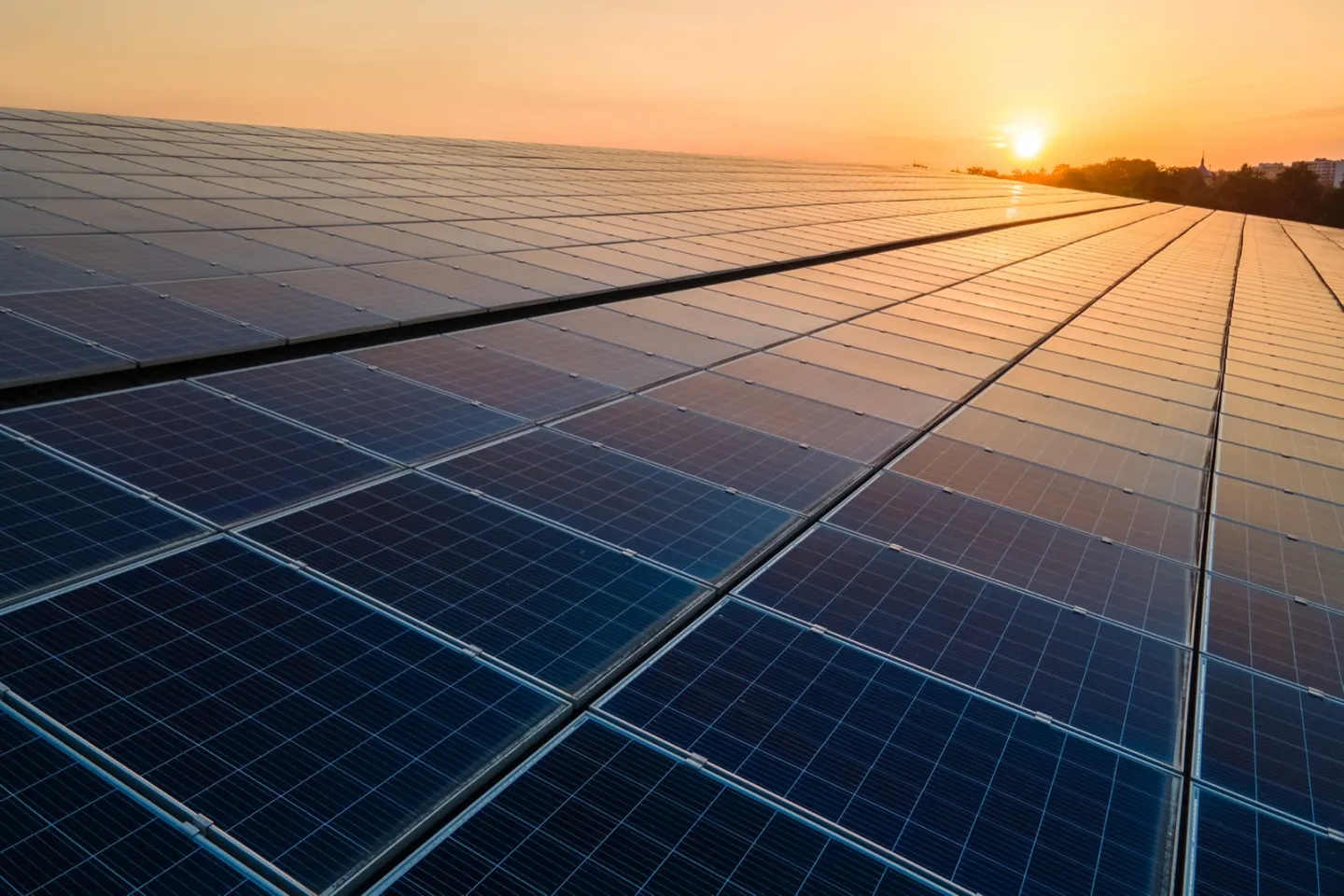
The 200 to 300 kWp band covers the larger single-roof installations that mid-size businesses put up: a busy distribution warehouse, a manufacturing unit running plant through the day, or a cold store whose refrigeration load never really stops. On a flat industrial roof, a system this size occupies a meaningful share of the available area and feeds a substantial part of the site's daytime demand, which is what makes the economics work at this scale.
To put rough numbers on it from engineering rules of thumb rather than a quote: at modern commercial modules of 540 to 600 W, a system in this band runs to roughly 340 to 555 panels (around 1.7 to 1.85 modules per kWp). Laid out on a flat roof with the row spacing needed to stop one row shading the next, that is roughly 1,000 to 2,100 m² of roof, allowing about 5 to 7 m² per kWp. At a Yorkshire yield of roughly 850 to 950 kWh per kWp installed, the array would generate in the region of 170,000 to 285,000 kWh a year. These are indicative figures to size your thinking; the real numbers come from the PV*SOL model run against your own roof, pitch, orientation and shading.
OrientationThese are indicative engineering rules of thumb. Your real figures come from an on-site survey and a PV*SOL model of your roof, shading and consumption.
What changes at 200 to 300 kWp: CDM 2015 and half-hourly metering
The reason this band is run differently from a smaller SME install is that two duties become central here, and both shape the programme and the costs before a single panel goes up.
The first is the CDM 2015 construction rules. A solar installation at this scale is a construction project, and the Construction (Design and Management) Regulations 2015 apply to it. They place legal duties on you as the client, on the principal designer and on the principal contractor, covering competence, the flow of pre-construction information, a written construction phase plan and the health and safety file handed over at the end. At 200 kWp and above, with significant work at height across a large roof, this is the framework the whole job is delivered inside, so it has to be planned from the start rather than bolted on. Our process is built around these duties, which is part of what working outside MCS at commercial scale means.
The second is metering. Around this size a site typically sits on, or moves to, half-hourly settlement metering. The industry's P272 change moved larger non-domestic supplies off profile-class estimation and onto actual half-hourly readings, so your consumption, and the way solar reshapes it across the trading day, is measured and settled in half-hour blocks. That matters because it makes self-consumption visible and verifiable, and because exporting surplus through a route such as the Smart Export Guarantee requires half-hourly export metering in the first place. It changes how the saving is evidenced, as well as how much it is. The detail of both duties is set out in our guides, on CDM 2015 and on half-hourly metering.
- 200–300 kWp System size
- 340–555 Modules
- 1,000–2,100 m² Roof area
- 170,000–285,000 kWh Annual output Yorkshire, indicative
What drives the cost at this scale
There is no published price and no per-kWp rate for a system in this band, because an honest figure only comes from a survey and the PV*SOL model run against your roof. What we can do is set out what actually drives the cost at 200 to 300 kWp, so you can see where the money goes before you ask for a quote.
The main drivers are the modules themselves (340 to 555 of them at this size), the inverter configuration, and the mounting system, which on a flat roof means ballasted or fixed frames engineered to the roof's structural loading and the local wind zone. Then there is the DC and AC cabling, the LV switchgear and protection, and the labour to install across a roof of roughly 1,000 to 2,100 m². Access and scaffold or mast-climbers are a real line at this scale because of the work-at-height duties under CDM. The grid side is the other significant variable: the DNO connection application, any reinforcement the network operator requires, and the half-hourly metering changeover all sit on the critical path and can move the total either way depending on what your site needs.
On scale economics, the direction of travel is genuine and worth stating plainly: the per-kWp cost of a system in this band is generally lower than for a smaller SME install, because the fixed elements of a project, the survey, design, mobilisation, DNO application and commissioning, are spread across more installed capacity. We state that only as a direction, not a number. Capital allowances are the one place a figure belongs, and it is a third-party one: solar PV is treated as special-rate plant, and the Annual Investment Allowance gives a 100% first-year deduction within the £1m annual AIA limit, which can bring the relief forward into year one. That is the mechanism, not tax advice, and the value to your business depends on your profits and your other capital spend, so confirm it with your accountant. For payback, return on investment and the funding routes, see commercial solar finance and our ROI and payback guide, which carry those figures with the proper caveats. We do not restate them here.
Which businesses this band suits
This band fits sites with a large roof and a substantial daytime electrical load, because the return at this scale is driven by self-consumption: every unit the array generates that you use on site is a unit you do not buy from the grid, and at half-hourly settlement that offset is measured and visible. An exported unit is worth far less than one you avoid importing, so the businesses this band suits are the ones consuming most of what they generate, during daylight, on the same meter.
That points to mid-size warehouses and distribution centres, where lighting, conveyors, chargers and HVAC run through the working day under a wide flat roof. It points to manufacturing units with steady process loads, where machinery, compressors and extraction draw a continuous baseload that solar can shave off the peak-rate import. And it points to cold storage, where refrigeration is the dominant cost and runs around the clock, so a large array on the roof above it directly offsets the single biggest line on the electricity bill. In each case the sizing question is set by your consumption profile rather than by how much roof you happen to have, which is the conversation a feasibility survey starts.
What does the grid connection and switchgear involve at 200 to 300 kWp?
At this band the connection moves up a tier, and the answer your network operator gives shapes the electrical design. Under ENA Engineering Recommendation G99 a generator of this size is no longer a small embedded array waved through on a simple notification. It is a formal connection application to Northern Powergrid, the Distribution Network Operator for Yorkshire and north and north-east Lincolnshire, and the offer that comes back defines what the system is allowed to do. A 200 to 300 kWp array usually connects on your existing low-voltage supply, but whether your incomer and on-site transformer have the headroom to carry it, and whether the local network can accept what you might export, is exactly what the connection enquiry resolves. That is why the application runs early, before the design is locked.
On the electrical side, the array has to land into switchgear and protection sized for it. A system this size feeds in through dedicated LV switchgear with the isolation, metering and G99-compliant protection relays the connection requires, tied into your main distribution board or, on a larger site, into the LV side of the supply transformer. Where the existing board is already close to its rating, or where the transformer is sized tight to the site's present load, accommodating the array can mean an upgrade on your side of the meter, and that is a real line in the cost rather than an afterthought. None of this is exotic at 200 to 300 kWp, but it is the point where the connection stops being a formality, which is why we open the conversation with the network operator at the same time as the roof survey. The detail sits in our guide to the G99 application and the grid connection queue.
If the offer comes back limited, export limitation is the engineered way through. Where the network does not have headroom to accept the array's full output, the connection can still be granted by capping what the system pushes onto the grid, engineered to the G100 standard, so the array proceeds at an agreed export limit instead of waiting on network reinforcement. Because a unit you use on site is worth far more than a unit you export, a well-designed system in this band already leans on self-consumption, so a sensible export cap tends to cost very little in real return. Whether you need to limit export, and at what threshold, is for Northern Powergrid to confirm; our G100 export limitation guide sets out how it is designed in.
What does it take to run a 200 to 300 kWp system once it is live?
At this scale the array is a piece of operating plant on your balance sheet, so the question shifts from installing it to running it well across the life of the asset. The half-hourly settlement metering that comes with a site this size measures the import you offset and any surplus you export in half-hour blocks, and the same granularity exposes how the array interacts with the non-commodity parts of your bill. Use of System charges, the distribution DUoS and transmission TNUoS lines, are weighted toward winter peak-demand periods and the red-band hours of the working day, and they are material at this size. Solar offsets daytime import directly, and pairing the array with battery storage lets a site shift load away from those charged peaks, which is a second layer of value on top of each unit saved. We size that against your own metered profile rather than a sector average, and the mechanics are set out on our network charges and half-hourly metering pages.
The ongoing duty is operations and maintenance, and a system in this band warrants a planned regime rather than ad-hoc attention. That means remote performance monitoring that flags an underperforming string or a tripped inverter against the modelled yield, periodic inverter servicing across the life of the equipment, electrical inspection of the DC and AC system, and panel cleaning judged against the site rather than scheduled blindly, since a dusty distribution yard or a roof near process exhaust soils faster than a clean one. None of this is onerous, but it is what keeps a 200 to 300 kWp asset generating to model and keeps the warranties intact. We cover what that looks like in practice under commercial services and the wider project process, so the asset is supported well beyond the day it energises.
Commercial solar at 200 to 300 kWp: common questions
As an indicative figure from engineering rules of thumb, a 250 kWp system uses roughly 425 to 465 modules at commercial panel ratings of 540 to 600 W, working at around 1.7 to 1.85 panels per kWp. Across the whole 200 to 300 kWp band the count runs from about 340 to 555 panels. The exact number depends on the module you specify and the usable roof area, so treat this as a guide to scale rather than a fixed count; your actual layout comes from the survey and the PV*SOL model of your roof.
Allowing roughly 5 to 7 m² per kWp on a flat industrial roof, including the row spacing that stops one row shading the next, a system in this band needs in the region of 1,000 to 2,100 m². A pitched roof can pack a little tighter, a flat roof on an east-west layout a little looser. This is an indicative envelope to check feasibility, not a final design figure. A drone-assisted survey measures your actual usable area, around plant, rooflights, walkways and access zones, before anything is sized.
At a Yorkshire yield of roughly 850 to 950 kWh per kWp installed, a 250 kWp array would generate in the order of 212,000 to 238,000 kWh a year, with the full 200 to 300 kWp band landing somewhere between roughly 170,000 and 285,000 kWh. That is a modelled rule of thumb; the figure for your roof depends on pitch, orientation, shading and the modules specified, which is exactly what the PV*SOL model resolves into a number you can plan against.
Payback at this scale turns mostly on how much of the generation you consume on site rather than export, your import tariff and how the project is funded, so a single headline figure would be misleading. We do not state payback or return-on-investment figures on this page. The guarded, properly caveated numbers live on our commercial finance pages and in the ROI and payback guide, and your own figures come from the PV*SOL model run against your roof and your consumption.
The on-roof work for a system this size is typically a few weeks once a crew is mobilised, but the programme is paced by the grid connection rather than the panels. From the point the design is agreed, the G99 connection application and the Northern Powergrid offer it produces are the longest single lead time, because at this band the network operator has to confirm your supply can carry the array and whether export needs limiting. If the offer calls for reinforcement, new switchgear or a transformer upgrade on your side of the meter, that work sits on the critical path and extends the calendar. Any G100 export limitation is designed in from the start, so it adds no time later. The honest answer is that the connection sets the dates, which is why the enquiry runs early; our installation timeline guide walks through each stage, and your real dates come from the survey and the connection offer.
Your size and your figure come from the survey, not a band.
These bands are a way to navigate. The system we actually design comes from your half-hourly consumption and an on-site drone survey, modelled in PV*SOL, with the figure built for your site rather than read off a price list.
- Sized to your consumption, not your roof area
- On-site 3D drone survey and PV*SOL model
- Over 50 kWp, outside MCS