Skip to content

Alectrona

System takeover

Taking over an orphaned commercial solar system

When the firm that built your array has gone bust, walked away or will not answer the phone, we adopt the system: we diagnose it, put right what is wrong, and take on the ongoing maintenance, so the asset has an accountable owner again.

  • Engineer-led, every step
  • In-house insured drone survey
  • Over 50 kWp, outside MCS
Reviews

The feedback we work to earn

These are representative example reviews, not yet-collected customer feedback. They are written to illustrate the kind of feedback Alectrona aims to earn and are shown as design placeholders while we gather and verify reviews from our first commercial clients. Alectrona is the commercial solar trading brand of RVTC LTD.

What set Alectrona apart was the documented design pack. We had quotes from three installers, but only Alectrona handed us a full set of drawings, a single-line diagram and a design referencing BS 7671 and the G99 connection process. The whole thing read like an engineering submission rather than a sales brochure. Our M&E consultant reviewed it and signed it off without a single query. That gave the board the confidence to release the capital.

Estates Manager, academy trust (Yorkshire)

Other firms priced our roof off a satellite image and a desktop guess. Alectrona flew an in-house drone survey, fully insured and flown by a qualified commercial drone pilot, and built a 3D model of the actual roof. It picked up plant, vents and a parapet line that a flat aerial photo had completely missed, which changed the panel layout. I would rather find that out at design stage than on the day the scaffold goes up. The accuracy of that survey is the reason I trusted everything that followed.

Facilities Manager, distribution centre (East Midlands)

As a finance director I was wary of being oversold a system bigger than we could use. Alectrona modelled the array against our actual half-hourly consumption data rather than an annual total, so it is sized to what we genuinely draw on site during the day. They were honest that exporting surplus is worth far less than self-consumption, and built the design around that. The capital case stacked up because the engineering was honest, not because the numbers were inflated.

Finance Director, logistics group (North West)

We were undecided between buying outright, leasing and a PPA. Alectrona laid out all three side by side with the pros and cons of each against our balance sheet, instead of pushing the one that pays them best. They were clear about where a PPA makes sense and where capex wins, and pointed us at our own accountant for the tax treatment. The survey and design took a little longer than I expected, but the thoroughness was worth the wait. Genuinely consultative.

Property Director, retail park (West Midlands)

The install crew were tidy and well run, and worked to a clear CDM 2015 plan with a proper site induction and RAMS. What impressed me most was the handover. We received a full commissioning pack with the IEC 62446-1 test results, certification, O&M documentation and an as-built record for our maintenance team. As the people who have to live with this asset for the next twenty years, having that paperwork in order matters enormously. Nothing was left loose.

Operations Director, food manufacturer (Lincolnshire)

I expected the usual hard sell and got the opposite. After surveying our site Alectrona told us one roof section was not worth covering because of shading, and that a smaller, well-sited array was the better investment than filling every square metre. There was no commission-driven upselling and no pressure. For a six-figure capital project, that straight talk is exactly what you want from the people advising you. We will be using them again on our second site.

Managing Director, engineering firm (Sheffield)

Key facts
  • For orphaned systems We adopt commercial arrays whose original installer has gone bust, been sold on or stopped answering the phone
  • Brand-agnostic diagnosis Diagnosed through Solar Tech Support, our independent diagnostics and repair arm, across whatever hardware is on your roof
  • In-house drone survey Inspected by our own insured pilot from the air, without a roof access scaffold
  • Independent sign-off Remedial work reviewed by an AM2-trained Qualifying Supervisor; the engineer never signs themselves off
  • Ongoing accountability Put right, then carried forward under a written maintenance contract with Sentinel monitoring behind it

An orphaned system is a commercial solar or storage installation whose original installer is no longer there to support it. The company has folded, been sold on, or simply stopped returning calls. The panels keep generating, but nobody is accountable for the wiring, the inverters, the monitoring or the warranties, and the paperwork that proves the install was done properly is often missing.

That is a common position for a finance or facilities director to inherit, and it is a solvable one. We take the system on. The diagnostic work runs through Solar Tech Support, our independent, brand-agnostic diagnostics and repair arm, the team that fixes orphaned systems whose installer walked away. Alectrona then puts right what the survey finds and carries the asset forward under a written maintenance contract.

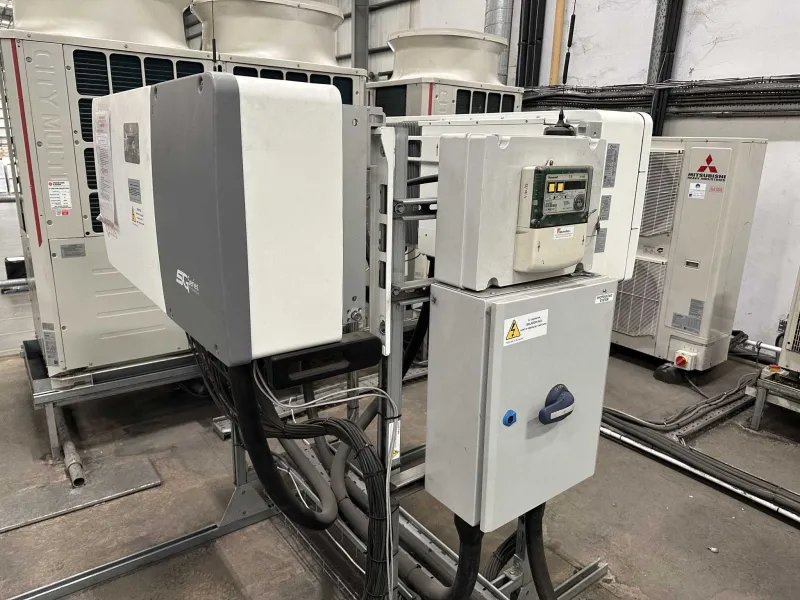
A commercial solar installation

On-site 3D drone survey before anything is specified.

What an orphaned system actually costs you

A solar array is a long-life asset, and an unsupported one quietly loses value. A tripped string, a failed inverter or a dropped monitoring link can sit unnoticed for months, so the first sign is usually a bill that has crept back up. Without anyone watching the system, an underperforming roof looks the same as a healthy one until you read the meter.

The deeper risk is the things you cannot see. Field-made MC4 connectors are one of the most common fault categories on field-built arrays, and a corroded pin is a leading cause of the heat and arcing behind rooftop fires. When the installer is gone, so is the record of what was fitted, how it was tested and what is still under warranty. An orphaned system is usually undocumented as well as unsupported, and that is what a takeover puts right.

How a takeover works

We start by establishing what you actually have, because the brochure and the as-built rarely match. Solar Tech Support runs the diagnostic: a brand-agnostic inspection of the array, the inverters, the protection and the monitoring, across whatever hardware the original installer used.

  • An in-house drone survey of the roof or site, flown by our own pilot, fully insured, to inspect the array without a roof access scaffold
  • A full electrical and performance diagnostic against the relevant component standards, finding the faults, the safety issues and the lost generation
  • A plain written report of what is wrong, what is at risk and what it will take to put right, with no obligation to have us do the work
  • The remedial work itself, then ongoing operations and maintenance under a written contract, so the asset has a named owner again

Why an independent arm matters here

Taking over someone else's installation only works if the diagnosis is honest. Solar Tech Support is brand-agnostic and independent, so it has no reason to condemn working kit to sell you a new system. It reports what it finds, whether that is a single failed connector or a re-string, and across a high volume of orphaned systems it has seen the fault before.

Where remedial work is needed, our Qualifying Supervisor reviews the install report before sign-off. They are a fully AM2-trained electrician, and the engineer who did the work never signs themselves off. That independent review is how a fault gets caught before it goes back on your roof, and it is the same discipline we apply to a new build.

What you get afterwards

Once the system is put right, it moves onto a maintenance footing rather than back into limbo. We monitor performance through Sentinel, our own free monitoring app, so a fault is found early rather than at the next quarter's bill, and the diagnostic depth of Solar Tech Support sits behind it if something needs a hands-on visit.

The arrangement is set out in a written maintenance contract with one accountable group across diagnosis, repair and ongoing care. You inherit a documented system with a phone number that gets answered, which is the thing the original installer stopped providing.

Which standards a takeover actually tests against

The reason a takeover can rebuild a missing record is that the original install was meant to meet published standards, so the diagnostic re-checks the array against those same standards rather than against the installer's word for it. The electrical inspection works to BS 7671, the UK wiring regulations, covering the DC and AC sides, the isolation, the earthing and bonding, and the protective devices that a fire or a fault depends on. The array-specific testing follows IEC 62446-1, the standard that defines the commissioning and periodic tests for a grid-connected PV system, including the string insulation resistance, the open-circuit voltage and the polarity checks that a field-built array is most likely to have wrong.

Where the system exports to the grid, the connection sits under a G99 agreement with the distribution network operator, which across Yorkshire and northern and north-eastern Lincolnshire is Northern Powergrid. An orphaned system often has a G99 connection whose paperwork left with the installer, so part of re-documenting the asset is confirming the connection terms and the protection settings still match what the network agreed. Reading what each of these tests means in plain terms is covered in the commercial solar guides; the point of the takeover is that the array is measured against them again, not assumed to still pass.

How we take the work on safely and lawfully

Remedial work on a commercial roof is construction work, so a takeover is run as a project under the Construction (Design and Management) Regulations 2015 rather than as an informal repair visit. That sets out who is responsible for planning the work, controlling the risks of working at height and around live DC, and handing over the right information at the end. For a finance or facilities director it means the legal duties that sit on you as the party commissioning the work are accounted for from the outset, not discovered afterwards.

The site assessment that drives that plan starts in the air. Our in-house drone pilot holds the A2 Certificate of Competency and a General VLOS Certificate, and is fully insured, so we can survey the condition of an unfamiliar array and read the roof for hazards before anyone climbs onto it, without standing up a scaffold just to look. That capability is ours rather than a subcontractor's, which is why it can be brought to bear early on a system we did not build. The detail of that survey is on the 3D drone survey page, and the broader assessment route, where you want a report before committing, is the independent audit.

The handover record you are left holding

The lasting value of a takeover is that the asset stops being a black box. When the work is signed off you receive the documents the original installer was meant to leave and did not: the electrical test certificates to BS 7671, the array commissioning results to IEC 62446-1, an updated record of the inverters, strings and protection as they now stand, and the warranty position on the equipment that remains. That record is what lets the next engineer, a buyer's surveyor or a funder understand the system without starting from scratch again.

From there the array sits under a written maintenance contract with planned re-inspection, so the documentation stays current rather than ageing back into the state you inherited. How that ongoing footing works is set out under operations and maintenance. The combined effect is that an undocumented, unsupported system becomes a documented one with an accountable owner, which is the gap the original installer left behind.

FAQ

System takeover: common questions

Yes. That is exactly what a takeover is for. We adopt commercial solar and storage systems whose original installer has folded, been sold on or stopped answering, regardless of who built it. We diagnose what you have, put right what is wrong and take on the ongoing maintenance, so the asset has an accountable owner again.

Yes. The diagnostic runs through Solar Tech Support, our independent, brand-agnostic diagnostics and repair arm, which works across whatever hardware the original installer fitted rather than a single house brand. We establish what is actually on your roof first, then report what it needs.

Usually not. Because the diagnosis is independent, there is no incentive to condemn working kit. Many orphaned systems need a specific fault put right, a failed inverter or a connector, rather than a wholesale replacement. The written report tells you what is genuinely wrong and what it will take to fix, with no obligation to have us do the work.

It is common and it is manageable. Part of a takeover is re-establishing the record: what is installed, how it tests against the relevant standards, and what is still in warranty. The drone survey and electrical diagnostic rebuild that picture, so you end up with a documented system rather than an undocumented one.

The system moves onto a written maintenance arrangement instead of going back into limbo. We monitor it through Sentinel, our own free monitoring app, so faults surface early, and Solar Tech Support sits behind that for hands-on diagnostics. You get one accountable group across repair and ongoing care, and a phone that gets answered.

It is survey-led, so there is no honest fixed price to publish here. A takeover starts with a diagnostic of a system someone else built, and what it costs to put right depends entirely on what that diagnostic finds, whether a single failed connector or inverter channel or a wider re-string. We scope and price the remedial work from the written report, with no obligation to have us carry it out, and the ongoing maintenance is set out separately in the contract. For how commercial solar costs are built up and how the figures are derived from your own site, see the commercial solar cost guide and the finance pages. Where capital allowances apply to qualifying plant, that is a mechanism to confirm with your accountant rather than a saving we promise.

The diagnostic stage is quick because much of it can be settled from the system's own data and an in-house drone survey rather than a scaffold, so the written report on what is wrong follows soon after the inspection. The remedial work itself depends on what the report finds: a single failed connector or inverter channel is a short visit, while a re-string or replacement of a major component takes longer and may need parts ordered in. Where the system exports to the grid, any change that affects the G99 connection terms is timed around the distribution network operator's response, which for our area is Northern Powergrid. We set out an honest sequence and the dependencies once the diagnostic is in, rather than quoting a timescale before we have seen the array. The ongoing maintenance then runs continuously under the contract.

Get a commercial quote

Start where every good project starts: the survey.

We fly your roof, model your half-hourly load, and come back with a designed system and a price you can take to the board. Engineer-led from the first call to the final handover, and the years after it.

  • On-site 3D drone survey, fully insured in-house pilot
  • Half-hourly load modelled in PV*SOL before anything is specified
  • Engineer-led, assured to the non-MCS standard (CDM 2015)