What set Alectrona apart was the documented design pack. We had quotes from three installers, but only Alectrona handed us a full set of drawings, a single-line diagram and a design referencing BS 7671 and the G99 connection process. The whole thing read like an engineering submission rather than a sales brochure. Our M&E consultant reviewed it and signed it off without a single query. That gave the board the confidence to release the capital.
Alectrona
BESS brandSigenergy
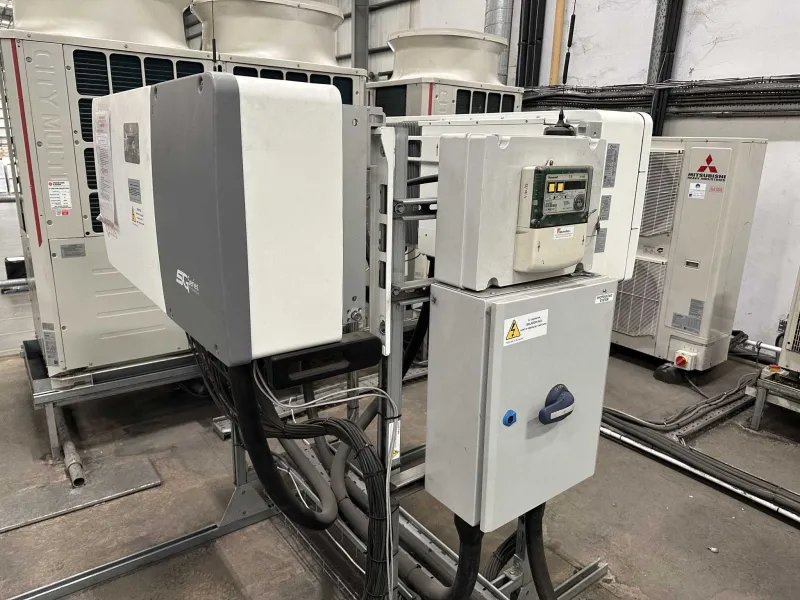
Sigenergy is a fast-growing energy-storage manufacturer whose SigenStor platform brings the inverter, a modular battery, the energy management and a backup Gateway into one integrated stack, which makes it a strong fit for small-to-mid commercial sites that want resilience alongside savings.
- Commercial scale, over 50 kWp
- Brand-agnostic, the right fit
- Sized to your real load
The feedback we work to earn
These are representative example reviews, not yet-collected customer feedback. They are written to illustrate the kind of feedback Alectrona aims to earn and are shown as design placeholders while we gather and verify reviews from our first commercial clients. Alectrona is the commercial solar trading brand of RVTC LTD.
Other firms priced our roof off a satellite image and a desktop guess. Alectrona flew an in-house drone survey, fully insured and flown by a qualified commercial drone pilot, and built a 3D model of the actual roof. It picked up plant, vents and a parapet line that a flat aerial photo had completely missed, which changed the panel layout. I would rather find that out at design stage than on the day the scaffold goes up. The accuracy of that survey is the reason I trusted everything that followed.
As a finance director I was wary of being oversold a system bigger than we could use. Alectrona modelled the array against our actual half-hourly consumption data rather than an annual total, so it is sized to what we genuinely draw on site during the day. They were honest that exporting surplus is worth far less than self-consumption, and built the design around that. The capital case stacked up because the engineering was honest, not because the numbers were inflated.
We were undecided between buying outright, leasing and a PPA. Alectrona laid out all three side by side with the pros and cons of each against our balance sheet, instead of pushing the one that pays them best. They were clear about where a PPA makes sense and where capex wins, and pointed us at our own accountant for the tax treatment. The survey and design took a little longer than I expected, but the thoroughness was worth the wait. Genuinely consultative.
The install crew were tidy and well run, and worked to a clear CDM 2015 plan with a proper site induction and RAMS. What impressed me most was the handover. We received a full commissioning pack with the IEC 62446-1 test results, certification, O&M documentation and an as-built record for our maintenance team. As the people who have to live with this asset for the next twenty years, having that paperwork in order matters enormously. Nothing was left loose.
I expected the usual hard sell and got the opposite. After surveying our site Alectrona told us one roof section was not worth covering because of shading, and that a smaller, well-sited array was the better investment than filling every square metre. There was no commission-driven upselling and no pressure. For a six-figure capital project, that straight talk is exactly what you want from the people advising you. We will be using them again on our second site.
- Platform SigenStor: M1 three-phase hybrid inverter, 50 to 125 kW, with the modular SigenStack battery
- Modular battery SigenStack scales in 12 kWh module steps, from roughly 48 kWh up to 252 kWh per inverter
- Backup The three-phase Gateway, C120 to C1200, disconnects from the grid and runs a defined backup load in an outage
- Best fit Small-to-mid commercial sites wanting resilience alongside savings, with room to grow
- Warranty Established maker with a named product warranty, confirmed for your exact product before contract
Sigenergy was founded by senior engineers from the inverter and storage industry, and its SigenStor platform is built around one idea: keep the parts that have to talk to each other under one roof. The hybrid inverter, the battery, the energy management and the backup Gateway are designed as a single stack rather than assembled from separate vendors. For a finance or facilities director, that means fewer interfaces to coordinate and one accountable product to underwrite.
This page sets out where Sigenergy genuinely fits and frames its standing honestly. Alectrona is brand-agnostic. Sigenergy is one of the makers we specify from, and we put it forward where it suits the project rather than as a default.
Brand-agnostic: the bankable battery that fits the project.
The SigenStor platform and the commercial range
SigenStor is a modular system rather than a fixed box. The commercial range runs from a compact three-phase configuration up to a substantial site battery, and the battery scales by stacking 12 kWh modules rather than by changing the inverter.
- The M1 three-phase hybrid inverter, available from 50 kW up to 125 kW, paired with the SigenStack battery built from 12 kWh modules. Capacity scales by adding modules, so an M1 at 125 kW can carry a SigenStack of 252 kWh from twenty-one modules, or sit at 48 kWh from four, with the steps in between set by what the site needs.
- Smaller SigenStor batteries of roughly 24 to 36 kWh, built from 6 or 9 kWh modules and run by an Energy Controller of around 20 to 30.6 kW three-phase, for the lighter end of commercial load.
- The Sigenergy Gateway, three-phase, in C120, C180, C600 and C1200 sizes spanning roughly 120 kW to 1200 kW, which is the device that handles backup and grid-islanding.
These are the available ranges, not a quote. The system the site gets is sized per project from a survey of your half-hourly load.
The Gateway adds backup as well as savings
The Gateway is what makes Sigenergy stand out for small-to-mid commercial sites that want resilience. It sits between your supply and your protected loads and watches the grid. When the grid fails, the Gateway disconnects the site from the network and keeps a defined backup load running from the battery and any solar, so a critical area stays live through an outage instead of going dark.
Backup is scoped, not assumed. We map which circuits must stay up and for how long, because that critical load sets the power the Gateway and battery have to carry, and the run-time sets the energy. Protecting a server room or a cold store for hours is a much larger system than riding through a short dip, so the design tracks the resilience you actually need rather than the maximum possible.
Modular scalability you can grow into
The practical advantage of the platform is that the battery grows without the inverter changing. A site can start with the storage its current load and budget justify, then add 12 kWh modules later as demand grows, a tariff shifts or an extra process comes online, all on the same M1 inverter and the same controls.
For a director planning capital in stages, that matters. It means the first phase is not over-bought to cover a future that may not arrive, and a later expansion is an addition rather than a rebuild. We model the starting size and the likely growth path from your half-hourly data, so the stack you install leaves room for where the site is going.
Bankability and how we specify it
We frame Sigenergy honestly. It is an established manufacturer with a named product warranty and a fast-growing deployed base, and it is a capable, value-strong maker. We do not dress that as a utility-grade bankable tier. Where the bankability of the asset matters to a lender or to your board, we confirm the warranty terms and the financeability that fit your project, in writing for the exact product, before contract, rather than leaning on a brand's reputation.
The assurance on the install is the engineering stack, not a domestic scheme. The system is designed to BS 7671, commissioned and verified to IEC 62446-1, connected under G99 with your network operator, and delivered under CDM 2015 on a JCT or NEC contract. MCS is the domestic scheme and is not the trust signal at this scale. Whichever brand we specify, the choice follows the survey and the PV*SOL model of your real load, and Alectrona specifies the battery that fits the project, the scale and your risk appetite, with the current product and warranty confirmed before contract.
How safe is a Sigenergy battery, and which standards does it meet?
For a battery at commercial scale the safety case is part of the specification, not an afterthought. SigenStor uses lithium iron phosphate (LFP) cells, the chemistry with the most stable thermal behaviour in commercial storage, and the modules carry the manufacturer's certification to the cell and system safety standards that matter at this scale. We confirm the current certificates for the exact product before contract: IEC 62619 for the safety of secondary lithium cells and batteries in industrial use, IEC 62477-1 for the safety of the power conversion equipment, and the wider IEC 62933 family that frames electrical energy storage systems and their safety requirements.
Those product certificates sit inside a site fire-engineering envelope. We design the installation so the battery's location, separation, ventilation and detection follow the principles in BS EN standards and the guidance the HSE expects for lithium battery energy storage, and the design references the fire-safety thinking in NFPA 855, the standard for the installation of stationary energy storage systems that UK engineers increasingly read across to. How that lands on your building, the spacing, the suppression and the access for the fire service, comes out of the survey. The chemistry choice and what it means for your project is set out on our LFP versus NMC page, and the wider site safety case on our battery fire safety page.
Can a Sigenergy battery earn from the grid as well as store solar?
SigenStor is a grid-interactive platform, so on the right tariff a Sigenergy battery can do more than shift your own solar. The same hybrid stack that charges from the array can charge from the grid when prices are low and discharge when they are high, and where a site has the connection and the volume, that capability can reach into the markets the National Energy System Operator (NESO) runs. These are real mechanisms with real rules, named here so you can see what the platform is capable of rather than promised as a number.
The relevant frameworks are the Capacity Market, which pays for firm capacity made available at times of system stress; the Balancing Mechanism and the ancillary services such as Dynamic Containment, through which NESO procures fast frequency response; and wholesale price arbitrage under a half-hourly tariff. Access to most of these is through a licensed aggregator rather than directly, and the rules are set by Ofgem and NESO, not by the battery maker. Whether your site can reach any of them depends on your connection, your half-hourly profile and your supplier. We will not print a capacity payment, an arbitrage spread or a payback figure on this page. Any such number is modelled, not promised, and it depends on your tariff, your dispatch and the market on the day. We model it from your data and disclose the basis, and you should treat every figure as indicative and verify it before you sign. The mechanisms are explained on our grid services and capacity market pages, and the day-to-day price-shifting on our time-of-use arbitrage page.
What does the SigenStor energy management actually do?
The part of SigenStor that turns hardware into savings is the energy management. The platform's EMS decides, half-hour by half-hour, whether to charge from solar, charge from the grid, hold the battery for backup, discharge to cover site load, or respond to a price signal, and it does this from the same controls that run the inverter and the Gateway. Because the stack is one product rather than three vendors stitched together, the dispatch logic sees the whole picture: the array, the store, the site load and the grid interface.
For a commercial buyer that integration is the practical advantage. Peak-shaving, where the battery covers the spikes that drive your demand charges, and self-consumption, where stored solar offsets expensive import rather than being exported for far less, are both EMS strategies that the platform runs without a separate controller bolted on. We set the strategy from your half-hourly load and your tariff, model it in PV*SOL as a starting point, and tune the dispatch to your actual objective. How peak-shaving is configured is covered on our peak shaving page, and how the control layer is specified across brands on our EMS software page.
Sigenergy at a glance
- Sigen PV M1 three-phase hybrid, 50 to 125 kWInverter
- SigenStack, modular 12.06 kWh LFP modules, around 48 to 253 kWh per systemBattery
- 314 Ah LFP (lithium iron phosphate)Cell
- 10,000 cycles (cell-level, 0.5C, to 60% state of health)Cycle life
- Sigen Gateway C-series (grid-side 120 to 1200 kW) parallels many units and provides grid-islanding backupBackup and scale
Sigenergy: common questions
It is Sigenergy's integrated stack: a three-phase hybrid inverter, a modular battery, the energy management and a backup Gateway designed to work together as one system rather than assembled from separate vendors. For a commercial site that means fewer interfaces between parts and a single accountable product, which is one of the reasons it suits small-to-mid sites well.
The Gateway sits between your supply and your protected loads and monitors the grid. When the grid fails, it disconnects the site from the network and keeps a defined backup load running from the battery and any solar, so a critical area stays live through an outage. The backup is scoped to the circuits that must stay up and for how long, because that sets the power and the energy the system has to carry. The Gateway is three-phase, in C120, C180, C600 and C1200 sizes from roughly 120 kW to 1200 kW.
Yes, that is the point of the modular design. The SigenStack battery grows by adding 12 kWh modules on the same M1 inverter, so you can start with the capacity your current load justifies and expand later as demand grows or a tariff changes. We model the starting size and the likely growth path from your half-hourly data so the first phase leaves room for the next.
Sigenergy is an established manufacturer with a named product warranty and a fast-growing deployed base, and it is a capable, value-strong maker. We will not dress that as a utility-grade bankable tier. Where the bankability of the asset matters to your lender or board, we confirm the warranty terms and the financeability that fit your project, in writing for the exact product, before contract.
No. Alectrona is brand-agnostic. Sigenergy is one of the makers we specify from, and we put it forward where it fits the project, the scale and your risk appetite. We size the system from your half-hourly load, model it in PV*SOL after an insured drone survey, and confirm the chosen brand, the current product and the warranty before contract.
We will not print a price on this page, because the honest figure for a SigenStor system comes from the survey. The cost turns on how many 12 kWh SigenStack modules the battery needs, the M1 inverter rating, whether a Gateway and its size are included for backup, and how your connection works. We size all of that from your half-hourly load, then quote the exact configuration. See our battery costs page for what drives the number.
Plan in months rather than weeks for a commercial SigenStor, and the pacing item is usually the grid connection, not the kit. The G99 application to Northern Powergrid, your DNO, has to be assessed before a firm install date, and that timeline sits with the network operator. Once the connection and design are settled, the modular SigenStack and M1 inverter install in a defined window. We start the G99 process early so the programme is not waiting on it.
See what a battery would actually do on your site.
We model your half-hourly load and your solar against a battery sized from an on-site survey, so the figure you get is yours, not a from-price. Capex first, with the bankable brand that fits the project.
- Sized from your half-hourly load, not a per-kWh rule of thumb
- Brand-agnostic: the bankable battery that fits the project
- Engineer-led, assured to the non-MCS standard (CDM 2015)