Skip to content

Alectrona

Service

Commercial inverter replacement

The inverter is the part of a commercial solar system most likely to need attention in its working life. Replacing a failed or end-of-life unit restores generation, and we do it brand-agnostically through our sister operation Solar Tech Support, like-for-like or as a considered upgrade.

  • Engineer-led, honest scope
  • Sized from your half-hourly load
  • Over 50 kWp, outside MCS
Reviews

The feedback we work to earn

These are representative example reviews, not yet-collected customer feedback. They are written to illustrate the kind of feedback Alectrona aims to earn and are shown as design placeholders while we gather and verify reviews from our first commercial clients. Alectrona is the commercial solar trading brand of RVTC LTD.

What set Alectrona apart was the documented design pack. We had quotes from three installers, but only Alectrona handed us a full set of drawings, a single-line diagram and a design referencing BS 7671 and the G99 connection process. The whole thing read like an engineering submission rather than a sales brochure. Our M&E consultant reviewed it and signed it off without a single query. That gave the board the confidence to release the capital.

Estates Manager, academy trust (Yorkshire)

Other firms priced our roof off a satellite image and a desktop guess. Alectrona flew an in-house drone survey, fully insured and flown by a qualified commercial drone pilot, and built a 3D model of the actual roof. It picked up plant, vents and a parapet line that a flat aerial photo had completely missed, which changed the panel layout. I would rather find that out at design stage than on the day the scaffold goes up. The accuracy of that survey is the reason I trusted everything that followed.

Facilities Manager, distribution centre (East Midlands)

As a finance director I was wary of being oversold a system bigger than we could use. Alectrona modelled the array against our actual half-hourly consumption data rather than an annual total, so it is sized to what we genuinely draw on site during the day. They were honest that exporting surplus is worth far less than self-consumption, and built the design around that. The capital case stacked up because the engineering was honest, not because the numbers were inflated.

Finance Director, logistics group (North West)

We were undecided between buying outright, leasing and a PPA. Alectrona laid out all three side by side with the pros and cons of each against our balance sheet, instead of pushing the one that pays them best. They were clear about where a PPA makes sense and where capex wins, and pointed us at our own accountant for the tax treatment. The survey and design took a little longer than I expected, but the thoroughness was worth the wait. Genuinely consultative.

Property Director, retail park (West Midlands)

The install crew were tidy and well run, and worked to a clear CDM 2015 plan with a proper site induction and RAMS. What impressed me most was the handover. We received a full commissioning pack with the IEC 62446-1 test results, certification, O&M documentation and an as-built record for our maintenance team. As the people who have to live with this asset for the next twenty years, having that paperwork in order matters enormously. Nothing was left loose.

Operations Director, food manufacturer (Lincolnshire)

I expected the usual hard sell and got the opposite. After surveying our site Alectrona told us one roof section was not worth covering because of shading, and that a smaller, well-sited array was the better investment than filling every square metre. There was no commission-driven upselling and no pressure. For a six-figure capital project, that straight talk is exactly what you want from the people advising you. We will be using them again on our second site.

Managing Director, engineering firm (Sheffield)

A solar array is largely passive. The modules sit on the roof and generate, the mounting holds them, the cabling carries the current. The inverter is the one part that works hard every second of daylight, switching at speed, managing heat, and tracking the array's most productive operating point as the light changes. It is the component carrying the electrical and thermal load, and over the life of a commercial system it is the part most likely to need attention. When it stops, the array stops earning, often quietly, sometimes with only a fault light or a gap in the monitoring to show for it.

Replacing the inverter restores generation. The decision is rarely just "swap the broken box". It is whether to go like-for-like or take the opportunity to upgrade, whether the replacement is compatible with the existing array and any battery, how it should be sized against your roof and your export agreement, and how the work is carried out safely and signed off. We approach all of that as engineers, through Solar Tech Support, which is independent and ties itself to no single manufacturer.

When and why an inverter needs replacing

Inverters do not usually fail without warning. More often the system tells you something is wrong before it stops: a recurring fault code that clears and returns, a string or phase that drops out, output that has drifted below what the monitoring used to show on a comparable day, fan noise or heat that was not there before, or an isolation or earth-fault alarm. Sometimes the unit simply will not turn on. Any of these is a reason to investigate rather than to assume the worst.

Not every fault means replacement. The first step is diagnosis rather than a sale. Solar Tech Support's job is to find out what is actually happening, because the right answer might be a firmware update, a connection repaired, a cooling problem cleared, or a single component addressed under warranty. Replacement is the answer when the inverter has genuinely failed beyond economic repair, when it is at the end of its serviceable life and repairs no longer make sense, or when a unit is obsolete and the manufacturer no longer supports it with spares or firmware. We will not put fabricated lifespans on this page. How long a given inverter lasts depends on the unit, how hard it has worked, how well it has been ventilated and maintained, and plain luck. What we will say plainly is whether replacing yours is the sensible engineering decision or whether something cheaper will do.

Like-for-like or an upgrade

Once replacement is the right call, there are two honest routes, and which one suits you depends on the system and what you want from it.

Like-for-like. If the existing design is sound and the array is performing as it should apart from the inverter, the simplest, fastest and most cost-effective route is a direct equivalent. It restores generation with the least disruption and keeps the rest of the system as it was. Where the original model is discontinued, we identify the closest current equivalent that matches the array's electrical characteristics, so the swap behaves like the unit it replaces.

An upgrade. A failed inverter can also be the moment to improve the system rather than simply restore it. A newer inverter may bring better efficiency, more useful monitoring, or features the original lacked. If your roof has shading, plant or rooflights breaking it up, a DC-optimised, module-level architecture can recover yield a plain string design loses and give you visibility down to each module. If you are adding, or planning to add, battery storage, this is the natural point to move to a hybrid or battery-ready inverter so the system is built for it rather than retrofitted around it. An upgrade costs more than a like-for-like swap and is not always the right answer; we will set out the trade-off and let the numbers and your plans decide, never push the bigger job for its own sake.

Because Solar Tech Support is brand-agnostic, neither route is steered by a badge. The recommendation is whatever genuinely fits your array, your roof and your intentions for the system.

Compatibility, sizing and the process

An inverter cannot be chosen in isolation. It has to match the array that is already on the roof and the supply and connection the building already has. Compatibility means the replacement suits the existing strings and their voltage and current characteristics, the way the roof is split across orientations and MPPT inputs, the phase configuration of your supply, and any battery or storage already installed. Sizing means the inverter is rated for the array it serves and, just as importantly, for the export limit your Distribution Network Operator has granted, which is frequently lower than the array could physically push. A replacement that ignores the connection agreement is not a replacement done properly.

The process is methodical and safe. It starts with diagnosis to confirm replacement is genuinely the answer and to capture exactly what the existing system is. From there we specify the right unit, like-for-like or upgrade, and confirm warranty and support before any work is agreed. The installation is carried out with the system safely isolated, the new inverter commissioned and the array confirmed back to expected output against the monitoring, and the work signed off to BS 7671 by a qualified supervisor. Where the change affects your grid connection, the correct DNO notification is handled. Costs are survey-led; we do not publish a figure on this page, because a meaningful number depends on your inverter, your array and your site, and the honest place to size that up is a look at the system. If you want the inverter replaced as part of a continuing arrangement rather than a one-off, it sits naturally within Solar Tech Support's operations and maintenance and system takeover services. If you are not yet sure what shape your system is in, an independent performance audit is the place to start.

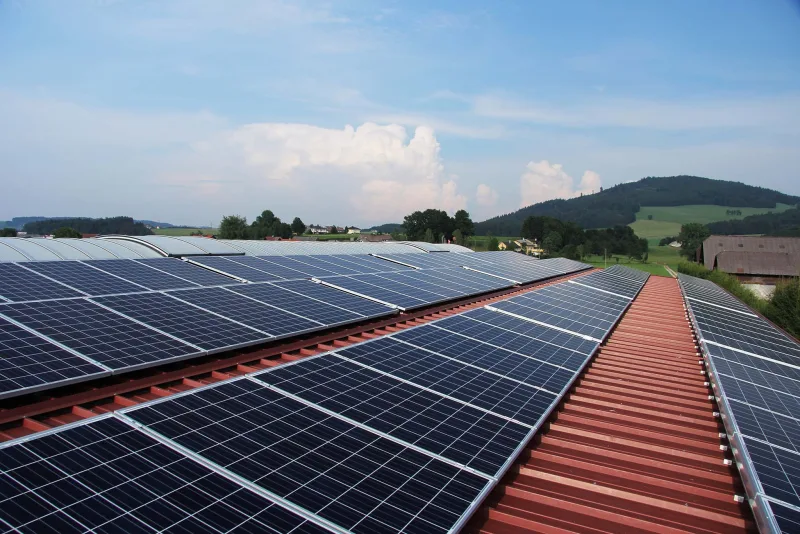
A commercial solar installation
FAQ

Inverter replacement: common questions

You start with diagnosis rather than a swap. Solar Tech Support investigates the fault first, because the cause might be a firmware update, a connection, a cooling issue or a component covered by warranty rather than a dead inverter. Replacement is the right answer when the unit has genuinely failed beyond economic repair, is at the end of its serviceable life, or is obsolete and no longer supported with spares or firmware. We will tell you straight which it is rather than reach for the biggest job.

No. Solar Tech Support is brand-agnostic and tied to no single manufacturer. If the existing design is sound, a like-for-like equivalent is usually the fastest and most cost-effective route, and where the original model is discontinued we match the closest current equivalent to the array's characteristics. Where an upgrade genuinely suits your roof or your plans, for example moving to a battery-ready inverter, we will set out that option too. The choice follows what fits your system, never a badge.

Often, yes, and a failed inverter can be a sensible moment to do it. A newer unit may bring better efficiency or more useful monitoring, a DC-optimised architecture can recover yield on a shaded or complex roof, and a hybrid or battery-ready inverter prepares the system for storage. An upgrade costs more than a like-for-like swap and is not always the right call, so we set out the trade-off and let the numbers and your plans decide rather than push the larger job.

It has to match two things: the array already on the roof and the connection the building already has. We confirm the new inverter suits the existing strings, the MPPT layout and the phase configuration of your supply, and any battery present. It is then rated for the array and, crucially, for the export limit your Distribution Network Operator has granted, which is often lower than the array could physically push. A replacement that ignores the connection agreement is not done properly.

We do not publish a figure here, because a meaningful number depends on your inverter, your array and your site, and on whether you go like-for-like or upgrade. The honest way to price it is to look at the system. Diagnosis comes first to confirm replacement is genuinely needed, then we specify the right unit and confirm the warranty and support before any work is agreed, with the install signed off to BS 7671 and the DNO notified where the connection changes.

The swap itself is usually a short job once the right unit is on site and the system is safely isolated, but the honest answer is that the lead time before that point governs the calendar rather than the time on the tools. Diagnosis comes first to confirm replacement is genuinely needed, then the unit has to be specified and procured, and a like-for-like equivalent that is in stock can be turned around faster than an upgrade that changes the architecture or adds a battery-ready inverter. Where the change affects your grid connection, the Distribution Network Operator notification is handled alongside the work. We are engineers rather than a stockist, so we cannot promise a fixed number of days on a page; once Solar Tech Support has seen the fault and the unit needed, you get a realistic timeline for your specific replacement rather than a generic estimate.

Get a commercial quote

Tell us what the building needs to do.

Whether it is charging, a tariff question, a funding route or a failed inverter, we start from your site and your load, model it, and come back with an honest answer rather than a from-price.

  • Engineer-led, sized from your half-hourly load
  • Capex-first, with the honest read on every funding route
  • Brand-agnostic, assured to the non-MCS standard (CDM 2015)