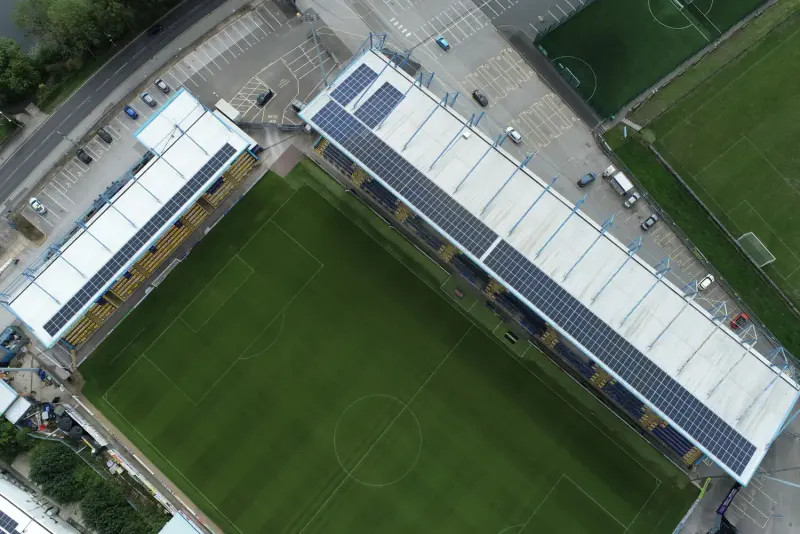
What set Alectrona apart was the documented design pack. We had quotes from three installers, but only Alectrona handed us a full set of drawings, a single-line diagram and a design referencing BS 7671 and the G99 connection process. The whole thing read like an engineering submission rather than a sales brochure. Our M&E consultant reviewed it and signed it off without a single query. That gave the board the confidence to release the capital.
Alectrona
Commercial guideIs commercial solar worth it?
The honest answer is that it depends, and what it depends on is how much of the generation your building uses on site rather than exports.
- Commercial scale, over 50 kWp
- On-site 3D drone survey + PV*SOL
- Engineer-led, outside MCS
The feedback we work to earn
These are representative example reviews, not yet-collected customer feedback. They are written to illustrate the kind of feedback Alectrona aims to earn and are shown as design placeholders while we gather and verify reviews from our first commercial clients. Alectrona is the commercial solar trading brand of RVTC LTD.
Other firms priced our roof off a satellite image and a desktop guess. Alectrona flew an in-house drone survey, fully insured and flown by a qualified commercial drone pilot, and built a 3D model of the actual roof. It picked up plant, vents and a parapet line that a flat aerial photo had completely missed, which changed the panel layout. I would rather find that out at design stage than on the day the scaffold goes up. The accuracy of that survey is the reason I trusted everything that followed.
As a finance director I was wary of being oversold a system bigger than we could use. Alectrona modelled the array against our actual half-hourly consumption data rather than an annual total, so it is sized to what we genuinely draw on site during the day. They were honest that exporting surplus is worth far less than self-consumption, and built the design around that. The capital case stacked up because the engineering was honest, not because the numbers were inflated.
We were undecided between buying outright, leasing and a PPA. Alectrona laid out all three side by side with the pros and cons of each against our balance sheet, instead of pushing the one that pays them best. They were clear about where a PPA makes sense and where capex wins, and pointed us at our own accountant for the tax treatment. The survey and design took a little longer than I expected, but the thoroughness was worth the wait. Genuinely consultative.
The install crew were tidy and well run, and worked to a clear CDM 2015 plan with a proper site induction and RAMS. What impressed me most was the handover. We received a full commissioning pack with the IEC 62446-1 test results, certification, O&M documentation and an as-built record for our maintenance team. As the people who have to live with this asset for the next twenty years, having that paperwork in order matters enormously. Nothing was left loose.
I expected the usual hard sell and got the opposite. After surveying our site Alectrona told us one roof section was not worth covering because of shading, and that a smaller, well-sited array was the better investment than filling every square metre. There was no commission-driven upselling and no pressure. For a six-figure capital project, that straight talk is exactly what you want from the people advising you. We will be using them again on our second site.
- Applies to Commercial systems over 50 kWp, outside MCS
- Deciding factor Self-consumption: how much generation is used on site
- Best fit High daytime load, owned or long-leased roof, rising import tariffs
- Payback (well-matched site) as little as ~3 years (including the year-one AIA saving); typically ~3.5–5 years
- Bill reduction up to ~60% on a well-matched site, more typically ~40–50%, depending on consumption profile and roof space
Is commercial solar worth it?
Commercial solar is a capital investment, so the question a finance or facilities director is really asking is whether the return justifies the outlay against everything else competing for the same capital. For a system over 50 kWp, the answer turns on one thing above roof size or panel count: how much of what the array generates your building consumes as it is produced.
This guide sets out the factors that make a commercial system worth it, the cases where it is marginal, and why the only honest figure for your site comes from modelling your real demand rather than a category average. It is a plain-English orientation for a buyer, not formal financial advice; we confirm the specifics for your site before anything is specified.
Self-consumption
Solar earns most when the electricity is used on site rather than exported. A unit you consume offsets an expensive import unit; a unit you export is paid far less. So the value of a commercial array tracks how well its output lines up with your demand through the day, not how large the roof is.
That makes load shape the deciding factor. A building that draws heavy, steady power through daylight hours uses most of what the array produces, which is where the economics are strongest. A building that draws light load during the day and exports the surplus sees a weaker return on the same panels. Two sites under identical roofs can return very different numbers once you look at when the power is actually drawn, which is why we model your half-hourly consumption against generation before sizing anything.
When commercial solar is worth it
The case is strongest when several of these line up:
- High daytime consumption. Manufacturing, refrigeration, processing, warehousing with materials-handling-equipment charging, and any site running a heavy weekday load through daylight tend to self-consume a high share of what the array makes.
- A roof you own or hold on a long lease. The investment pays back over years, so a freehold or a long unexpired lease term lets you capture the full return rather than handing it to a landlord partway through.
- Rising import tariffs. Every unit of self-consumed generation offsets a unit you would otherwise buy, so the more your import price climbs, the more each offset unit is worth.
- Capacity to use the first-year capital allowances. A profitable business that can absorb the first-year allowances improves the early-year position materially.
Where the daytime match is strong and the roof is sound, a well-matched commercial system can cut grid import by up to ~60% on a well-matched site, more typically ~40–50%, depending on consumption profile and roof space.
When it is marginal, and what to do about it
The case is softer when the load does not line up with daylight. A site that runs lightly during the day, peaks after dark, or sits idle for long stretches of the year will export more of its generation and earn less per panel. A short remaining lease, a roof that needs structural work before it can carry an array, or a metering split that hands the benefit to someone other than the bill-payer all weaken the case too.
None of these rules a site out on their own. Where the daytime match is weak, battery storage can shift surplus generation into an evening or overnight load, and we model that on real numbers before recommending it rather than overbuilding a roof that would export cheaply. Where the load genuinely sits in the wrong place and storage does not close the gap, we say so. The honest read comes from your half-hourly data, not a sector average.
What the return looks like, and how we substantiate it
On a well-matched commercial site, payback can be as little as ~3 years (including the year-one AIA saving); typically ~3.5–5 years, depending on consumption profile, tariff and roof. Across the life of the system that tends to translate to around 15–25% IRR over its life / ~25% annual return net of maintenance, after first-year capital allowances.
These are the figures for a well-matched site, and they are conditional on exactly the factors above. We do not quote them as a guarantee or a headline price. Cost is survey-led, so there is no honest "from £X" figure: the real numbers come from an on-site drone survey and a half-hourly PV*SOL model of your roof and your load.
Indicative, not financial or tax advice. Confirm the position with a qualified accountant or tax adviser. Your figure comes from a survey-led PV*SOL model.
Representative example only. The payback, IRR and bill-reduction figures shown are illustrative for a well-matched site and rest on stated assumptions about system size, installed cost, import and export tariff, self-consumption share and a year-one Annual Investment Allowance, current at June 2026. Your figures are derived from your own drone survey, half-hourly consumption data and agreed installed cost, not from this example, and are confirmed with you before they inform a decision.
What costs eat into the return over the system's life?
A worth-it decision rests on the return net of what it costs to keep the system running, not the headline saving. For a commercial array the running cost is genuinely low, but it is not zero, and an honest assessment names the items rather than assuming a panel lasts untouched for decades.
The largest single ongoing item is the inverter. Panels routinely carry product warranties measured in decades, but string and central inverters are the working part of the system and are usually planned for at least one replacement across the array's operating life. Beyond that, the recurring costs are modest: periodic inspection, panel cleaning where soiling is heavy, and the electrical testing that a duty-holder needs anyway. We set out what that schedule looks like in the commercial solar maintenance guide, because the operations and maintenance line belongs in the model from the start.
Output also drifts down slowly over time. Panel manufacturers publish a performance warranty that guarantees a minimum retained output after twenty-five or thirty years, and a credible life-of-system model carries that degradation curve rather than holding generation flat. The point is not that these costs are large; on a well-matched site they are small against the import they offset. The point is that a defensible payback figure already has them in it, which is exactly why we quote a return from a modelled site rather than a brochure.
How do the tax and allowance rules change whether it is worth it?
For a business buying its own system, the tax treatment of the capital is part of the answer, and it can move the early-year position materially. Plant and machinery installed for a trade, which is how a commercial solar array is generally treated, can attract first-year capital allowances, and the Annual Investment Allowance lets a qualifying business write off the cost against taxable profits in the year of spend rather than over many years. A profitable business that can absorb that allowance sees a better early-year return than the raw payback suggests.
The detail matters and it is not ours to settle. The available reliefs, the thresholds and the rules on what qualifies are set by HM Revenue and Customs and can change at fiscal events, so any figure that leans on an allowance is current at the date it is modelled and is confirmed with your own accountant rather than asserted here. We treat this as orientation for a buyer, not tax advice. Where the allowance position genuinely changes whether a site clears your investment hurdle, that belongs in a conversation with a qualified adviser alongside the survey, and we point the financial detail to commercial solar finance rather than pretend a guide can stand in for it.
Does it still stack up if we lease the roof or fund it externally?
Owning the system outright is the cleanest case, because you keep the full saving and the allowances. It is not the only route, and whether solar is worth it can depend as much on how it is funded as on the roof itself.
Two questions decide the funded case. The first is roof tenure. If you hold the building on a short remaining lease, the investment may not have years enough to pay back before the benefit transfers, so a long unexpired term, a freehold, or a landlord willing to share the cost changes the picture. The second is the funding structure. A capital purchase, asset finance, and a power purchase agreement where a third party owns the array and sells you the power each leave the saving in a different place and carry different obligations. Under a purchase you keep the full offset and the allowances; under a PPA you trade some of the upside for no upfront capital. Which one is worth it depends on your cost of capital and your balance-sheet priorities, and we keep that decision honest by modelling the site first and pointing the structures to commercial solar finance rather than steering you toward one. The underlying generation case from the half-hourly metering data is the same whoever funds it; the funding only decides who banks the return.
What turns a borderline site into a worth-it one?
Plenty of sites sit on the line: a decent daytime load, a sound roof, but a self-consumption share that exports more surplus than you would like. The question then is not whether to walk away but what closes the gap, and there are usually levers before the answer is no.
The most common is storage. Where generation peaks at midday but the load sits in the evening, a battery shifts surplus into the demand window and lifts the self-consumed share that drives the whole return; we size that against your real numbers in the commercial battery storage work rather than bolting on capacity that would sit idle. A second lever is load shifting: moving a flexible process, a charging schedule, or a refrigeration cycle into daylight raises self-consumption at no extra hardware cost. A third is the connection itself. On a constrained part of the network the Distribution Network Operator may cap or refuse full export, which on a high self-consumption site changes little, and an export-limited connection can keep a project viable where a full export offer would stall it in the grid connection queue. None of these is guaranteed to tip a given site, which is why we model them on your data and tell you the honest read, with the return basis kept in the ROI and payback guide rather than promised here.
Past the guide, this is how your figure actually gets set.
-
Survey On-site 3D drone survey
Our own insured pilot flies your roof and captures the real geometry and shading, so the design starts from your building instead of a satellite guess.
Booked to suit your operating hours
-
Model PV*SOL design and proposal
We model the array in bankable-grade software, size it around your daytime load, and set out generation, savings and payback across three funding routes.
Modelled, not promised
-
Install Engineered and installed
Designed and installed to BS 7671, commissioned to IEC 62446-1, connected under G99 and run under CDM 2015. Alectrona is typically the Principal Contractor.
Outside MCS, assured by the non-MCS stack
-
Aftercare Operations and maintenance
A 12-month defects period backed by an Insurance-Backed Guarantee, then ongoing operations and maintenance so the asset keeps earning for its full working life.
Kept performing, year on year
Indicative, not financial or tax advice. Confirm the position with a qualified accountant or tax adviser. Your figure comes from a survey-led PV*SOL model.
Last updated June 2026
Is commercial solar worth it?: common questions
It depends on your building, and the honest deciding factor is how much of the generation you use on site rather than export. A site with heavy daytime load, an owned or long-leased roof and a rising import price tends to make a strong case. A site that runs lightly during the day or exports most of its output makes a weaker one.
We do not answer that from a sector average. We model your half-hourly demand against generation for your exact roof and tell you the honest split before anything is specified.
Self-consumption. Every unit you use on site offsets an expensive import unit, while an exported unit is paid far less, so the return tracks how well the array output lines up with your demand through the day. That is why load shape matters more than roof size or panel count, and why two buildings under identical roofs can return very different figures.
It can, but the daytime case on its own is weaker, because generation peaks in the middle of the day. Where the load sits in the evening or overnight, we look at whether battery storage shifts surplus generation into that window, and we model it on your real numbers rather than overbuilding a roof that would export cheaply. Where storage does not close the gap, we say so honestly.
On a well-matched site, payback can be as little as ~3 years (including the year-one AIA saving); typically ~3.5–5 years, depending on consumption profile, tariff and roof. That is conditional on the factors in this guide, not a quote.
Indicative, not financial or tax advice. Confirm the position with a qualified accountant or tax adviser. Your figure comes from a survey-led PV*SOL model.
Because cost is survey-led. The system is sized to your actual half-hourly load and to what your roof can safely carry, both of which come from an on-site drone survey and a PV*SOL model. A headline "from" price would be a guess, and an honest commercial quote does not start with one.
Expect the build itself to be measured in days to a few weeks once the system is specified, but the timeline that decides when the return starts is the grid connection. A system over 50 kWp needs a Distribution Network Operator connection agreement, and on a constrained network it is that connection step, rather than the install, that sets the date you begin generating. We start the connection application early and run the survey and design alongside it. The honest lead time for your site is confirmed against your DNO position, not quoted generically; see the grid connection queue guide.
Get the numbers for your roof.
A guide can only take you so far. The figure you get is modelled from your own half-hourly load and a system sized from the on-site drone survey. No obligation, and systems this size sit outside the domestic MCS scheme, so the assurance is the engineering stack.
- On-site 3D drone survey, fully insured in-house pilot
- Half-hourly load modelled in PV*SOL before anything is specified
- Engineer-led, assured to the non-MCS standard (CDM 2015)
- Capex, lease-purchase or PPA, whichever suits you