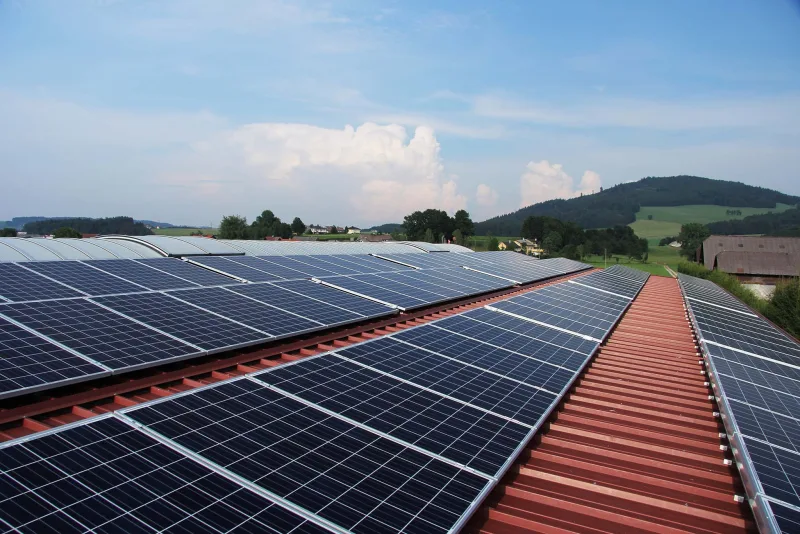
What set Alectrona apart was the documented design pack. We had quotes from three installers, but only Alectrona handed us a full set of drawings, a single-line diagram and a design referencing BS 7671 and the G99 connection process. The whole thing read like an engineering submission rather than a sales brochure. Our M&E consultant reviewed it and signed it off without a single query. That gave the board the confidence to release the capital.
Alectrona
Commercial guideWhat does BS 7671 mean for your commercial solar system?
BS 7671 is the UK wiring regulations, and a commercial solar array is designed, installed, inspected and tested to it. Section 712 is the part written specifically for solar PV, and on a system over 50 kWp this is a core part of the assurance, in place of a domestic certificate.
- Commercial scale, over 50 kWp
- On-site 3D drone survey + PV*SOL
- Engineer-led, outside MCS
The feedback we work to earn
These are representative example reviews, not yet-collected customer feedback. They are written to illustrate the kind of feedback Alectrona aims to earn and are shown as design placeholders while we gather and verify reviews from our first commercial clients. Alectrona is the commercial solar trading brand of RVTC LTD.
Other firms priced our roof off a satellite image and a desktop guess. Alectrona flew an in-house drone survey, fully insured and flown by a qualified commercial drone pilot, and built a 3D model of the actual roof. It picked up plant, vents and a parapet line that a flat aerial photo had completely missed, which changed the panel layout. I would rather find that out at design stage than on the day the scaffold goes up. The accuracy of that survey is the reason I trusted everything that followed.
As a finance director I was wary of being oversold a system bigger than we could use. Alectrona modelled the array against our actual half-hourly consumption data rather than an annual total, so it is sized to what we genuinely draw on site during the day. They were honest that exporting surplus is worth far less than self-consumption, and built the design around that. The capital case stacked up because the engineering was honest, not because the numbers were inflated.
We were undecided between buying outright, leasing and a PPA. Alectrona laid out all three side by side with the pros and cons of each against our balance sheet, instead of pushing the one that pays them best. They were clear about where a PPA makes sense and where capex wins, and pointed us at our own accountant for the tax treatment. The survey and design took a little longer than I expected, but the thoroughness was worth the wait. Genuinely consultative.
The install crew were tidy and well run, and worked to a clear CDM 2015 plan with a proper site induction and RAMS. What impressed me most was the handover. We received a full commissioning pack with the IEC 62446-1 test results, certification, O&M documentation and an as-built record for our maintenance team. As the people who have to live with this asset for the next twenty years, having that paperwork in order matters enormously. Nothing was left loose.
I expected the usual hard sell and got the opposite. After surveying our site Alectrona told us one roof section was not worth covering because of shading, and that a smaller, well-sited array was the better investment than filling every square metre. There was no commission-driven upselling and no pressure. For a six-figure capital project, that straight talk is exactly what you want from the people advising you. We will be using them again on our second site.
- What it is The UK wiring regulations, the 18th Edition and its amendments
- PV section Section 712 covers solar photovoltaic systems
- Applies to The electrical installation of a commercial solar array
- Commissioning Alongside IEC 62446-1 for grid-connected PV
- Why it matters Core of the non-MCS assurance stack over 50 kWp
BS 7671 for solar
OrientationThis is a plain-English orientation for a commercial buyer, not formal electrical advice; we confirm the standards and certification that apply to your project.
Every electrical installation in a commercial building is held to the same national rulebook: BS 7671, the UK wiring regulations, often referred to as the 18th Edition and its amendments. A solar array is an electrical installation, so it is designed, installed, inspected and tested to that standard like any other circuit on your site, with a dedicated section written for solar PV.
For a finance or facilities director, BS 7671 matters because it is the floor that defines a safe, compliant electrical job, and the certification issued against it is part of the evidence your insurer, lender and any future maintenance provider will expect to see. This is a plain-English orientation for a commercial buyer, not formal electrical advice; we confirm the position for your project.
What BS 7671 actually is
BS 7671 is the British Standard for the requirements of electrical installations, usually known as the wiring regulations and referred to as the 18th Edition along with its amendments. It is the document that defines how an electrical installation in the UK is designed, built, inspected and tested so that it is safe to use and safe to work on. Electricians work to it as a matter of course, and any competent commercial electrical job is carried out against it.
It is not solar-specific. It governs the electrical installation in any building, from the distribution board to the final circuit. A solar array adds generation to that installation, so it is brought under the same standard rather than treated as a thing apart. The system is designed to it, installed to it, then inspected and tested against it before it is signed off, with the appropriate certification issued on completion.
The part written for solar PV
Within BS 7671 there is a section dedicated to solar photovoltaic power supply systems, Section 712. It sets out the particular requirements that apply because a PV array behaves differently from a conventional circuit, and it is the part an engineer designing a commercial array works to alongside the general regulations.
The reason a dedicated section exists is that the DC side of a solar system is unusual. The panels generate a DC voltage whenever there is daylight on them, so that part of the installation cannot simply be switched dead the way an AC circuit can. Section 712 covers the matters that follow from that: how the DC side is arranged and protected, how the system is isolated, how cabling and connectors are selected and installed, and how the array is integrated safely with the rest of the building's electrical installation. Designing to it is how a properly engineered array answers the risks that are specific to PV.
- Section 712 The part written for solar PV Within BS 7671, the 18th Edition and its amendments
- IEC 62446-1 Commissioning for grid-connected PV Documented test results and a commissioning record
- Over 50 kWp Outside the domestic MCS scheme BS 7671 is the backbone of the non-MCS assurance stack
Inspection, testing and commissioning to IEC 62446-1
Designing to a standard is only half of the assurance. The system also has to be inspected and tested to prove it was built as designed, and that it is safe before it is energised. Under BS 7671 the installation is inspected and tested, and an electrical installation certificate is issued recording the results.
On a solar system this sits alongside commissioning to IEC 62446-1, the international standard for grid-connected PV systems. It sets out the documentation, the tests and the inspection a PV array should pass before it goes live, and the commissioning record you are handed afterwards. The two work together: BS 7671 governs the electrical installation and its certification, and IEC 62446-1 governs the PV-specific commissioning. What you receive is a documented set of test results and a commissioning record, not a verbal assurance that it works.
How this fits the non-MCS assurance stack
A commercial array sits above 50 kWp and outside the MCS scheme, which is the domestic-scale certification and does not reach this far up the scale. So the assurance does not come from a domestic certificate. It comes from a stack of named engineering standards and duties, and BS 7671 is the backbone of the electrical side of that stack.
- Design and testing to BS 7671, including the PV-specific requirements of Section 712, with an electrical installation certificate on completion.
- Commissioning to IEC 62446-1, the international standard for grid-connected PV, with a documented commissioning record.
- Grid connection under G99, the DNO process that confirms permission to connect and any export limit.
- Construction safety under CDM 2015, the regulations that govern how the works are planned and run on your site.
Taken together this is a more demanding framework than the domestic scheme, because it governs the same asset under the wiring regulations, grid-code compliance and construction-safety law. The certification and commissioning records are part of the handover pack, which is the evidence your insurer and lender will ask for. This guide is orientation rather than formal advice; we confirm the standards and the certification that apply to your specific project.
What does BS 7671 require on the DC side of a commercial array?
The reason Section 712 exists at all is that the DC side of a solar installation behaves unlike any other circuit in a building, so it is worth setting out plainly what the wiring regulations actually ask for there. A string of modules sits at a high DC voltage in daylight and cannot be switched dead from the consumer unit, which means the protection, isolation and cable selection have to be designed for a part of the system that is live whenever the sun is up.
In broad terms the standard drives the design toward a few specific outcomes. DC cabling is selected and installed to withstand the array's maximum voltage and the rooftop environment over a long service life, and it is arranged to limit the risk of earth and short-circuit faults on the DC side. The system is given clearly identified means of isolation so the array can be made safe for maintenance, and the arrangement of strings, combiners and protective devices is designed so a single fault does not propagate. Overvoltage protection and earthing arrangements are designed for the building and its exposure rather than copied from a template.
Two related points follow from this. First, the architecture you choose changes how much high-voltage DC exists and how far it runs across the roof, which is one reason the choice between string and central inverters is an engineering decision rather than a pricing one. Second, the same live-in-daylight property that drives DC isolation is the root of the fire-safety thinking in RC62, so the wiring-regulation requirements and the insurer-facing fire guidance are addressing the same physics from two directions. We confirm the specific DC design for your site, since the detail follows from the array layout, the roof and the inverter platform rather than from a generic rule.
What does the BS 7671 documentation and labelling pack include?
On a commercial array the paperwork is the evidence that the standard was met, so it is worth knowing what you should be handed. Under BS 7671 the installation is inspected and tested and an Electrical Installation Certificate is issued recording the results, with the schedule of inspections and the schedule of test results attached. For a PV system this sits alongside the commissioning documentation produced to IEC 62446-1, so what you receive is a documented set of measured results rather than a statement that the system works.
The standard also drives the on-site labelling and signage that a maintainer or an emergency responder will rely on years later. That typically includes dual-supply warning labels at the origin of the installation and at the meter position, identification of the DC and AC isolation points, and a clear single-line diagram showing how the array connects into the building. The point of the labelling is that anyone coming to the system later can see at a glance that there is a second source of supply and where to make it safe, which matters precisely because the DC side cannot be switched dead.
This documentation is the backbone of the handover pack and is the evidence your insurer, lender and any future maintenance provider will ask to see, which is why it is central to demonstrating quality without an MCS certificate. We treat the certification, the commissioning record and the as-built single-line diagram as core deliverables of the design and engineering stage, and we confirm the exact contents of the pack for your project before work begins.
How does BS 7671 sit alongside the IET Code of Practice and the grid code?
BS 7671 is the floor for the electrical installation, but a competent commercial PV design draws on more than one document, and it helps to see how they fit together rather than treating the wiring regulations as the whole story. The IET publishes a Code of Practice for grid-connected solar photovoltaic systems that translates the requirements into practical PV design and installation guidance, and it is the reference an engineer works to alongside Section 712 and the general regulations. Where BS 7671 sets the requirement, the IET Code of Practice and IEC 62446-1 fill in how a PV system is designed, commissioned and documented in detail.
The grid interface is governed separately again. BS 7671 covers the installation on your side of the meter, while the Engineering Recommendation G99, administered through your DNO, governs how the array connects to and behaves on the public network, including the loss-of-mains protection and any export limit. A compliant system satisfies both: the wiring regulations for the asset itself, and the grid code for the connection. For Northern Powergrid as the network operator in this region, the G99 settings are agreed with them and demonstrated at commissioning.
Above all of this sits the construction-safety framework. The works are planned and run under CDM 2015, which governs how the job is delivered safely on your site, while BS 7671 governs the quality and safety of the finished electrical asset. Because these are reviewed and amended periodically, we confirm the current edition of the wiring regulations and the version of each referenced standard that applies to your project rather than stating an unverified position as settled. This guide is orientation for a commercial buyer, not formal electrical advice.
Past the guide, this is how your figure actually gets set.
-
Survey On-site 3D drone survey
Our own insured pilot flies your roof and captures the real geometry and shading, so the design starts from your building instead of a satellite guess.
Booked to suit your operating hours
-
Model PV*SOL design and proposal
We model the array in bankable-grade software, size it around your daytime load, and set out generation, savings and payback across three funding routes.
Modelled, not promised
-
Install Engineered and installed
Designed and installed to BS 7671, commissioned to IEC 62446-1, connected under G99 and run under CDM 2015. Alectrona is typically the Principal Contractor.
Outside MCS, assured by the non-MCS stack
-
Aftercare Operations and maintenance
A 12-month defects period backed by an Insurance-Backed Guarantee, then ongoing operations and maintenance so the asset keeps earning for its full working life.
Kept performing, year on year
Last updated June 2026
BS 7671 for solar: common questions
BS 7671 is a British Standard rather than a statute in its own right, but it is the recognised benchmark for a safe electrical installation in the UK, and meeting it is how an installation is demonstrated to comply with the relevant electrical safety law. In practice it is the standard every competent commercial electrical job is designed, installed and tested to, and the certification issued against it is the evidence the work was done correctly.
Section 712 is the part of BS 7671 written specifically for solar photovoltaic power supply systems. It covers the requirements that apply because a PV array behaves differently from a conventional circuit, particularly on the DC side, which stays live whenever there is daylight on the panels. It deals with how that side is arranged, protected and isolated, and how the array is integrated safely with the building's electrical installation.
They do different jobs and work together. BS 7671 governs the electrical installation and its inspection, testing and certification. IEC 62446-1 is the international standard for grid-connected PV, covering the documentation, tests and inspection a solar array should pass before it is energised, and the commissioning record handed over afterwards. A properly engineered commercial system is designed to BS 7671 and commissioned to IEC 62446-1.
MCS is a domestic-scale scheme that does not cover systems over 50 kWp, so it is not the trust signal for a commercial array. The assurance is the certification and records you are handed instead: the electrical installation certificate issued under BS 7671 with the inspection and test results, and the commissioning record produced to IEC 62446-1. That documentation is what your insurer, lender and any future maintenance provider will ask to see.
Yes. The installation is inspected and tested to BS 7671 and an electrical installation certificate is issued recording the results, alongside the IEC 62446-1 commissioning record for the PV side. These form part of the handover pack with the as-built documentation. This page is orientation rather than formal advice, and we confirm the specific certification and standards that apply to your project before any work begins.
There is no separate BS 7671 fee. Designing, installing, inspecting and testing to the wiring regulations is the baseline a competent commercial electrical job is delivered to, so the certification and commissioning are embedded in the installed system rather than priced as an add-on. The overall figure for a project is survey-led and depends on the array, the roof and the inverter platform, which is set out in our guide to commercial solar cost.
The BS 7671 inspection and testing happen at the end of the installation, before the system is energised and handed over, and the Electrical Installation Certificate is issued at that point recording the test results. It is produced alongside the IEC 62446-1 commissioning record as part of the handover pack. The lead time to reach that stage depends on the design, the G99 connection process with your DNO and the site programme, so we confirm the expected timeline for your project at survey rather than quoting a standard duration.
Get the numbers for your roof.
A guide can only take you so far. The figure you get is modelled from your own half-hourly load and a system sized from the on-site drone survey. No obligation, and systems this size sit outside the domestic MCS scheme, so the assurance is the engineering stack.
- On-site 3D drone survey, fully insured in-house pilot
- Half-hourly load modelled in PV*SOL before anything is specified
- Engineer-led, assured to the non-MCS standard (CDM 2015)
- Capex, lease-purchase or PPA, whichever suits you