Skip to content

Alectrona

Our method

Design and engineering

A commercial system over 50 kWp sits outside MCS, so the engineering design is the real deliverable, and it is assured by a named stack: BS 7671, IEC 62446-1, a G99 grid connection, CDM 2015 and a JCT or NEC contract.

  • Engineer-led, every step
  • In-house insured drone survey
  • Over 50 kWp, outside MCS
Reviews

The feedback we work to earn

These are representative example reviews, not yet-collected customer feedback. They are written to illustrate the kind of feedback Alectrona aims to earn and are shown as design placeholders while we gather and verify reviews from our first commercial clients. Alectrona is the commercial solar trading brand of RVTC LTD.

What set Alectrona apart was the documented design pack. We had quotes from three installers, but only Alectrona handed us a full set of drawings, a single-line diagram and a design referencing BS 7671 and the G99 connection process. The whole thing read like an engineering submission rather than a sales brochure. Our M&E consultant reviewed it and signed it off without a single query. That gave the board the confidence to release the capital.

Estates Manager, academy trust (Yorkshire)

Other firms priced our roof off a satellite image and a desktop guess. Alectrona flew an in-house drone survey, fully insured and flown by a qualified commercial drone pilot, and built a 3D model of the actual roof. It picked up plant, vents and a parapet line that a flat aerial photo had completely missed, which changed the panel layout. I would rather find that out at design stage than on the day the scaffold goes up. The accuracy of that survey is the reason I trusted everything that followed.

Facilities Manager, distribution centre (East Midlands)

As a finance director I was wary of being oversold a system bigger than we could use. Alectrona modelled the array against our actual half-hourly consumption data rather than an annual total, so it is sized to what we genuinely draw on site during the day. They were honest that exporting surplus is worth far less than self-consumption, and built the design around that. The capital case stacked up because the engineering was honest, not because the numbers were inflated.

Finance Director, logistics group (North West)

We were undecided between buying outright, leasing and a PPA. Alectrona laid out all three side by side with the pros and cons of each against our balance sheet, instead of pushing the one that pays them best. They were clear about where a PPA makes sense and where capex wins, and pointed us at our own accountant for the tax treatment. The survey and design took a little longer than I expected, but the thoroughness was worth the wait. Genuinely consultative.

Property Director, retail park (West Midlands)

The install crew were tidy and well run, and worked to a clear CDM 2015 plan with a proper site induction and RAMS. What impressed me most was the handover. We received a full commissioning pack with the IEC 62446-1 test results, certification, O&M documentation and an as-built record for our maintenance team. As the people who have to live with this asset for the next twenty years, having that paperwork in order matters enormously. Nothing was left loose.

Operations Director, food manufacturer (Lincolnshire)

I expected the usual hard sell and got the opposite. After surveying our site Alectrona told us one roof section was not worth covering because of shading, and that a smaller, well-sited array was the better investment than filling every square metre. There was no commission-driven upselling and no pressure. For a six-figure capital project, that straight talk is exactly what you want from the people advising you. We will be using them again on our second site.

Managing Director, engineering firm (Sheffield)

Key facts
  • Electrical Installation designed to BS 7671 for wiring, earthing and protection
  • Commissioning Handed over and inspected to IEC 62446-1
  • Grid & safety G99 connection agreed with the DNO; project run under CDM 2015
  • Contract JCT or NEC, with a defects period that survives switch-on
  • Sign-off Reviewed by an AM2-trained Qualifying Supervisor; the installer never signs himself off

MCS is the domestic scheme. On a commercial array it is not the thing that protects your capital, and we do not present it as one. What protects your capital is a design that meets named engineering standards, a contract that holds the parties to them, and a sign-off discipline that does not let the installer mark his own work.

The drawings, the load model and the specification are the asset you are actually buying. Everything the system earns over its design life is set on paper before a single fixing goes onto the roof. This page sets out the standards the design is held to and the discipline that signs it off.

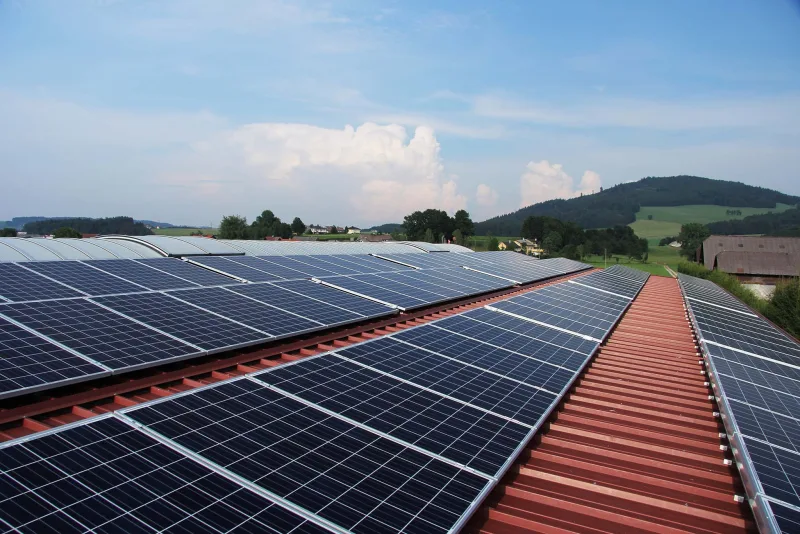
A commercial solar installation

Half-hourly load modelled in PV*SOL before anything is specified.

The standards the design is held to

A commercial design is assured by a stack of named standards rather than a single badge. Each one governs a different part of the work, and together they are how a system over 50 kWp is signed off without MCS.

  • BS 7671 governs the electrical installation: the wiring, the earthing and the protection.
  • IEC 62446-1 governs commissioning and inspection: the documentation and tests a PV system is handed over against.
  • A G99 connection agrees with your Distribution Network Operator how the array connects and exports safely.
  • CDM 2015 governs how the project is planned and built so the work is safe and properly co-ordinated.
  • A JCT or NEC contract holds the parties to all of the above, with a defects period that survives switch-on.

The component standards we hold

Standards only matter if they reach the parts that fail first. The detail that decides whether a system runs for its design life is in the joints, the protection and the cable, so we hold a fixed specification at component level.

Every joint we make on site uses a sealed connector rather than a taped or improvised one, because a wet or corroded DC joint is a common cause of underperformance and fire risk on older arrays. Earthing and surge protection are specified to BS 7671, so the array is protected against faults and transients rather than left exposed. Cable is sized and rated for the design life of the system rather than the minimum that passes on the day, so it is not carrying avoidable losses or running hot later in its design life.

How the design is signed off

The discipline that matters most is the one that stops a job marking its own homework. On every install, our Qualifying Supervisor reviews the install report before the work is signed off. The Qualifying Supervisor is a fully AM2-trained electrician, the practical assessment that confirms an electrician can install and test to the standard, so the review is a competent second set of eyes rather than a rubber stamp.

The point is simple. The installer never signs himself off. The engineer who built the job and the engineer who approves it are not the same person, which is how a defect gets caught on paper before it becomes a fault on the array.

Engineer-led, no invented metric

We describe the design in terms of the standards it meets and the discipline that signs it off rather than a headline number we cannot stand behind. There is no fabricated uptime figure or service-level promise here, because an honest engineering claim is one you can name the standard for.

That engineer-led approach runs across the group of three companies. Alectrona installs to this design standard, Sentinel is a free independent monitoring app so you can see the asset for yourself, and Solar Tech Support is the independent brand-agnostic diagnostics and repair arm for when something does need a hands-on fix.

How the survey feeds the engineering model

The design does not start at a desk with a satellite photo. It starts with a measured survey of your actual roof, and on a commercial array that survey is flown rather than walked. Our pilot holds an in-house A2 Certificate of Competency and a General Visual Line of Sight operational authorisation, and the drone work is fully insured, so we capture the roof without standing a team on a fragile or live surface to do it. That matters to the design because the model is only as honest as the data it is built on.

The flight produces three things the engineering depends on. A measured layout of the usable roof area, so the panel count and array geometry are drawn against real dimensions rather than an estimate. A shading read across the day, so strings are arranged to keep a shaded module from dragging its neighbours down. And, where a thermal pass is flown, a heat picture that surfaces a delaminating membrane or an existing hot joint before anything new is fixed to it. The same thermographic discipline underpins the IEC 62446-1 commissioning inspection later, so the array is checked the way it was designed. The full method is set out on the 3D drone survey page.

The G99 connection and why the design waits on the offer

An array over 50 kWp cannot simply be switched on and left to export. It connects under a G99 agreement with the Distribution Network Operator, which across Yorkshire and northern Lincolnshire is Northern Powergrid. The G99 application tells the network operator how much the system will generate and export, and the operator returns a connection offer that may set an export limit, ask for additional protection, or in some cases require reinforcement before the full capacity is allowed onto the local network.

This is why the engineering design and the connection are worked in step rather than one after the other. The export limit the operator agrees feeds straight back into the inverter configuration and the array sizing, so we hold the design open until the G99 position is clear instead of installing capacity the network will not accept. It is also a real part of the programme: the turnaround belongs to the network operator rather than to us, so we lodge the application early. How that timeline runs alongside survey, design and install is covered on the how we quote page, and the export side connects to the wider economic picture set out across the commercial finance pages.

CDM 2015: how the project is planned to be built safely

A rooftop install over 50 kWp is construction work, and it falls under the Construction (Design and Management) Regulations 2015. CDM is not paperwork bolted on at the end. It assigns clear duties from the design stage, names who plans the work and who controls the site, and requires that the way the system will be built and later maintained is thought through before anyone goes up. For a finance or facilities director that is the difference between a co-ordinated project and an uninsured liability on your roof.

In practice it means the access, the fall protection, the isolation procedure and the sequence of work are designed alongside the electrical system rather than improvised on the day, and that the project hands over a health and safety file the building keeps. That file tells whoever maintains the array in five years' time how it was built and how to work on it safely, which is the same continuity the operations and maintenance service relies on. CDM, the named standards and the JCT or NEC contract are the three things that together stand in for MCS at this scale.

FAQ

Design and engineering: common questions

By a named engineering stack rather than a single certificate. The installation is designed to BS 7671, commissioned and inspected to IEC 62446-1, connected under a G99 agreement with your network operator, and built under CDM 2015. A JCT or NEC contract holds the parties to all of it, with a defects period that survives switch-on. MCS is the domestic scheme and is not the trust signal at this scale.

On every install, the Qualifying Supervisor reviews the install report before the work is signed off. They are a fully AM2-trained electrician, so the review is a competent second check rather than a formality. The discipline this enforces is that the installer never signs himself off: the person who built the job and the person who approves it are different people, which catches a defect on paper before it becomes a fault on the array.

Every site-made joint uses a sealed connector, because a wet or corroded DC joint is a common cause of underperformance and fire risk on older arrays. Earthing and surge protection are specified to BS 7671. Cable is sized and rated for the design life of the system rather than the minimum that passes on the day, so it is not running hot or carrying avoidable losses later in its life.

No invented one. We describe the design by the standards it meets and the sign-off discipline behind it, because that is what you can verify. For any economic figure such as payback or bill reduction, we use only our published, guarded wording and confirm it against a model of your own site rather than quoting a generic number.

It is survey-led, so the honest answer is that it depends on your roof and your network position, and we set the programme out once we have seen the site rather than quoting a fixed number we cannot stand behind. The drone survey and the engineering design itself move quickly once we are instructed. The part that genuinely takes time sits outside our hands: the G99 connection offer is returned by the Distribution Network Operator, Northern Powergrid across Yorkshire and northern Lincolnshire, and that turnaround belongs to them rather than to us.

Because of that, we lodge the G99 application early and work the design in step with it, so the engineering is ready when the connection position is confirmed rather than starting from cold afterwards. The full sequence of survey, design, connection and install is laid out on the how we quote page.

There is no honest fixed price to publish, because the engineering is priced against your own roof and the standards the install is delivered to rather than a published rate. What carries cost is the electrical design to BS 7671, the commissioning regime to IEC 62446-1, the G99 connection work with Northern Powergrid, the project run under CDM 2015, and the JCT or NEC contract that holds the parties to all of it. We scope those against your site and price the design as part of the wider quote rather than dropping a template figure on a page.

How commercial costs are built up, and why a like-for-like comparison has to hold the scope constant, is set out in the commercial solar cost guide, and the funding routes sit under commercial finance. Any payback or return on the outlay is modelled, not promised, and any capital-allowances treatment is a mechanism to confirm with your accountant.

Get a commercial quote

Start where every good project starts: the survey.

We fly your roof, model your half-hourly load, and come back with a designed system and a price you can take to the board. Engineer-led from the first call to the final handover, and the years after it.

  • On-site 3D drone survey, fully insured in-house pilot
  • Half-hourly load modelled in PV*SOL before anything is specified
  • Engineer-led, assured to the non-MCS standard (CDM 2015)