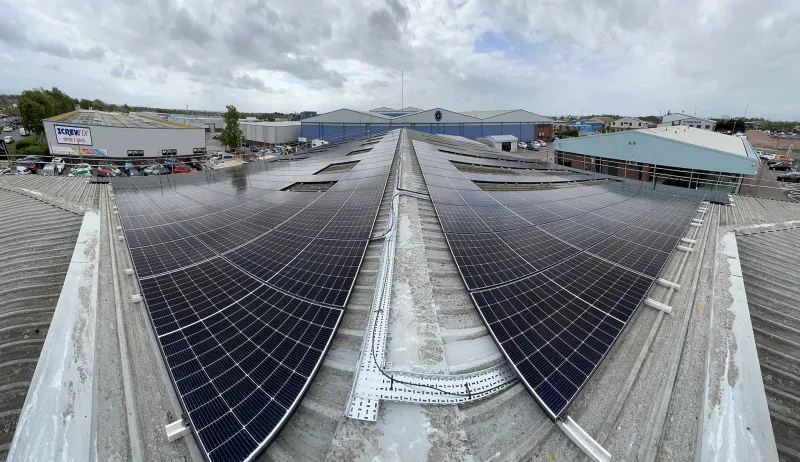
What set Alectrona apart was the documented design pack. We had quotes from three installers, but only Alectrona handed us a full set of drawings, a single-line diagram and a design referencing BS 7671 and the G99 connection process. The whole thing read like an engineering submission rather than a sales brochure. Our M&E consultant reviewed it and signed it off without a single query. That gave the board the confidence to release the capital.
Alectrona
AftercareO&M contracts
Two O&M quotes can carry the same headline rate and mean completely different things. This is the anatomy of a commercial solar maintenance contract, so you can read one and tell a thin agreement from a real one before you sign it.
- Engineer-led, every step
- In-house insured drone survey
- Over 50 kWp, outside MCS
The feedback we work to earn
These are representative example reviews, not yet-collected customer feedback. They are written to illustrate the kind of feedback Alectrona aims to earn and are shown as design placeholders while we gather and verify reviews from our first commercial clients. Alectrona is the commercial solar trading brand of RVTC LTD.
Other firms priced our roof off a satellite image and a desktop guess. Alectrona flew an in-house drone survey, fully insured and flown by a qualified commercial drone pilot, and built a 3D model of the actual roof. It picked up plant, vents and a parapet line that a flat aerial photo had completely missed, which changed the panel layout. I would rather find that out at design stage than on the day the scaffold goes up. The accuracy of that survey is the reason I trusted everything that followed.
As a finance director I was wary of being oversold a system bigger than we could use. Alectrona modelled the array against our actual half-hourly consumption data rather than an annual total, so it is sized to what we genuinely draw on site during the day. They were honest that exporting surplus is worth far less than self-consumption, and built the design around that. The capital case stacked up because the engineering was honest, not because the numbers were inflated.
We were undecided between buying outright, leasing and a PPA. Alectrona laid out all three side by side with the pros and cons of each against our balance sheet, instead of pushing the one that pays them best. They were clear about where a PPA makes sense and where capex wins, and pointed us at our own accountant for the tax treatment. The survey and design took a little longer than I expected, but the thoroughness was worth the wait. Genuinely consultative.
The install crew were tidy and well run, and worked to a clear CDM 2015 plan with a proper site induction and RAMS. What impressed me most was the handover. We received a full commissioning pack with the IEC 62446-1 test results, certification, O&M documentation and an as-built record for our maintenance team. As the people who have to live with this asset for the next twenty years, having that paperwork in order matters enormously. Nothing was left loose.
I expected the usual hard sell and got the opposite. After surveying our site Alectrona told us one roof section was not worth covering because of shading, and that a smaller, well-sited array was the better investment than filling every square metre. There was no commission-driven upselling and no pressure. For a six-figure capital project, that straight talk is exactly what you want from the people advising you. We will be using them again on our second site.
- Read the scope Monitoring, inspection, testing, cleaning where it pays, fault response and reporting, each named in the clause
- Preventive vs corrective Know which work the fee covers and which is charged on top, in writing
- Reporting A written condition and performance report after every scheduled visit
- Response terms Agreed per contract for your asset, never a published uptime or time promise
- Pricing Scoped to your system and set per contract, not from a published per-kWp rate
An operations and maintenance contract is the agreement that keeps a commercial solar asset performing after the installer has gone home. The trouble is that the words "O&M contract" cover everything from a once-a-year photo of the inverter to a properly scoped programme of inspection, monitoring and guaranteed response. The label tells you almost nothing. The clauses tell you everything.
This page is a buyer's guide to those clauses. It sets out what a sound contract actually contains, the difference between the preventive work that stops faults and the corrective work that fixes them, the reporting and response terms worth checking, and why the scope should be cut to your specific asset rather than dropped in from a template. If you want the overview of the service itself, who inspects, who monitors and who repairs, that sits on our operations and maintenance page. This page is about reading the agreement.
Half-hourly load modelled in PV*SOL before anything is specified.
What the scope clause should actually list
The scope is the part of the contract that earns its keep, and a vague one is where disputes are born. A clause that promises "regular maintenance and monitoring" has told you nothing you can hold anyone to. A sound scope names the work, names how often, and names what lands on your desk afterwards.
For a commercial PV asset over 50 kWp, read the scope for these items by name, and treat their absence as a question rather than an assumption.
- Remote monitoring: what is watched, how alerts are raised, and who acts on them. Monitoring that nobody is contracted to respond to is only a dashboard; a service is someone contracted to act on the alerts.
- Scheduled inspection: a physical site visit on a stated frequency, covering the panels, cabling, isolators, inverters, earthing and any battery units, because those faults are found by hand rather than by a portal.
- Electrical testing: the periodic verification the asset needs to stay safe and compliant, referenced to the standard rather than left implied.
- Cleaning, where it pays: not as a reflex, but assessed against soiling and access, so you are not paying to clean a roof that rain keeps clean.
- Fault response: what happens when something breaks, on what terms, and at whose cost.
- Performance reporting: a written record after each visit, so the asset is documented and you can see what was done.
Preventive versus corrective: the split that defines the contract
Every O&M contract is a blend of two kinds of work, and understanding the split is how you read what you are really buying. Preventive maintenance is the planned work that stops faults happening: the scheduled inspections, the testing, the settings checks, the cleaning where it earns its place. It is predictable, it is on a calendar, and it is what a fixed annual fee normally covers.
Corrective maintenance is the work that fixes a fault once it has occurred: diagnosing a failed inverter, replacing a damaged isolator, tracing a string that has dropped offline. This is where contracts diverge sharply. Some include corrective labour up to a point and charge parts and major component replacement separately. Others bundle a diagnostic visit and quote the repair. Neither is wrong, but you need to know which you have signed, because an agreement that looks cheap on the preventive line can carry an open-ended corrective bill behind it.
The question to put to any provider is simple: what does the fee cover, and what is charged on top. A good contract answers it plainly in writing. Where a fault needs a genuine repair, ours routes to brand-agnostic diagnostics through the group's independent repair arm, so the system is fixed by people set up to work on equipment they did not install.
Reporting and response terms worth reading closely
Two clauses separate a contract you can manage an asset against from one you simply pay. The first is reporting. After each scheduled visit you should receive a written report that records the system's condition, the generation against what was expected, anything found, and a prioritised list of what needs doing and how soon. That report is what lets a finance director see the truth about the asset, and it doubles as the evidence of professional maintenance that insurers and landlords often ask for.
The second is response. A serious contract defines what happens when a fault is raised: how a fault is triaged, the order in which work is prioritised, and the route from alert to attendance. The honest way to read these terms is as commitments agreed for your asset and written into your agreement, not as a published promise lifted off a marketing page. Be wary of a headline uptime percentage or a fixed response time advertised before anyone has seen your site, because a number that has not been scoped to your asset is a number that may not survive contact with it. What matters is that the response terms are named, agreed and yours.
Scope, warranty and the price behind the rate
The right contract is the one cut to your specific asset, which is why a template rate tells you so little. A single-inverter rooftop array on an easy roof, a multi-inverter site with battery storage, and a system spread across several buildings are three different maintenance problems. The number of inverters, the presence and chemistry of a battery, the roof access, the export arrangement under the G99 connection and the age of the kit all change what the contract needs to cover and how often.
Warranty obligations are the part buyers most often miss. Manufacturer warranties on panels, inverters and batteries usually carry conditions: maintenance carried out and recorded, settings kept within stated limits, faults reported within a window. An O&M contract that does not keep those conditions met can quietly cost you a warranty claim years later. A scope built around your asset keeps the maintenance the warranty depends on inside the contract, rather than discovering the gap when a component fails.
All of which is why we do not publish a figure per kWp per year. A rate is only meaningful once you know what it buys, and a low number against a thin scope is more expensive than a higher one that keeps the asset performing and the warranties intact. We scope the work against your system and set the price per contract, in writing, with the scope it covers stated alongside it. The way we arrive at any commercial price is set out on how we quote, and for an existing asset a one-off performance audit is often the sensible first step.
O&M contracts: common questions
At minimum it should name remote monitoring with someone contracted to act on the alerts, scheduled physical inspection on a stated frequency, the periodic electrical testing the asset needs to stay safe and compliant, cleaning assessed where it pays rather than as a reflex, defined fault response, and a written performance report after each visit. The test of a good scope is that each item is named with a frequency and a deliverable, so you can hold someone to it. A clause that only promises "regular maintenance" has not told you what you are buying.
Preventive maintenance is the planned work that stops faults: the scheduled inspections, electrical testing, settings checks and cleaning where it earns its place. It is predictable and usually covered by a fixed annual fee. Corrective maintenance is the work that fixes a fault once it has happened, such as diagnosing a failed inverter or replacing a damaged component. Contracts treat corrective work very differently, some include the labour up to a point and charge parts separately, others quote each repair, so the single most useful question is what the fee covers and what is charged on top.
We do not publish a per-kWp figure, because a rate is only meaningful once you know what it buys, and an honest price is specific to the asset and the site. The cost is driven by the system size, the number of inverters, whether there is battery storage, the site access, the warranty conditions the contract has to keep met, and the response terms you want. We scope those against your system and set the price per contract, in writing, with the scope it covers stated alongside it, so you are comparing what the fee delivers rather than a number with no scope behind it.
Look for response terms that are named and agreed for your specific asset and written into your agreement: how a fault is triaged, how work is prioritised, and the route from alert to attendance. Treat any headline uptime percentage or fixed response time advertised before anyone has seen your site with caution, because a figure that has not been scoped to your asset may not survive contact with it. The terms that matter are the ones agreed per contract for your system, not a promise lifted from a marketing page.
The operations and maintenance page is the overview of the service: who inspects, how the system is monitored independently through Sentinel, who repairs it, and the handover, defects period and Insurance-Backed Guarantee behind it. This page is the contract anatomy, a buyer's guide to reading and judging the agreement itself, so you can tell a thin contract from a sound one before you sign. Read the overview to understand the service, and read this to understand the paperwork.
The cleanest moment to put one in place is at handover, so the contract picks the asset up the day the install is signed off and the defects liability period and any Insurance-Backed Guarantee run alongside maintenance that is actually being carried out. For an existing or recently adopted system there is no waiting for an anniversary; the contract can start once the scope is set. On term length, read three things together rather than the headline duration: the initial period, the renewal basis, and the notice you must give to end it, because an attractive rate locked to an auto-renewing multi-year term with a long notice window is a different commitment from the same rate on an annual one. Visit cadence is the other timing clause, the frequency of the scheduled inspection should be named and fixed to your asset, not left to the provider's discretion, since the warranty conditions and the periodic electrical testing both depend on the work happening on a stated schedule.
Start where every good project starts: the survey.
We fly your roof, model your half-hourly load, and come back with a designed system and a price you can take to the board. Engineer-led from the first call to the final handover, and the years after it.
- On-site 3D drone survey, fully insured in-house pilot
- Half-hourly load modelled in PV*SOL before anything is specified
- Engineer-led, assured to the non-MCS standard (CDM 2015)