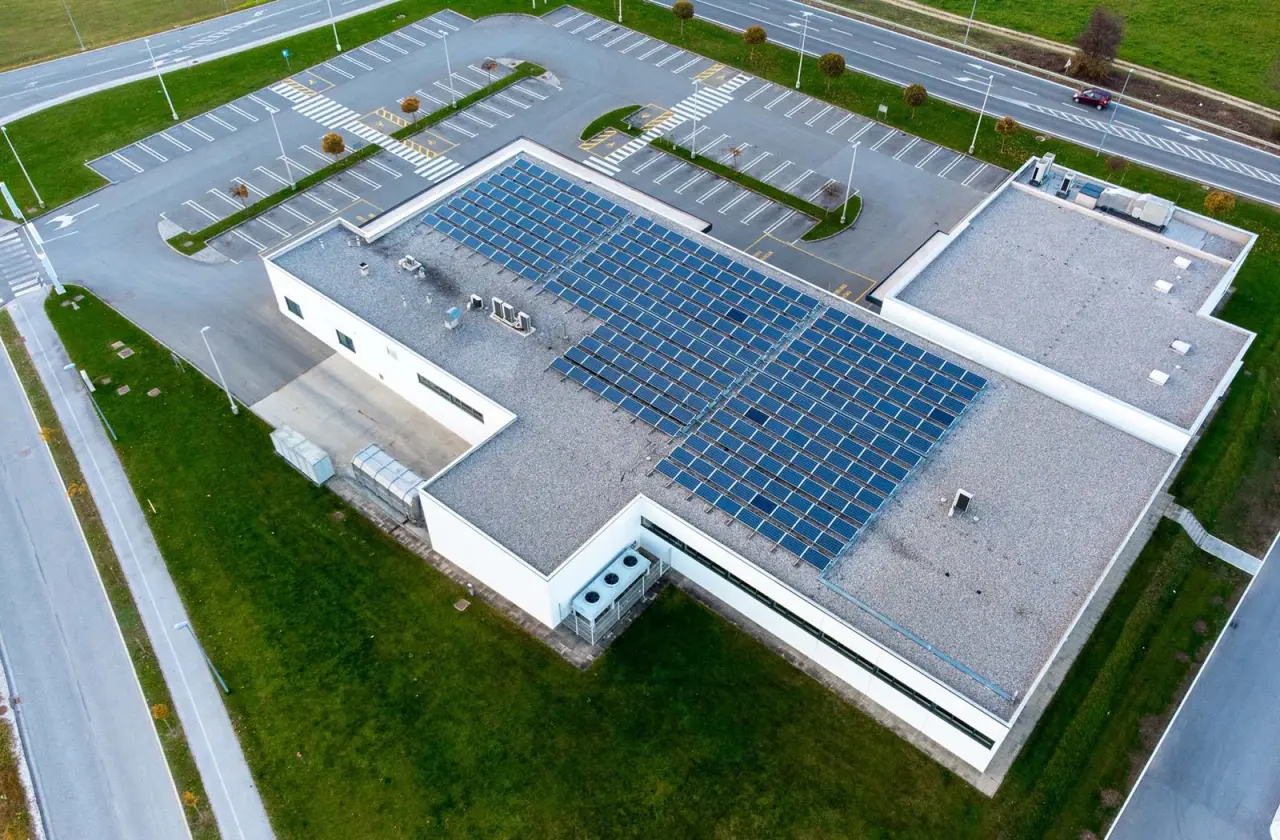
What set Alectrona apart was the documented design pack. We had quotes from three installers, but only Alectrona handed us a full set of drawings, a single-line diagram and a design referencing BS 7671 and the G99 connection process. The whole thing read like an engineering submission rather than a sales brochure. Our M&E consultant reviewed it and signed it off without a single query. That gave the board the confidence to release the capital.
Alectrona
Commercial guideWhat is a G99 application, and why does your system need one?
A commercial solar array connects to the grid under the ENA Engineering Recommendation G99, the framework your Distribution Network Operator uses to assess and agree how a larger generator can connect and export safely.
- Commercial scale, over 50 kWp
- On-site 3D drone survey + PV*SOL
- Engineer-led, outside MCS
The feedback we work to earn
These are representative example reviews, not yet-collected customer feedback. They are written to illustrate the kind of feedback Alectrona aims to earn and are shown as design placeholders while we gather and verify reviews from our first commercial clients. Alectrona is the commercial solar trading brand of RVTC LTD.
Other firms priced our roof off a satellite image and a desktop guess. Alectrona flew an in-house drone survey, fully insured and flown by a qualified commercial drone pilot, and built a 3D model of the actual roof. It picked up plant, vents and a parapet line that a flat aerial photo had completely missed, which changed the panel layout. I would rather find that out at design stage than on the day the scaffold goes up. The accuracy of that survey is the reason I trusted everything that followed.
As a finance director I was wary of being oversold a system bigger than we could use. Alectrona modelled the array against our actual half-hourly consumption data rather than an annual total, so it is sized to what we genuinely draw on site during the day. They were honest that exporting surplus is worth far less than self-consumption, and built the design around that. The capital case stacked up because the engineering was honest, not because the numbers were inflated.
We were undecided between buying outright, leasing and a PPA. Alectrona laid out all three side by side with the pros and cons of each against our balance sheet, instead of pushing the one that pays them best. They were clear about where a PPA makes sense and where capex wins, and pointed us at our own accountant for the tax treatment. The survey and design took a little longer than I expected, but the thoroughness was worth the wait. Genuinely consultative.
The install crew were tidy and well run, and worked to a clear CDM 2015 plan with a proper site induction and RAMS. What impressed me most was the handover. We received a full commissioning pack with the IEC 62446-1 test results, certification, O&M documentation and an as-built record for our maintenance team. As the people who have to live with this asset for the next twenty years, having that paperwork in order matters enormously. Nothing was left loose.
I expected the usual hard sell and got the opposite. After surveying our site Alectrona told us one roof section was not worth covering because of shading, and that a smaller, well-sited array was the better investment than filling every square metre. There was no commission-driven upselling and no pressure. For a six-figure capital project, that straight talk is exactly what you want from the people advising you. We will be using them again on our second site.
- Framework ENA Engineering Recommendation G99
- Applies to Commercial generators connecting and exporting to the DNO network
- Assessed by Your local Distribution Network Operator (DNO)
- Smaller route G98 covers smaller, lighter-touch connections; a commercial array sits under G99
- Export limiting Handled under the related recommendation G100
G99 application
OrientationThis is a plain-English orientation for a commercial buyer, not formal grid-connection advice; we confirm the specifics for your site.
Any solar system that connects to the public grid has to be agreed with the local Distribution Network Operator, the company that owns and runs the wires in your area. The framework that governs that agreement for a commercial-scale array is the Energy Networks Association Engineering Recommendation G99.
G99 matters to a finance or facilities director for one practical reason: it sits on the critical path. The connection terms the DNO offers can shape what the system is allowed to export, how the project is sequenced, and in some cases the cost of getting it energised. Understanding the process early means it is planned for rather than discovered late. This page is a plain-English orientation for a commercial buyer, not formal grid-connection advice. We confirm the specifics for your site.
What G99 actually is
G99 is the national Engineering Recommendation that sets out how generation equipment connects to the distribution network. When you install a solar array that can feed power back into the grid, the inverters become a generator in the eyes of the network, and the DNO needs to be satisfied that connecting them will not disturb voltage, protection or stability for everyone else on the local network.
The recommendation defines the technical requirements the equipment must meet, the protection settings that govern how it behaves during a grid fault, and the application route used to get the connection agreed. For a commercial array it is a formal application that is assessed and approved before the system is allowed to export, rather than a notification made after the fact.
Why a larger system needs a full application
The ENA framework is tiered by the size of the generator. Small installations can often use the lighter G98 route, where a compliant unit is connected and the DNO is simply notified. A commercial array is well above that scale, so it falls under G99 and requires a full application that the DNO assesses on its merits before connection. This is a grid-connection threshold, and it is separate from any product certification scheme.
The difference is that the DNO does real engineering work on your application. It looks at the capacity of the local network, the existing load and generation already connected nearby, and whether the network can accept your export without reinforcement. The outcome is a connection offer with defined terms, which is why this step is started early rather than treated as a formality at the end.
Where G100 fits
There are two related questions in any grid application. The first is whether you can connect the generator at all. The second is how much power you are permitted to push back onto the network, the export limit.
Where a site wants to generate for its own use but the network cannot accept full export, the system can be set up with an export limitation scheme under the related ENA Engineering Recommendation G100. In plain terms, the inverters are constrained so the system never exports more than an agreed amount, which can make a connection viable where an unlimited export offer would trigger costly network reinforcement. For a business that self-consumes most of its generation, an export-limited connection is often a sensible design rather than a compromise.
How this sits in the project
The G99 application is part of the engineering work on a commercial project. It is not paperwork done in isolation. The design, the inverter selection, the protection settings and the export strategy all feed the application, and the DNO's response can feed back into the design. The two are worked together.
Timescales and any connection costs depend on the DNO, the capacity of your local network and the size of the system, so they are confirmed for your specific site rather than quoted generically. We handle the application and the technical correspondence with the network operator as part of delivering the system. Treat this guide as orientation rather than formal advice; we confirm the details that apply to your site.
What does a G99 application actually involve, step by step?
A G99 application is a structured technical submission to the Distribution Network Operator, made up of several documents rather than a one-page form. The DNO needs enough technical detail to model how your generator behaves on the local network before it issues a connection offer, so the documentation matters as much as the equipment.
For a commercial array the package typically describes the site and its existing supply, the rated capacity of the generation, the make and model of the inverters with their type-test or compliance evidence, a single-line electrical diagram, and the proposed loss-of-mains and protection arrangements. ENA Engineering Recommendation G99 sets out the data the network operator expects, and missing or inconsistent information is one of the most common reasons an application stalls early. Getting it right first time keeps the assessment moving.
Once submitted, the DNO carries out its network study and returns a connection offer with defined terms, which the applicant then accepts before the work proceeds. After installation the system is commissioned and the protection settings are demonstrated, and the network operator is given the evidence it needs to confirm the connection is energised on the agreed basis. We assemble the technical pack and manage that correspondence as part of the engineering described in our design and engineering stage, so the application reflects the system that is actually being built. Treat the specifics here as orientation; confirm the current data requirements and route with your network operator for your site.
Which generator type does a commercial solar array fall under?
G99 does not treat every generator the same way. The recommendation groups generation into types broadly by capacity and connection voltage, with progressively more onerous requirements as the generator gets larger, because a bigger machine has more influence on the network around it. Where your array sits in that banding shapes the depth of the assessment and the protection it must carry.
Most commercial rooftop arrays connecting at low voltage sit in the lower G99 bands, where the requirements are well established and the route is familiar. A very large ground-mounted scheme, or one connecting at high voltage, can fall into a higher type with additional fault ride-through and control expectations. The practical point for a buyer is that the classification is set by the technical parameters of your specific connection, so it is confirmed against the current recommendation rather than assumed. If you are weighing a field-scale scheme, the wider considerations are covered in our guide on ground-mount planning, and the network capacity that drives many of these outcomes is explained in the grid connection queue.
This is why the application and the design are worked together. The inverter selection, the export strategy and the protection philosophy all influence which requirements apply, and the network operator's response can feed back into any of them. We confirm the applicable type and obligations for your site rather than working from a generic assumption.
How does G99 connect to protection settings and BS 7671?
The behaviour the DNO cares about most under G99 is what the generator does when the grid is disturbed. The inverters must disconnect cleanly if the network fails, hold within agreed voltage and frequency windows, and avoid energising a part of the network that should be dead. These are the loss-of-mains and protection functions, and G99 defines the settings and the way they are demonstrated.
Those grid-interface settings work together with the general electrical installation standard. The wiring, isolation, earthing and labelling of the system are designed and verified to BS 7671, the IET Wiring Regulations, with the relevant guidance for solar PV installations, while G99 governs the interface with the public network specifically. A compliant commercial array satisfies both: the installation standard for the asset on your side of the meter, and the Engineering Recommendation for how it connects to and behaves on the DNO's network.
For larger or higher-type connections the network operator may require commissioning evidence or a witnessed demonstration that the protection performs as declared before the system is allowed to run unrestricted. We specify the protection to the recommendation, set it to the values the DNO agrees, and provide the commissioning record as part of handover, so the as-built system matches what was applied for. The current settings and any witness-test expectation are confirmed with your network operator, since these are reviewed periodically and we do not state an unverified figure as settled.
How does the G99 application fit the wider connection and metering journey?
The G99 application is one step in a connected sequence, and reading it in isolation is where programmes slip. The connection it agrees, the export terms it sets and the metering that follows all influence the commercial case for the system, so they are planned together rather than discovered one after another.
Where the network cannot accept full export, the application is often paired with an export limitation scheme under the related ENA Engineering Recommendation G100, covered in our guide on export limitation and G100. The terms the offer carries, and any charges the network applies, sit within the wider framework explained in network charges, overseen at industry level by the energy regulator Ofgem. If the system is to be paid for the units it does send back, that revenue runs through the metering and the export arrangement set out in SEG and export, which depends in turn on the right half-hourly metering being in place.
Because all of this is set in motion by the connection, the application belongs at the front of the project rather than the end. We frame the connection route, the export strategy and the metering implications during the feasibility and design work so the grid position is understood before capital is committed. This page is orientation for a commercial buyer, not formal grid-connection advice; we confirm the specifics that apply to your site with your network operator.
Past the guide, this is how your figure actually gets set.
-
Survey On-site 3D drone survey
Our own insured pilot flies your roof and captures the real geometry and shading, so the design starts from your building instead of a satellite guess.
Booked to suit your operating hours
-
Model PV*SOL design and proposal
We model the array in bankable-grade software, size it around your daytime load, and set out generation, savings and payback across three funding routes.
Modelled, not promised
-
Install Engineered and installed
Designed and installed to BS 7671, commissioned to IEC 62446-1, connected under G99 and run under CDM 2015. Alectrona is typically the Principal Contractor.
Outside MCS, assured by the non-MCS stack
-
Aftercare Operations and maintenance
A 12-month defects period backed by an Insurance-Backed Guarantee, then ongoing operations and maintenance so the asset keeps earning for its full working life.
Kept performing, year on year
Last updated June 2026
G99 application: common questions
Both are ENA Engineering Recommendations for connecting generation to the grid, tiered by the size of the generator. G98 is the lighter route for smaller installations, where a compliant unit is connected and the network operator notified. A commercial array is well above that scale, so it falls under G99, which requires a full application assessed and agreed by the DNO before the system can export.
The DNO looks at whether the local network can accept your system. That means the spare capacity on the network near your site, the load and generation already connected, and whether your export would need any reinforcement to the wires or equipment. The outcome is a connection offer setting out the terms on which you can connect and how much you are permitted to export.
G100 is the related recommendation that covers export limitation. It allows a system to be constrained so it never exports more than an agreed amount onto the network. It is useful where a site self-consumes most of its generation, or where an unlimited export connection would be expensive or unavailable, because it can make a connection viable without full network reinforcement. Whether it suits your site is part of the design work, which we confirm for your specific site.
That depends on the DNO, the capacity of your local network and the size of the system, so we confirm the indicative timescale for your specific site rather than quote a generic figure. The application sits on the project's critical path, so it is started early and worked alongside the design rather than left to the end.
Yes. The G99 application and the technical correspondence with the network operator are part of delivering the system. The design, protection settings and export strategy all feed the application, and the DNO's response feeds back into the design, so the two are managed together rather than handed to you.
The application work is part of the engineering we deliver rather than a bolt-on line, but the network operator can apply its own connection or assessment charges, and any reinforcement it quotes carries a real cost set by the DNO. Those figures depend on your local network, so they are modelled before we quote rather than priced generically. We give you the connection position in plain terms, and our wider commercial solar cost guide explains how it sits in the overall budget. The first feasibility read is free.
Get the numbers for your roof.
A guide can only take you so far. The figure you get is modelled from your own half-hourly load and a system sized from the on-site drone survey. No obligation, and systems this size sit outside the domestic MCS scheme, so the assurance is the engineering stack.
- On-site 3D drone survey, fully insured in-house pilot
- Half-hourly load modelled in PV*SOL before anything is specified
- Engineer-led, assured to the non-MCS standard (CDM 2015)
- Capex, lease-purchase or PPA, whichever suits you