What set Alectrona apart was the documented design pack. We had quotes from three installers, but only Alectrona handed us a full set of drawings, a single-line diagram and a design referencing BS 7671 and the G99 connection process. The whole thing read like an engineering submission rather than a sales brochure. Our M&E consultant reviewed it and signed it off without a single query. That gave the board the confidence to release the capital.
Alectrona
Commercial solar by sector · over 50 kWp · outside MCSYour roof is not the question. Your load shape is.
A distribution shed, a cold store and an office block can carry near-identical roofs and return completely different numbers. What separates them is the load underneath: when the electricity is actually used, and how much of the generation is consumed on site rather than exported for a fraction of the price.
So we start with the sector and the demand profile, not the panel count. Find yours below.
- Sized to your half-hourly load, not a roof estimate
- 24 sectors, each with its own demand shape
- On-site 3D drone survey + PV*SOL on every quote
The feedback we work to earn
These are representative example reviews, not yet-collected customer feedback. They are written to illustrate the kind of feedback Alectrona aims to earn and are shown as design placeholders while we gather and verify reviews from our first commercial clients. Alectrona is the commercial solar trading brand of RVTC LTD.
Other firms priced our roof off a satellite image and a desktop guess. Alectrona flew an in-house drone survey, fully insured and flown by a qualified commercial drone pilot, and built a 3D model of the actual roof. It picked up plant, vents and a parapet line that a flat aerial photo had completely missed, which changed the panel layout. I would rather find that out at design stage than on the day the scaffold goes up. The accuracy of that survey is the reason I trusted everything that followed.
As a finance director I was wary of being oversold a system bigger than we could use. Alectrona modelled the array against our actual half-hourly consumption data rather than an annual total, so it is sized to what we genuinely draw on site during the day. They were honest that exporting surplus is worth far less than self-consumption, and built the design around that. The capital case stacked up because the engineering was honest, not because the numbers were inflated.
We were undecided between buying outright, leasing and a PPA. Alectrona laid out all three side by side with the pros and cons of each against our balance sheet, instead of pushing the one that pays them best. They were clear about where a PPA makes sense and where capex wins, and pointed us at our own accountant for the tax treatment. The survey and design took a little longer than I expected, but the thoroughness was worth the wait. Genuinely consultative.
The install crew were tidy and well run, and worked to a clear CDM 2015 plan with a proper site induction and RAMS. What impressed me most was the handover. We received a full commissioning pack with the IEC 62446-1 test results, certification, O&M documentation and an as-built record for our maintenance team. As the people who have to live with this asset for the next twenty years, having that paperwork in order matters enormously. Nothing was left loose.
I expected the usual hard sell and got the opposite. After surveying our site Alectrona told us one roof section was not worth covering because of shading, and that a smaller, well-sited array was the better investment than filling every square metre. There was no commission-driven upselling and no pressure. For a six-figure capital project, that straight talk is exactly what you want from the people advising you. We will be using them again on our second site.
Self-consumption is where commercial solar earns. Power used on site is worth far more than power exported, so the load shape decides the return.
Generation is worth most when you use it yourself. Every unit consumed on site offsets an expensive import unit; every unit exported is paid far less. So the value of a commercial system tracks how well its output lines up with the building’s demand through the day, not how many panels the roof can hold.
That match is a property of the sector. Refrigeration and continuous process load run through the working day and self-consume almost everything. A warehouse with shift charging and conveyors uses a high share. An office or a school self-consumes well on weekday daytime but exports more at weekends and over holidays. None of this is guesswork, but it does vary site to site, which is why we model the real load before we size anything.
Wherever the daytime load is, that is where it earns.
Find your sector, and how its load shape reads.
Sectors are listed in the order we build them, warehousing and logistics first. Each card carries an indicative size band for orientation only and a straight read on how that sector tends to self-consume. The real numbers come from the survey and the load model, never from this page.
Industrial & logistics
The biggest, simplest roofs in the region, and the heaviest, steadiest daytime loads. This is where self-consumption runs highest and commercial solar earns most.
-
Warehousing & logistics
Most common250 kWp – 1 MWp+ (large, unshaded flat or shallow-pitch roofs) Indicative band, not a quoteLarge daytime loads from MHE charging, conveyors, lighting and HVAC line up well with generation, so a high share is self-consumed rather than exported.
The biggest, simplest commercial roofs in the region. M62, M1 and M18 distribution sheds give the most usable, unshaded array area per site.
Warehousing & logistics in detail -
Industrial units
50–250 kWp per unit (often multi-let estates) Indicative band, not a quoteMixed light-industrial occupiers run steady daytime load; older mill and post-war stock can carry lower structural loading, so the survey checks the roof before sizing.
Yorkshire has dense multi-let industrial estates and converted mill stock. Many units suit a right-sized array once a structural survey confirms the roof.
Industrial units in detail -
Manufacturing
150 kWp – 1 MWp+ (large single-occupier roofs) Indicative band, not a quoteContinuous process and machinery load through the working day gives one of the highest self-consumption profiles of any sector, so very little is exported.
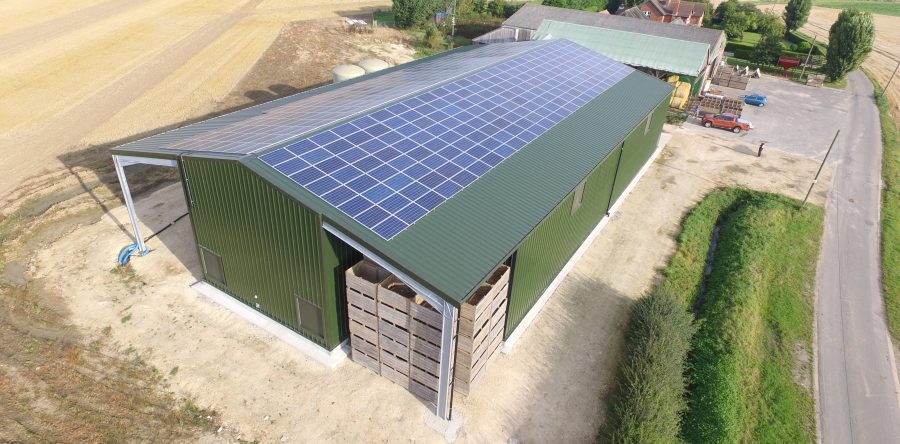
High, continuous electricity demand makes manufacturing one of the strongest cases for commercial solar. Yorkshire is a major manufacturing region.
Manufacturing in detail -
Cold storage
150 kWp – 1 MWp+ (large refrigerated sheds) Indicative band, not a quoteRefrigeration runs continuously and peaks in summer alongside generation, giving the highest self-consumption of any sector, so almost nothing is exported.
Round-the-clock refrigeration load means the highest self-consumption of any sector, and the summer demand peak lines up with peak solar generation.
Cold storage in detail -
Food & drink processing
150 kWp – 1 MWp+ (large process facilities) Indicative band, not a quoteProcess heat, refrigeration and continuous production lines draw heavy daytime load, so a high share of generation is self-consumed.
Energy-intensive production lines and refrigeration self-consume well. York and the Humber hold some of the UK largest food-manufacturing sites.
Food & drink processing in detail -
Agriculture
50–500 kWp (barns, grain stores, poultry sheds) Indicative band, not a quoteSelf-consumption varies by enterprise: grain drying, milking and poultry sheds give steady load, while arable buildings may export more, so sizing follows the half-hourly profile.
Large, simple farm-building roofs and rising on-farm electricity costs. The Vale of York, Selby and East Riding hold productive arable land with extensive roof stock.
Agriculture in detail -
Data centres
indicative 250 kWp+ (rooftop offsets only a fraction of IT load) Indicative band, not a quoteRound-the-clock IT and cooling load means whatever is generated is self-consumed, though rooftop solar offsets only a share of the very high total demand.
Constant, very high electricity demand self-consumes everything generated. Rooftop solar is a partial offset and a visible sustainability commitment.
Data centres in detail -
Water & utilities
indicative 250 kWp – 1 MWp+ (treatment works, pumping stations, large land area) Indicative band, not a quoteContinuous pumping, aeration and treatment load runs day and night, so self-consumption is among the highest of any sector and very little is exported.
Water and wastewater sites carry a heavy, constant process load that self-consumes almost everything generated, and many hold large roof or land area.
Water & utilities in detail -
Horticulture
indicative 100–500 kWp (glasshouse and packhouse roofs) Indicative band, not a quoteGlasshouse lighting, climate control and packhouse refrigeration draw a heavy, often year-round load that self-consumes a high share of generation.
Controlled-environment growers and packhouses run energy-intensive lighting and climate load, a stronger and steadier case than broadacre farm buildings.
Horticulture in detail
Land, public & community
Farm buildings, schools, care settings and faith buildings. Occupancy patterns differ widely here, so sizing and storage follow the real timetable of each site.
-
Schools & academies
50–250 kWp per site (often portfolio across a MAT) Indicative band, not a quoteTerm-time weekday daytime use self-consumes well; holidays and weekends export more, so battery storage or a portfolio approach across a multi-academy trust improves the match.
Weekday daytime occupancy, large flat roofs and a sustainability mandate. Multi-academy trusts can roll a single approach across an estate.
Schools & academies in detail -
Healthcare & care homes
50–250 kWp per site Indicative band, not a quoteContinuous 24/7 occupancy with heating, hot water and laundry load gives steady self-consumption across the day and into the evening.
Round-the-clock occupancy means generation is used on site, not exported, and resilience matters where vulnerable residents depend on power.
Healthcare & care homes in detail -
Churches & faith buildings
indicative 50–100 kWp (large roof area, lower load) Indicative band, not a quoteOccupancy is concentrated around services and events, so daytime self-consumption is modest; a faith building may export more, which sizing and tariff choice should reflect.
Large, prominent roofs and a stewardship motive. Listed status and conservation constraints must be checked, as listed buildings sit outside permitted development.
Churches & faith buildings in detail -
Sports venues
indicative 50–250 kWp (stands, clubhouses, leisure blocks) Indicative band, not a quoteMatch-day peaks and floodlighting fall outside generation hours, but day-to-day clubhouse, gym and catering load self-consumes a useful share. Carport canopies add array area.
Large grandstand and clubhouse roofs plus car-park canopy potential. A visible commitment that suits clubs and community sports venues.
Sports venues in detail -
NHS hospitals
indicative 250 kWp – 1 MWp+ across a hospital estate Indicative band, not a quoteA hospital runs a large 24/7 critical load across many buildings, so generation is used on site continuously and resilience is part of the case.
Large multi-building estates with round-the-clock demand and a net-zero NHS mandate. Public-sector decarbonisation funding can apply where eligible.
NHS hospitals in detail -
Universities & colleges
indicative 250 kWp – 1 MWp+ across a campus estate Indicative band, not a quoteCampus teaching and research load runs through the working day across many buildings, self-consuming well, and an estate-wide rollout improves the match.
Estate-wide multi-building campuses with daytime load and sustainability targets. Salix and public-sector funding can apply, and a PPA suits a capital-constrained estate.
Universities & colleges in detail -
Public sector & councils
indicative 100 kWp – 1 MWp+ across a council estate portfolio Indicative band, not a quoteA council operates a varied portfolio of offices, depots, leisure centres and housing, so self-consumption varies by building and an estate approach matches generation to load.
A whole-estate decarbonisation opportunity with social-value weight. Public Sector Decarbonisation Scheme funding can apply to eligible council buildings.
Public sector & councils in detail
Commercial property
Retail, offices, hospitality and leisure. Long opening hours self-consume well, and for let property the array also improves the EPC and MEES position.
-
Retail
100–500 kWp (retail parks and superstores) Indicative band, not a quoteLong trading hours with lighting, HVAC and refrigeration give strong daytime self-consumption, highest on food and grocery formats.
Large flat retail-park and superstore roofs with long opening hours. Energy-intensive grocery and HVAC load self-consumes most of the generation.
Retail in detail -
Offices & landlords
50–250 kWp Indicative band, not a quoteWeekday office hours self-consume well; for let buildings the landlord-tenant metering split governs how the benefit is shared, which the design accounts for.
Improves the EPC and MEES position of let commercial property and answers tenant pressure for lower-carbon space. Suits landlords and owner-occupiers alike.
Offices & landlords in detail -
Hospitality
50–250 kWp (hotels, conference venues) Indicative band, not a quoteCatering, hot water, HVAC and conference load give steady daytime and evening use; venues such as Harrogate carry unusually large roofs for their footprint.
Hotels and conference venues carry high, steady energy loads and large roofs. Harrogate has an unusually dense conference and hospitality estate.
Hospitality in detail -
Leisure
50–250 kWp (leisure centres, gyms, pools) Indicative band, not a quotePools, gyms and ventilation draw heavy, continuous daytime electricity, so generation is largely self-consumed rather than exported.
Pools and gyms are among the most energy-intensive public buildings, so on-site solar offsets a large, continuous load through opening hours.
Leisure in detail -
Automotive dealerships
indicative 50–250 kWp (showroom roof plus carport canopy potential) Indicative band, not a quoteShowroom lighting and HVAC give daytime load; EV-handover charging adds demand that lifts self-consumption, with forecourt canopies offering extra array area.
Showroom roofs plus carport-canopy potential, with EV-handover charging adding on-site demand. A natural fit as dealerships electrify their forecourts.
Automotive dealerships in detail -
Service stations & forecourts
indicative 50–250 kWp (canopy and shop roof) Indicative band, not a quoteShop refrigeration, lighting and a growing EV-charging load run long hours, so on-site generation, especially from canopy solar, is largely self-consumed.
Forecourt canopies and shop roofs, with EV charging adding a large new on-site load as forecourts electrify. A natural pairing of solar, storage and charging.
Service stations & forecourts in detail -
Holiday parks
indicative 100–500 kWp (amenity blocks, reception, leisure) Indicative band, not a quoteOccupancy peaks in summer when generation also peaks, so a holiday park self-consumes well in season; amenity, catering and pool load runs through the day.
Summer peak occupancy lines up with peak solar, an unusually good seasonal match, across amenity blocks, pools and reception buildings.
Holiday parks in detail -
Student accommodation
indicative 100–500 kWp (purpose-built blocks) Indicative band, not a quoteTerm-time residential load is steady but the summer void lowers occupancy, so sizing and a battery or export route account for the seasonal dip.
Purpose-built student accommodation carries large residential blocks with a landlord decarbonisation case; the summer void is the feature the design works around.
Student accommodation in detail
The biggest flat roofs carry the biggest arrays, and the biggest daytime loads.
Commercial solar by sector: common questions
Find out how your sector stacks up.
Tell us about your building and your electricity use. We will survey the roof, model your half-hourly load in PV*SOL, and come back with an honest read on self-consumption and the right system size.
- Sized to your real half-hourly load
- Honest self-consumption split before anything is specified
- On-site 3D drone survey and PV*SOL modelling on every quote
- Capex, lease-purchase or PPA, whichever suits the business