Skip to content

Alectrona

Commercial solar by sector

Commercial solar for churches & faith buildings.

A church often has a large, prominent roof but a load concentrated around services and events, so the honest question is how much of the generation gets used on site and how much is exported.

  • Large, prominent roofs and a stewardship motive. Listed status and conservation constraints must be checked, as listed buildings sit outside permitted development.
  • Sized from your half-hourly load
  • Over 50 kWp, outside MCS
Reviews

The feedback we work to earn

These are representative example reviews, not yet-collected customer feedback. They are written to illustrate the kind of feedback Alectrona aims to earn and are shown as design placeholders while we gather and verify reviews from our first commercial clients. Alectrona is the commercial solar trading brand of RVTC LTD.

What set Alectrona apart was the documented design pack. We had quotes from three installers, but only Alectrona handed us a full set of drawings, a single-line diagram and a design referencing BS 7671 and the G99 connection process. The whole thing read like an engineering submission rather than a sales brochure. Our M&E consultant reviewed it and signed it off without a single query. That gave the board the confidence to release the capital.

Estates Manager, academy trust (Yorkshire)

Other firms priced our roof off a satellite image and a desktop guess. Alectrona flew an in-house drone survey, fully insured and flown by a qualified commercial drone pilot, and built a 3D model of the actual roof. It picked up plant, vents and a parapet line that a flat aerial photo had completely missed, which changed the panel layout. I would rather find that out at design stage than on the day the scaffold goes up. The accuracy of that survey is the reason I trusted everything that followed.

Facilities Manager, distribution centre (East Midlands)

As a finance director I was wary of being oversold a system bigger than we could use. Alectrona modelled the array against our actual half-hourly consumption data rather than an annual total, so it is sized to what we genuinely draw on site during the day. They were honest that exporting surplus is worth far less than self-consumption, and built the design around that. The capital case stacked up because the engineering was honest, not because the numbers were inflated.

Finance Director, logistics group (North West)

We were undecided between buying outright, leasing and a PPA. Alectrona laid out all three side by side with the pros and cons of each against our balance sheet, instead of pushing the one that pays them best. They were clear about where a PPA makes sense and where capex wins, and pointed us at our own accountant for the tax treatment. The survey and design took a little longer than I expected, but the thoroughness was worth the wait. Genuinely consultative.

Property Director, retail park (West Midlands)

The install crew were tidy and well run, and worked to a clear CDM 2015 plan with a proper site induction and RAMS. What impressed me most was the handover. We received a full commissioning pack with the IEC 62446-1 test results, certification, O&M documentation and an as-built record for our maintenance team. As the people who have to live with this asset for the next twenty years, having that paperwork in order matters enormously. Nothing was left loose.

Operations Director, food manufacturer (Lincolnshire)

I expected the usual hard sell and got the opposite. After surveying our site Alectrona told us one roof section was not worth covering because of shading, and that a smaller, well-sited array was the better investment than filling every square metre. There was no commission-driven upselling and no pressure. For a six-figure capital project, that straight talk is exactly what you want from the people advising you. We will be using them again on our second site.

Managing Director, engineering firm (Sheffield)

At a glance
  • Indicative size indicative 50–100 kWp (large roof area, lower load)

Churches, chapels, mosques, synagogues, temples and the halls that sit alongside them tend to share a particular shape. The roofs are large and visible, the building often matters to a whole community, and there is usually a stewardship motive behind looking at solar in the first place. What they do not usually have is a heavy, steady weekday load, and that is the part worth modelling carefully before anyone talks about panel counts.

Commercial solar over 50 kWp sits outside the MCS scheme, so this is not a domestic install scaled up. It is a commercial project assured by the non-MCS stack, and for a faith building it carries one extra question that most sectors do not: whether the building is listed or sits in a conservation area (a question that shapes the route for several commercial sectors we cover, including schools and academies where a hall doubles as community space), because that changes what is permitted before it changes anything else.

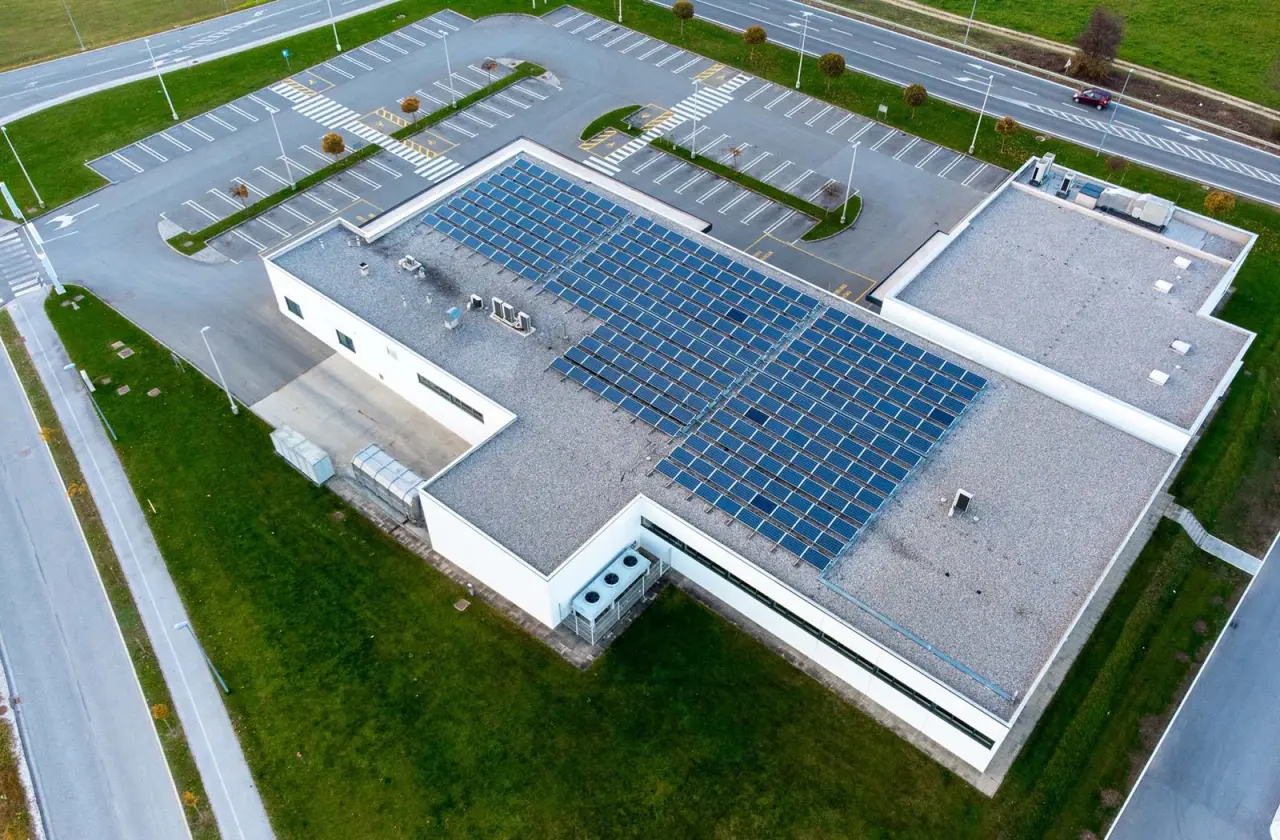
Commercial rooftop solar, the kind specified for churches & faith buildings

Sized from your half-hourly load, not a sector average.

01 Why it fits

What makes solar work for churches & faith buildings.

Solar earns most when the electricity is used on site. A unit you consume offsets an expensive import unit, while a unit you export is paid far less, so the value of a system tracks how well its output lines up with demand through the day rather than how large the roof is. For a faith building that match tends to be modest. Occupancy concentrates around services, prayer times and events, with stretches in between when the building draws very little, so a meaningful share of a midweek summer day can end up exported rather than self-consumed, which is the question our worth-it guide works through.

That does not make solar a poor fit, but it does make honest sizing matter more here than almost anywhere. A church hall in regular weekday use for a nursery, a food bank, a community café or hot-desking carries a steadier daytime load that lifts self-consumption, and where the building runs electric heating the winter picture shifts again. Where the daytime match is weak, we say so plainly, and we look at whether battery storage shifts generation into evening use, or whether a tariff and export arrangement is the more sensible answer than overbuilding a roof that would export cheaply.

02 Typical system

What a typical system looks like.

A faith building typically offers a large, often south-facing pitched roof or an adjoining hall roof, prominent enough that the array is part of the visible commitment as much as the energy case. As an indicative orientation only, this sector tends to fall around the 50 to 100 kWp band, reflecting plenty of roof area against a lower, event-led load. Treat that as a rough sense of scale rather than a figure to plan around. The real size comes from the on-site survey and the PV*SOL model run against your actual half-hourly consumption, which for this sector often points to sizing the array to the load rather than to the roof.

03 Sector detail

The consent route is not the same as a secular listed building

A faith building does not always sit under the ordinary planning system, and that is the single most important thing to settle before any design. Most commercial rooftop solar runs under permitted development, but a listed church, chapel or meeting house sits outside it and needs its own consent, and the route depends on the denomination. A Church of England church is exempt from listed-building consent under the ecclesiastical exemption and instead works through the faculty jurisdiction: the proposal goes to the Diocesan Advisory Committee (DAC) for advice and then to the Chancellor of the diocese for a faculty before any work is done. Roman Catholic, Methodist, Baptist and United Reformed buildings each run their own exempt system, while a listed mosque, synagogue, temple or gurdwara that is not covered by an exemption goes through local-authority listed-building consent in the normal way. The bodies differ, but the principle is the same: the consent decision is usually the gating item rather than the install itself, and getting it wrong is expensive.

We treat that consent position as the first piece of work rather than a box ticked at the end. Heritage bodies look hard at the visual impact on the building and its setting, the reversibility of any fixings into historic fabric, and whether a less prominent slope or an adjoining hall is the more defensible place to start. That is why the on-site 3D drone survey earns its place here more than on a modern roof: it records the pitch, ridge and verge detail, the state of slate, lead or tile, and the shading thrown by a tower or surrounding trees, which is exactly the evidence a DAC or a conservation officer wants to see. The wider route is set out in our commercial planning guide, and where the building is unlisted the standard permitted-development and G99 connection path with Northern Powergrid applies as it would for any commercial roof. We tell you which route your building is on before you commit, so the programme dates are honest rather than optimistic.

04 Sector detail

How a church or charity actually pays for it

Most faith buildings are run by a charity or a trust rather than a trading business, and that changes the financial case rather than weakening it. A Parochial Church Council, a charitable trust, a mosque or synagogue committee usually funds capital from reserves, restricted funds, an appeal or a grant rather than from cash flow, and the people approving the spend answer to a congregation and to charity trustees. That audience does not want a headline payback figure from a web page. It wants a defensible capital case it can put in front of a meeting, which is why we model the site in PV*SOL against your half-hourly data and show the self-consumption and export split, rather than attach a saving we cannot stand behind. We do not promise a payback or a bill reduction; how that capital case is built honestly is set out in our is commercial solar worth it guide.

The financial levers a faith charity can pull are also different from a company's. A trading business looks first at capital allowances against tax, which a charity that pays no corporation tax cannot use in the same way, so the case here usually rests on cutting an import bill that has risen steeply and on the funding available to charities and listed places of worship. Where the daytime match is weak because the building is event-led, the honest answers are the ones the page has already named: size the array to the load rather than the roof, weigh whether battery storage shifts midday generation into evening use, and treat a sensible export arrangement as the right home for genuine surplus rather than a reason to overbuild. Grant and funding routes for places of worship change over time and are decided by the funder rather than by us, so we will tell you plainly whether a route looks open for your building rather than build a case around money that may not be there. The free feasibility read, the drone survey and the load model come first, and the costed proposal follows once the array is sized and the consent position is clear.

FAQ

Commercial solar for churches & faith buildings: common questions

It can be, but it depends on the load. Because occupancy concentrates around services and events, a share of midweek generation may be exported rather than used on site, and export is paid far less than import. We model your half-hourly load before sizing anything, and where the daytime match is weak we look at whether battery storage or a different array size makes the honest case stronger. If a hall is in regular weekday community use, the self-consumption picture is usually better.
Possibly, but it needs handling differently. Listed buildings and scheduled monuments sit outside the permitted-development route that covers most commercial rooftop solar, so a listed church needs listed-building consent and the conservation position checked properly. We look at this early, before design, rather than discovering it late. An adjoining hall or a less sensitive roof slope is sometimes the more workable place to start.
As a rough orientation this sector tends to fall around the 50 to 100 kWp range, reflecting a large roof against a lower, event-led load. That is an indicative band only rather than a quote, and it carries no price. Your real system size comes from the on-site drone survey and the PV*SOL model, sized to your actual half-hourly consumption rather than to the roof area.
We do not publish a price. A church with a large pitched roof and an event-led load is a very different project from a hall in daily community use, so a figure from a page would not be honest. The enquiry, the drone survey and the half-hourly load model are free, and you get a written cost only once the array is sized to your actual consumption and the listed-building position is clear.
It depends most on the planning route. A roof under permitted development moves faster than a listed building that needs listed-building consent, which adds time before any works start. As a rough guide the survey and model come back within a few weeks, and the rooftop works run over days rather than weeks once consent and a G99 connection with Northern Powergrid are in place. We give you a programme specific to your building.
Get a commercial quote

See what your roof and your load would actually do.

We model your half-hourly consumption against a system sized from an on-site drone survey, so the figure you get is yours, not a from-price. No obligation, no MCS gatekeeping on systems this size.

  • On-site 3D drone survey, fully insured in-house pilot
  • Half-hourly load modelled in PV*SOL before anything is specified
  • Engineer-led, assured to the non-MCS standard (CDM 2015)