Skip to content

Alectrona

Commercial guide

What CDM 2015 means for your commercial solar project

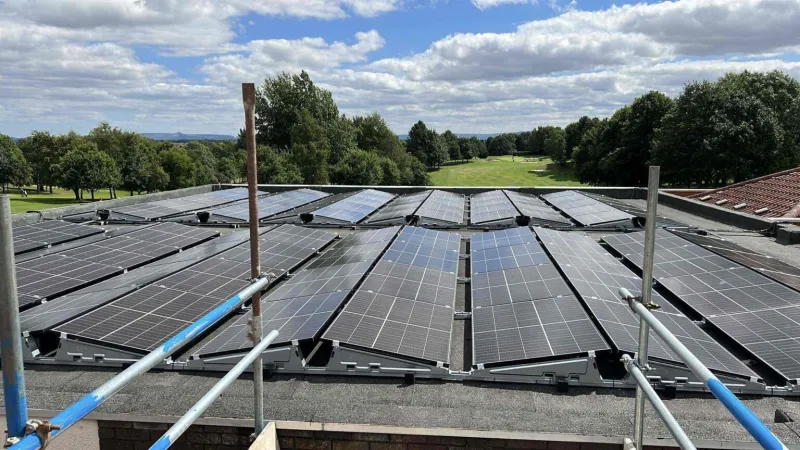
A rooftop solar install is construction work, so the Construction (Design and Management) Regulations 2015 apply to it, and that gives you, as the client, legal duties from the outset.

  • Commercial scale, over 50 kWp
  • On-site 3D drone survey + PV*SOL
  • Engineer-led, outside MCS
Reviews

The feedback we work to earn

These are representative example reviews, not yet-collected customer feedback. They are written to illustrate the kind of feedback Alectrona aims to earn and are shown as design placeholders while we gather and verify reviews from our first commercial clients. Alectrona is the commercial solar trading brand of RVTC LTD.

What set Alectrona apart was the documented design pack. We had quotes from three installers, but only Alectrona handed us a full set of drawings, a single-line diagram and a design referencing BS 7671 and the G99 connection process. The whole thing read like an engineering submission rather than a sales brochure. Our M&E consultant reviewed it and signed it off without a single query. That gave the board the confidence to release the capital.

Estates Manager, academy trust (Yorkshire)

Other firms priced our roof off a satellite image and a desktop guess. Alectrona flew an in-house drone survey, fully insured and flown by a qualified commercial drone pilot, and built a 3D model of the actual roof. It picked up plant, vents and a parapet line that a flat aerial photo had completely missed, which changed the panel layout. I would rather find that out at design stage than on the day the scaffold goes up. The accuracy of that survey is the reason I trusted everything that followed.

Facilities Manager, distribution centre (East Midlands)

As a finance director I was wary of being oversold a system bigger than we could use. Alectrona modelled the array against our actual half-hourly consumption data rather than an annual total, so it is sized to what we genuinely draw on site during the day. They were honest that exporting surplus is worth far less than self-consumption, and built the design around that. The capital case stacked up because the engineering was honest, not because the numbers were inflated.

Finance Director, logistics group (North West)

We were undecided between buying outright, leasing and a PPA. Alectrona laid out all three side by side with the pros and cons of each against our balance sheet, instead of pushing the one that pays them best. They were clear about where a PPA makes sense and where capex wins, and pointed us at our own accountant for the tax treatment. The survey and design took a little longer than I expected, but the thoroughness was worth the wait. Genuinely consultative.

Property Director, retail park (West Midlands)

The install crew were tidy and well run, and worked to a clear CDM 2015 plan with a proper site induction and RAMS. What impressed me most was the handover. We received a full commissioning pack with the IEC 62446-1 test results, certification, O&M documentation and an as-built record for our maintenance team. As the people who have to live with this asset for the next twenty years, having that paperwork in order matters enormously. Nothing was left loose.

Operations Director, food manufacturer (Lincolnshire)

I expected the usual hard sell and got the opposite. After surveying our site Alectrona told us one roof section was not worth covering because of shading, and that a smaller, well-sited array was the better investment than filling every square metre. There was no commission-driven upselling and no pressure. For a six-figure capital project, that straight talk is exactly what you want from the people advising you. We will be using them again on our second site.

Managing Director, engineering firm (Sheffield)

  • Framework Construction (Design and Management) Regulations 2015
  • Applies to Commercial solar installs, as construction work
  • Your role Client duties: appoint, inform, allow time
  • Named roles Principal designer and principal contractor
  • Alectrona handles PD/PC duties, construction phase plan, any HSE notification
01 The short version

CDM 2015

OrientationThis is a plain-English orientation to CDM 2015, not formal legal or health-and-safety advice; we confirm the specific duties and arrangements for your site before any work starts.

When you commission a commercial solar array, you are commissioning construction work. People are working at height, fixing structure to a roof, running cable and tying into your electrical supply, often over a live, occupied building. The Construction (Design and Management) Regulations 2015, usually shortened to CDM 2015, are the framework that governs how that work is planned, managed and made safe.

CDM is not a solar-specific rule and it is not optional. It applies to construction work generally, and a rooftop PV install sits squarely inside it. What follows is a plain-English orientation to how it works, who holds which duty, and what a competent contractor handles on your behalf, so that the regulatory side of a project is something you understand rather than something that surprises you.

Commercial rooftop solar, the subject of this guide: CDM 2015
An on-site drone survey and a PV*SOL model behind every quote.
02

Why a solar install counts as construction work

CDM 2015 defines construction work broadly, and a commercial PV project meets that definition. Mounting frames are fixed to the roof structure, modules are installed at height, DC and AC cabling is run and terminated, and the system is tied into your distribution board and metering. That is building work carried out by contractors, which is exactly what CDM exists to manage.

This matters because commercial solar sits over 50 kWp and outside the MCS scheme. MCS is the domestic-scale certification and it does not apply to a system of this size. The regulatory backbone here is the construction and electrical standards instead, and CDM 2015 is a central part of that backbone. It runs alongside the wiring and commissioning standards a properly engineered install is built to, and it governs how the works themselves are sequenced and kept safe on your site.

03

Your duties as the client

Under CDM 2015, the client carries duties that cannot be passed away entirely. When the work is for a business, you are a commercial client, and the regulations expect you to play an active part rather than simply hand over a building. In practice your core duties are to make sure the right people are appointed, that they have the information and time to work safely, and that suitable arrangements are in place to manage the project from design through to handover.

The good news is that a competent contractor carries most of this for you and tells you plainly what is yours to sign off. The duties that sit with you are mainly about appointing capable people, sharing what you know about the building, and allowing the project to be planned properly. They are not about you managing the construction yourself. We set out, in writing, which duties are ours and which are yours before any work starts.

04

Principal designer and principal contractor

Where more than one contractor is involved in a project, and a commercial solar install almost always involves several trades, CDM 2015 requires two named roles to be appointed in writing. The principal designer plans, manages and coordinates health and safety during the design and planning phase. The principal contractor does the same during the construction phase on site. If they are not appointed, the regulations treat the client as holding those duties by default, which is not where you want to be.

For an Alectrona project, we take on the principal designer and principal contractor roles as part of the engineering scope, so the duties sit with the people doing the work. That means the design is risk-assessed before anyone goes near the roof, the works are sequenced to keep your building operating, and a single accountable party manages safety from survey to commissioning. You are told who holds each role and what it covers.

Design and planning phase

Principal designer

Plans, manages and coordinates health and safety during the design and planning phase, so the design is risk-assessed before anyone goes near the roof.

  • Appointed in writing where more than one contractor is involved
  • Uses the pre-construction information you supply and controls design risk
  • Compiles the health and safety file and hands it over at the end
Construction phase on site

Principal contractor

Does the same during the construction phase on site, sequencing the works to keep your building operating while the array goes up.

  • Produces the construction phase plan before work begins on site
  • Manages access, working at height and isolation of live supplies
  • Submits any notification to the Health and Safety Executive
05

The construction phase plan and notification

Every project under CDM 2015 needs a construction phase plan before work begins on site. It is the document that sets out how the work will be carried out safely: access and working at height, the sequence of trades, isolation of live electrical supplies, exclusion zones below the work, and how the build is kept clear of your staff, occupants or visitors. On an occupied commercial building this is the document that keeps the site running while the array goes up.

Some projects are also notifiable, which means the principal contractor must notify the Health and Safety Executive before construction starts. Notification is triggered by the duration and scale of the work rather than by the size of the solar system in kWp. A larger commercial array is more likely to cross that line, and where it does we handle the notification as part of the principal contractor duty. The plan and any notification are ours to produce, and they do not fall to you.

06

What pre-construction information do you have to provide as the client?

One client duty under CDM 2015 sits with you and cannot be delegated: providing the pre-construction information. This is what you already know about the building and the site that the design and construction team need in order to plan safely. The Health and Safety Executive sets out this duty in its CDM guidance L153, and the practical point is simple. The people designing and installing the array are not asking you to assess risk. They are asking you to hand over the facts only you hold, so that the risk assessment is built on reality rather than guesswork.

For a rooftop solar project the information that matters most is usually about the roof and the building's services. The age and construction of the roof covering, any asbestos register the building holds, the location of fragile materials or roof-lights, the route and rating of the existing electrical supply, restricted or occupied areas below the work, and any earlier structural reports all shape how the install is sequenced. If the building has an asbestos-cement roof, the asbestos survey is a primary input the principal contractor needs before anyone goes up. Where you do not hold a particular record, saying so is itself useful information, because it tells the team a survey is needed rather than a document. We send you a short request listing exactly what we need at the start, so providing it is a matter of forwarding what you already have on file rather than producing anything new.

07

What is the health and safety file and why does it matter after handover?

CDM 2015 requires a health and safety file for any project involving more than one contractor, which a commercial solar install almost always does. The principal designer compiles it during the project and hands it to you, the client, at the end. It is not a record of how the job went. It is a forward-looking document for whoever next works on the building, setting out the residual risks and the information they will need to carry out future maintenance, cleaning, alteration or eventual removal safely.

For a PV system the file typically captures the array layout and fixing method, the position of DC and AC isolation points, the as-installed electrical drawings, the structural basis the mounting relies on, and any roof-access constraints such as fragile areas or designated walkways. This is the document a future contractor reads before they ever set foot on your roof, and it is why a competent installer treats the file as part of the deliverable rather than an afterthought. It also dovetails directly with the ongoing operations and maintenance regime: the same access constraints and isolation points that the file records are the ones your maintenance team inherits for the asset's whole life. We compile and hand over the health and safety file as part of the principal designer duty, and we keep a copy so that later visits start from the same record.

08

How does CDM 2015 connect to working at height and electrical safety on the job?

CDM is the planning and coordination framework, but it does not sit in isolation. It pulls in the other regulations that govern the specific hazards of a rooftop install, and it is the construction phase plan that ties them together for your site. The two that bite hardest on solar are work at height and live electrical work, and CDM is the structure that makes sure both are managed by the same accountable party rather than falling between trades.

Working at height on a commercial roof is governed by the Work at Height Regulations 2005, and for fragile or asbestos-cement roofs the Health and Safety Executive's guidance GEIS5 sets the expectation that work is planned to avoid loading the sheets directly, using staging, edge protection and proper access. We cover this in detail in the guide on working at height safety. The electrical side is governed by BS 7671, the IET Wiring Regulations, alongside the Electricity at Work Regulations 1989 for safe isolation of the live supply during the tie-in. Our guide on BS 7671 and solar sets out how a system above the domestic MCS scale is assured against those standards. CDM 2015 is what makes the principal contractor responsible for sequencing all of this safely on an occupied building, so that the working-at-height plan, the isolation plan and the trade sequence are one coordinated set of arrangements rather than three separate ones.

09

Who carries the CDM duties when you use a single engineering contractor?

CDM 2015 expects appointments to be made in writing, and it expects them to be made early, before the design is fixed. The regulations are explicit that where the principal designer and principal contractor are not appointed, the client holds those duties by default. For a commercial buyer commissioning solar, the cleanest position is one accountable engineering party holding both named roles, so that the design risk assessment, the construction phase plan, the pre-construction information you supply, and the health and safety file at the end all flow through a single chain of responsibility.

This is also a question of competence, which CDM frames as the skills, knowledge, experience and organisational capability to manage the work. The client duty is to take reasonable steps to satisfy yourself that the people you appoint are capable, which is one of the honest reasons the choice of installer matters as much for safety as for engineering. On an Alectrona project the appointments, the written confirmation of who holds each role, and the documents each role produces are set out before work starts, and they sit inside the wider project process rather than being bolted on at the end. Treating CDM as part of the engineering scope, rather than a separate compliance exercise, is what keeps the duties off your desk while still leaving you with the records the regulations require you to hold.

10 How we quote

Past the guide, this is how your figure actually gets set.

  1. Survey

    On-site 3D drone survey

    Our own insured pilot flies your roof and captures the real geometry and shading, so the design starts from your building instead of a satellite guess.

    Booked to suit your operating hours

  2. Model

    PV*SOL design and proposal

    We model the array in bankable-grade software, size it around your daytime load, and set out generation, savings and payback across three funding routes.

    Modelled, not promised

  3. Install

    Engineered and installed

    Designed and installed to BS 7671, commissioned to IEC 62446-1, connected under G99 and run under CDM 2015. Alectrona is typically the Principal Contractor.

    Outside MCS, assured by the non-MCS stack

  4. Aftercare

    Operations and maintenance

    A 12-month defects period backed by an Insurance-Backed Guarantee, then ongoing operations and maintenance so the asset keeps earning for its full working life.

    Kept performing, year on year

11 FAQ

CDM 2015: common questions

Yes. CDM 2015 applies to construction work, and installing a commercial solar array is construction work: structure fixed to the roof, work at height, cabling run and terminated, and a tie-in to your electrical supply. It is not solar-specific regulation, but a PV install falls clearly within it.

As a commercial client you have duties to appoint capable people in writing, share relevant information about the building, and allow the project enough time to be planned and carried out safely. You are not expected to manage the construction yourself. A competent contractor carries most of the load and tells you in writing which duties are theirs and which remain yours.

We do. Because a commercial install involves more than one contractor, CDM 2015 requires both roles to be appointed in writing, and we take them on as part of the engineering scope. That keeps the safety duties with the people doing the design and the site work, rather than defaulting back to you. We confirm in writing who holds each role.

It depends on the duration and scale of the works rather than the kWp of the system. Larger commercial projects are more likely to be notifiable, and where notification is required the principal contractor submits it to the Health and Safety Executive before construction starts. We confirm the specifics for your site and handle any notification as part of our duties.

It is the document, required before work starts on site, that sets out how the work will be done safely: access and working at height, the order of trades, isolation of live supplies, and keeping the build clear of your people. On an occupied building it is what allows the array to be installed while you keep operating. We produce it as part of the principal contractor duty.

The principal designer and principal contractor duties, the construction phase plan, the health and safety file and any HSE notification are part of the engineering scope on an Alectrona project, so they are not a separate line you are billed for managing yourself. Because every commercial solar price is survey-led and specific to your roof, connection and site arrangements, we do not quote a figure here. Our commercial solar cost guide explains what shapes a survey-led quote, and the CDM duties are folded into that rather than charged as an add-on.

CDM applies from the very start, because the client duty to appoint a principal designer and provide pre-construction information falls in the design and planning phase, before anyone is on the roof. Done properly it runs alongside survey, design and grid work rather than adding a separate stage, so it does not extend the timeline. The construction phase plan must be complete before work begins on site, and the health and safety file is handed over at the end. Our guide on how long installation takes sets out where these duties sit in the overall programme.

Get a commercial quote

Get the numbers for your roof.

A guide can only take you so far. The figure you get is modelled from your own half-hourly load and a system sized from the on-site drone survey. No obligation, and systems this size sit outside the domestic MCS scheme, so the assurance is the engineering stack.

  • On-site 3D drone survey, fully insured in-house pilot
  • Half-hourly load modelled in PV*SOL before anything is specified
  • Engineer-led, assured to the non-MCS standard (CDM 2015)
  • Capex, lease-purchase or PPA, whichever suits you