Skip to content

Alectrona

Commercial guide

What bankable and Tier 1 actually mean for commercial panels

On a commercial roof the panel brand is a financeability question before a performance one, and the trust signal is bankability, led by BloombergNEF Tier 1 with the scheme and quarter named.

  • Commercial scale, over 50 kWp
  • On-site 3D drone survey + PV*SOL
  • Engineer-led, outside MCS
Reviews

The feedback we work to earn

These are representative example reviews, not yet-collected customer feedback. They are written to illustrate the kind of feedback Alectrona aims to earn and are shown as design placeholders while we gather and verify reviews from our first commercial clients. Alectrona is the commercial solar trading brand of RVTC LTD.

What set Alectrona apart was the documented design pack. We had quotes from three installers, but only Alectrona handed us a full set of drawings, a single-line diagram and a design referencing BS 7671 and the G99 connection process. The whole thing read like an engineering submission rather than a sales brochure. Our M&E consultant reviewed it and signed it off without a single query. That gave the board the confidence to release the capital.

Estates Manager, academy trust (Yorkshire)

Other firms priced our roof off a satellite image and a desktop guess. Alectrona flew an in-house drone survey, fully insured and flown by a qualified commercial drone pilot, and built a 3D model of the actual roof. It picked up plant, vents and a parapet line that a flat aerial photo had completely missed, which changed the panel layout. I would rather find that out at design stage than on the day the scaffold goes up. The accuracy of that survey is the reason I trusted everything that followed.

Facilities Manager, distribution centre (East Midlands)

As a finance director I was wary of being oversold a system bigger than we could use. Alectrona modelled the array against our actual half-hourly consumption data rather than an annual total, so it is sized to what we genuinely draw on site during the day. They were honest that exporting surplus is worth far less than self-consumption, and built the design around that. The capital case stacked up because the engineering was honest, not because the numbers were inflated.

Finance Director, logistics group (North West)

We were undecided between buying outright, leasing and a PPA. Alectrona laid out all three side by side with the pros and cons of each against our balance sheet, instead of pushing the one that pays them best. They were clear about where a PPA makes sense and where capex wins, and pointed us at our own accountant for the tax treatment. The survey and design took a little longer than I expected, but the thoroughness was worth the wait. Genuinely consultative.

Property Director, retail park (West Midlands)

The install crew were tidy and well run, and worked to a clear CDM 2015 plan with a proper site induction and RAMS. What impressed me most was the handover. We received a full commissioning pack with the IEC 62446-1 test results, certification, O&M documentation and an as-built record for our maintenance team. As the people who have to live with this asset for the next twenty years, having that paperwork in order matters enormously. Nothing was left loose.

Operations Director, food manufacturer (Lincolnshire)

I expected the usual hard sell and got the opposite. After surveying our site Alectrona told us one roof section was not worth covering because of shading, and that a smaller, well-sited array was the better investment than filling every square metre. There was no commission-driven upselling and no pressure. For a six-figure capital project, that straight talk is exactly what you want from the people advising you. We will be using them again on our second site.

Managing Director, engineering firm (Sheffield)

  • Trust signal Bankability, led by BloombergNEF Tier 1 (scheme and quarter named)
  • What Tier 1 is A financeability heuristic, not a quality or safety guarantee
  • Reliability A separate question, cited via Kiwa PVEL and RETC
  • Super League A historical 2015 to 2019 scale marker, not a live badge
01 The short version

Bankable Tier 1 panels

On a commercial roof over 50 kWp, the panel brand is a financeability question before it is a performance one. A lender or an investor will not stand behind a system built on a maker it cannot assess, so the trust signal here is bankability, led by BloombergNEF Tier 1 with the scheme and the quarter named, never an accreditation aimed at domestic work.

This guide gives the honest version. BloombergNEF Tier 1 is a bankability heuristic, an indicator of financing track record and industry acceptance. It is not a guarantee of module quality, financial strength or safety, and BloombergNEF says so plainly. We explain what the listing measures, why we name the quarter on every claim and re-verify the exact module before contract, why reliability is a separate question we cite separately, and why the Silicon Module Super League is heritage from 2015 to 2019 rather than a live badge.

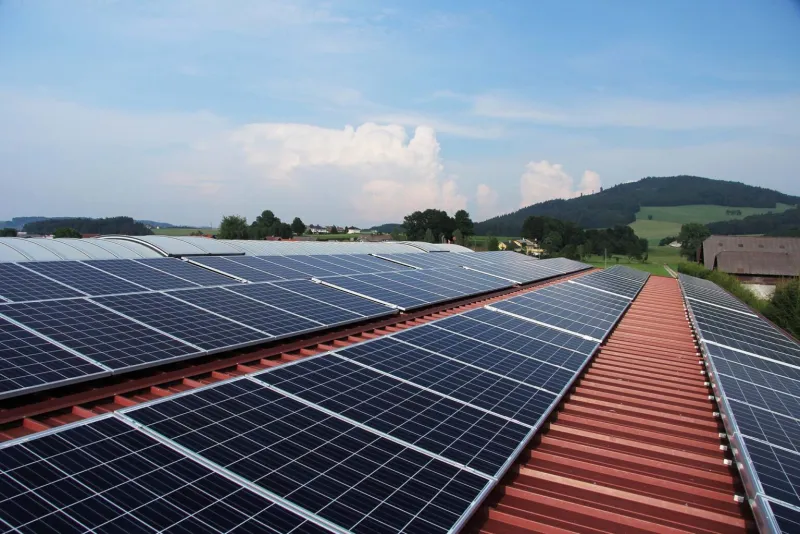
Commercial rooftop solar, the subject of this guide: Bankable Tier 1 panels
Engineer-led commercial solar over 50 kWp, sized to your load.
02

What "bankable" means for a commercial panel

Bankable means a lender or investor is confident the maker is financially sound enough to honour a 25 to 30 year warranty, and that its modules are accepted in projects that banks have agreed to finance. It is a measure of financeability, not a quality stamp on the product itself.

That matters on a commercial project because the funding behind the system, whether you buy outright, lease the asset or sign a power-purchase agreement, rests on the equipment being financeable. We specify bankable panels so the brand on the roof is one the money behind the project can stand behind. Bankability and reliability are different questions, and we treat them separately.

03

What BloombergNEF Tier 1 is, and what it is not

BloombergNEF runs a quarterly tiering system for photovoltaic module makers. In our own words, a manufacturer is Tier 1 when it has supplied own-brand, own-manufacture modules to at least six different projects, each financed on a non-recourse basis by six different commercial banks, within the past two years. Only project financings above the BloombergNEF size threshold count, and the firm has to own its production and sell under its own brand, so makers that outsource manufacturing under a brand name are not tiered.

The load-bearing point is what Tier 1 is not. BloombergNEF states that it is a measure of bankability and industry acceptance, not of product quality, financial strength, safety or ESG, and that there are documented examples of quality issues and even bankruptcy among Tier 1 makers. The listing is no guarantee against either. A company self-announcement is not evidence of Tier 1 status, and the list is published quarterly, with only the most recent list valid, so a maker can be added or removed in any quarter. We paraphrase the BloombergNEF methodology in our own words, attribute it and link the public methodology page, and we never copy the text, republish the gated list or display a BloombergNEF badge.

04

Why we name the quarter and re-verify before contract

Because the list moves. BloombergNEF publishes it quarterly and only the latest list is valid, so a status sourced a quarter ago may not hold today. We are not a module maker or a BloombergNEF client, so we never imply BloombergNEF endorses us. Instead we cite a maker's Tier 1 status, name the scheme and the quarter, and link the public methodology.

For any module that goes to contract, we verify the live quarter directly before relying on it. We also keep schemes distinct rather than blurring them. Where a maker's strongest sourced credential is a different scheme, for example Hanwha Q Cells holding S&P Global 2025 Tier 1 Cleantech rather than a BloombergNEF listing, we name that scheme and do not present it as BloombergNEF Tier 1.

05

Bankability is not reliability, so we cite both

BloombergNEF Tier 1 measures a financing track record, not how a module degrades or survives in the field. Reliability is a separate question answered by independent testing, and BloombergNEF itself recommends a separate technical due-diligence step. We cite reliability benchmarks alongside Tier 1 and always state the period, because these results move too.

  • Kiwa PVEL PV Module Reliability Scorecard. An independent laboratory that runs accelerated lifetime stress tests on production samples and names the best results Top Performers, measuring how the module is likely to degrade and survive in the field. We cite the year.
  • PV ModuleTech Bankability Ratings. A quarterly financial-grade assessment of a maker's manufacturing capacity, financial health and shipment record, expressed as a bankability grade. We cite the quarter and the grade, and we never inflate it.
  • RETC PV Module Index. An independent annual report grading modules on quality, performance and reliability, a second lab benchmark that complements Kiwa PVEL. We cite the year.
06

How we apply this across the brands we specify

We hold each brand to its true status rather than dressing every maker as the same thing. Several brands are both historical Silicon Module Super League members and current BloombergNEF Tier 1 makers, including JA Solar, LONGi, JinkoSolar, Canadian Solar and Trina Solar, and we name the quarter on each. We are precise where the record is not clean: JinkoSolar was removed from the BloombergNEF list in the second quarter of 2024 and later reinstated, so we describe its current listing rather than an unbroken record.

Our flagship module brand, Aiko, is positioned on its own merits. It is a BloombergNEF Tier 1 maker and a Kiwa PVEL Top Performer, but it was never a Silicon Module Super League member and is B-category in PV ModuleTech, so we do not call it Super League and do not claim an AAA or AA grade for it. Hanwha Q Cells leads with S&P Global 2025 Tier 1 Cleantech and a long Kiwa PVEL record, kept distinct from the BloombergNEF list. REC is a premium heterojunction maker owned by Reliance Industries; we do not claim BloombergNEF Tier 1 status for it and position it on its genuine merits, citing its Kiwa PVEL record through 2024 rather than as current.

07

A word on the Silicon Module Super League

The Silicon Module Super League was a historical analyst classification by PV-Tech and Solar Media over 2015 to 2019, grouping the era's largest crystalline-module manufacturers. It is a measure of historical scale and heritage only, not a quality, safety or bankability certification, so we always describe it in the past tense and never as a current credential, and only for genuine former members.

We never apply the label to a maker that was not on the roster. Newer entrants such as Aiko, and makers such as REC, were never Super League members, so we position them on their actual credentials instead. Where we name a heritage credential, we say what era it belongs to so it cannot be mistaken for a live badge.

08

Why does a lender care about the panel brand before the performance figures?

Because the warranty is only worth what the maker behind it is worth. A commercial array is a 25 to 30 year asset, and the performance warranty that underwrites its later-life output is a promise from the manufacturer, not from the installer. If the maker has left the market when a panel under-performs in year eighteen, the warranty is a piece of paper with no counterparty. That is the risk a lender prices, and it is why bankability sits ahead of the datasheet when funding is involved.

The funding route sharpens this. Where a system is bought outright the buyer carries the manufacturer-survival risk directly. Where it is leased, or built under a power-purchase agreement, the financier carries it, and the financier will only stand behind a brand it can assess against its own credit criteria. A panel that looks strong on a degradation curve but comes from a maker with no bank-financed track record is harder to finance than a slightly less efficient module from a maker that banks already accept. We set out how those routes differ across our commercial finance options, and we specify the array so the brand on the roof does not narrow the funding choices later.

This is also why we keep bankability and warranty depth as two separate reads. A long warranty term is a contractual promise; bankability is the probability the promiser is still there to honour it. A maker can offer a long 30 year product warranty and still be a weaker bankability bet than a maker offering a shorter one, so we weigh the term against the BloombergNEF listing and the financial-grade ratings rather than letting either stand alone. The performance side of that comparison is covered in our guide to TOPCon, HJT and PERC.

09

How do we actually verify a Tier 1 claim before it reaches your specification?

We treat every Tier 1 status as a claim to be evidenced, never as a fact to be assumed. The first rule is the source: BloombergNEF publishes its list quarterly behind a paywall, and only the most recent quarter is valid, so a status sourced last year is not current and a maker's own press release is not proof. When a module reaches your shortlist we check the live quarter for that exact maker rather than relying on a remembered position, because the list adds and removes makers every quarter. JinkoSolar's removal in the second quarter of 2024 and later reinstatement is the standing example of why a single past listing is not a durable credential.

The second rule is to keep the schemes distinct. BloombergNEF Tier 1 is one indicator; it is not interchangeable with the financial-grade bankability ratings published by PV ModuleTech, the reliability results from Kiwa PVEL, or the S&P Global Cleantech tiering some makers hold instead. We name the specific scheme, the grade where one applies, and the quarter or year it was sourced for, and we do not let a strong result under one scheme borrow the authority of another. Where a maker leads with a credential other than BloombergNEF, we say so plainly rather than implying a listing it does not hold.

The third rule is that the verification follows the chosen module, not the brand in the abstract. A manufacturer can be Tier 1 at company level while a particular module family carries different reliability evidence, so we tie the citation to the exact product going into the design. That work sits inside the survey-and-model stage described in how we quote, and it is why the specification names the panel by model rather than by brand badge. If you want the wider quality picture beyond panels, our guide on quality without MCS explains how we assure a system that sits outside the domestic certification scheme.

10

Does a bankable brand change how the array gets maintained and insured?

Yes, and this is the part of bankability that outlives the purchase. A warranty claim later in the asset's life depends on two things being intact: the maker still trading, and a maintained record that shows the array was operated and monitored as the warranty requires. Many manufacturer warranties are conditional on the system being commissioned correctly and kept under reasonable maintenance, so the bankable brand only pays off if the operations record supports a claim when one is needed. We design for that record from the start, which is why bankability and a real operations-and-maintenance regime are specified together rather than as separate afterthoughts. The detail of that regime is set out in our operations and maintenance stage.

Insurance reads the same signals. An insurer assessing a commercial PV asset looks at the equipment, the install standard and the monitoring, and a recognised, bankable module brand backed by a documented commissioning and maintenance trail is a cleaner risk than an obscure brand with a thin paper trail. None of this is a price quote or a guaranteed premium, since cover is rated by the insurer against the specific site, but the direction is consistent: the same evidence that makes a brand financeable makes the asset easier to insure and to maintain a valid warranty against. For how the underlying economics are modelled rather than promised, see whether commercial solar is worth it and the survey-led pricing in our commercial solar cost guide.

11 How we quote

Past the guide, this is how your figure actually gets set.

  1. Survey

    On-site 3D drone survey

    Our own insured pilot flies your roof and captures the real geometry and shading, so the design starts from your building instead of a satellite guess.

    Booked to suit your operating hours

  2. Model

    PV*SOL design and proposal

    We model the array in bankable-grade software, size it around your daytime load, and set out generation, savings and payback across three funding routes.

    Modelled, not promised

  3. Install

    Engineered and installed

    Designed and installed to BS 7671, commissioned to IEC 62446-1, connected under G99 and run under CDM 2015. Alectrona is typically the Principal Contractor.

    Outside MCS, assured by the non-MCS stack

  4. Aftercare

    Operations and maintenance

    A 12-month defects period backed by an Insurance-Backed Guarantee, then ongoing operations and maintenance so the asset keeps earning for its full working life.

    Kept performing, year on year

12 FAQ

Bankable Tier 1 panels: common questions

Bankable means a lender or investor is confident the maker is financially sound enough to honour a 25 to 30 year warranty, and that its panels are accepted in bank-financed projects. It is about financeability, not a quality stamp. We specify bankable panels because the funding behind a commercial system relies on the equipment being financeable.

No. BloombergNEF states that Tier 1 measures bankability and industry acceptance, not product quality, financial strength or safety, and that there are documented examples of quality issues and even bankruptcy among Tier 1 makers. It is a bankability heuristic, not a quality guarantee. That is why we cite independent reliability benchmarks, Kiwa PVEL and RETC, and the PV ModuleTech bankability grades alongside it.

In our own words, a maker is Tier 1 when it has supplied own-brand, own-manufacture modules to at least six different projects above BloombergNEF's size threshold, each financed on a non-recourse basis by six different commercial banks, within the past two years. The maker has to own its production. We paraphrase the BloombergNEF methodology, attribute it and link the public page, and we never copy the text or republish the list.

Because the list is published quarterly and only the most recent list is valid, so a maker can be added or removed in any quarter. We cite the quarter a status is sourced for, and we verify the live quarter for the exact module before contract. A company's own press release is not evidence of Tier 1 status, so we record any self-announcement as a claim and re-verify it.

No. It was a historical analyst classification by PV-Tech and Solar Media from 2015 to 2019, grouping the era's largest crystalline-module makers. It is a measure of scale and heritage only, never a quality, safety or bankability certification, so we describe it in the past tense and only for genuine former members.

Because the list is one indicator, not the only one. REC, for example, is a premium heterojunction maker owned by Reliance Industries; we do not claim Tier 1 status for it and position it on its genuine merits. Where a maker's strongest sourced credential is a different scheme, such as Hanwha Q Cells holding S&P Global 2025 Tier 1 Cleantech, we name that scheme and keep it distinct from the BloombergNEF list.

From the survey and the model, not from a margin. We survey the roof, build the design in PV*SOL, and pick the module that suits the geometry, the shading and the funding route. We then name the specific scheme, grade and quarter for that exact module and re-verify it before contract.

There can be a premium for a bankable, BloombergNEF-listed brand over an obscure unlisted maker, but we do not publish a per-panel or per-kWp figure, because the module is one line in a system price that the roof, the design and the funding route all move. Panel choice is rarely the deciding cost on a commercial array, and a cheaper unlisted module can cost more over the asset life if its warranty has no surviving counterparty. We price the whole system from a survey of your site rather than from a brand badge. Our commercial solar cost guide explains how the figure is built.

Confirming a maker's current BloombergNEF Tier 1 quarter and the relevant reliability and bankability-grade evidence is a fast desk check we run during the survey-and-design stage, so it adds no separate wait of its own. The longer timeline on a commercial project is set by the survey, the PV*SOL model and the grid-connection process, not by verifying a panel's status. We name the scheme and quarter for the exact module in the specification and re-verify it before contract, since the list moves each quarter. The overall sequence and timings for your site are walked through in how we quote.

Get a commercial quote

Get the numbers for your roof.

A guide can only take you so far. The figure you get is modelled from your own half-hourly load and a system sized from the on-site drone survey. No obligation, and systems this size sit outside the domestic MCS scheme, so the assurance is the engineering stack.

  • On-site 3D drone survey, fully insured in-house pilot
  • Half-hourly load modelled in PV*SOL before anything is specified
  • Engineer-led, assured to the non-MCS standard (CDM 2015)
  • Capex, lease-purchase or PPA, whichever suits you