Skip to content

Alectrona

Commercial solar by area

Commercial solar in Doncaster.

Doncaster has the highest concentration of large flat distribution roofs in South Yorkshire. We are Yorkshire-based and quick to your site, and we design solar above 50 kWp for that building stock.

  • Northern Powergrid network
  • The survey comes to your site
  • Over 50 kWp, outside MCS
Reviews

The feedback we work to earn

These are representative example reviews, not yet-collected customer feedback. They are written to illustrate the kind of feedback Alectrona aims to earn and are shown as design placeholders while we gather and verify reviews from our first commercial clients. Alectrona is the commercial solar trading brand of RVTC LTD.

What set Alectrona apart was the documented design pack. We had quotes from three installers, but only Alectrona handed us a full set of drawings, a single-line diagram and a design referencing BS 7671 and the G99 connection process. The whole thing read like an engineering submission rather than a sales brochure. Our M&E consultant reviewed it and signed it off without a single query. That gave the board the confidence to release the capital.

Estates Manager, academy trust (Yorkshire)

Other firms priced our roof off a satellite image and a desktop guess. Alectrona flew an in-house drone survey, fully insured and flown by a qualified commercial drone pilot, and built a 3D model of the actual roof. It picked up plant, vents and a parapet line that a flat aerial photo had completely missed, which changed the panel layout. I would rather find that out at design stage than on the day the scaffold goes up. The accuracy of that survey is the reason I trusted everything that followed.

Facilities Manager, distribution centre (East Midlands)

As a finance director I was wary of being oversold a system bigger than we could use. Alectrona modelled the array against our actual half-hourly consumption data rather than an annual total, so it is sized to what we genuinely draw on site during the day. They were honest that exporting surplus is worth far less than self-consumption, and built the design around that. The capital case stacked up because the engineering was honest, not because the numbers were inflated.

Finance Director, logistics group (North West)

We were undecided between buying outright, leasing and a PPA. Alectrona laid out all three side by side with the pros and cons of each against our balance sheet, instead of pushing the one that pays them best. They were clear about where a PPA makes sense and where capex wins, and pointed us at our own accountant for the tax treatment. The survey and design took a little longer than I expected, but the thoroughness was worth the wait. Genuinely consultative.

Property Director, retail park (West Midlands)

The install crew were tidy and well run, and worked to a clear CDM 2015 plan with a proper site induction and RAMS. What impressed me most was the handover. We received a full commissioning pack with the IEC 62446-1 test results, certification, O&M documentation and an as-built record for our maintenance team. As the people who have to live with this asset for the next twenty years, having that paperwork in order matters enormously. Nothing was left loose.

Operations Director, food manufacturer (Lincolnshire)

I expected the usual hard sell and got the opposite. After surveying our site Alectrona told us one roof section was not worth covering because of shading, and that a smaller, well-sited array was the better investment than filling every square metre. There was no commission-driven upselling and no pressure. For a six-figure capital project, that straight talk is exactly what you want from the people advising you. We will be using them again on our second site.

Managing Director, engineering firm (Sheffield)

  • Postcode coverage DN1 · DN2 · DN3 · DN4 · DN5 · DN11 · DN12
  • Local network Northern Powergrid
  • Sub-region South Yorkshire
01 The short version

Commercial solar in Doncaster

Doncaster sits at the road junction of South Yorkshire, where the M18, A1(M) and M180 meet, and the distribution sheds that cluster around those interchanges carry some of the largest single roof areas in the region. Alectrona is the commercial arm of RVTC LTD, Yorkshire-based and working across the Doncaster DN postcode districts, from the Rossington and Hatfield logistics belt to the older manufacturing units around Balby and Hexthorpe.

A system over 50 kWp is a structural and electrical project, not a domestic upgrade scaled up. On a 40,000 square foot Doncaster warehouse the array can run to several hundred kilowatts, so the roof loading, the inverter strategy and the grid connection all have to be engineered against the building's real half-hourly demand before anyone quotes a panel count. That is the work we do here.

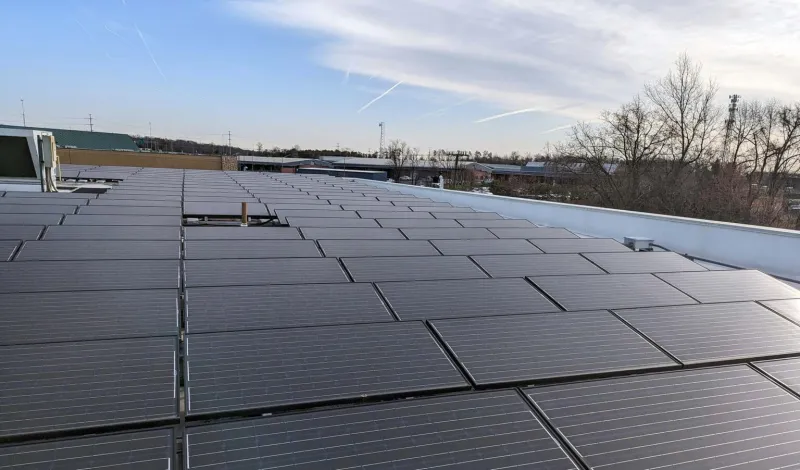
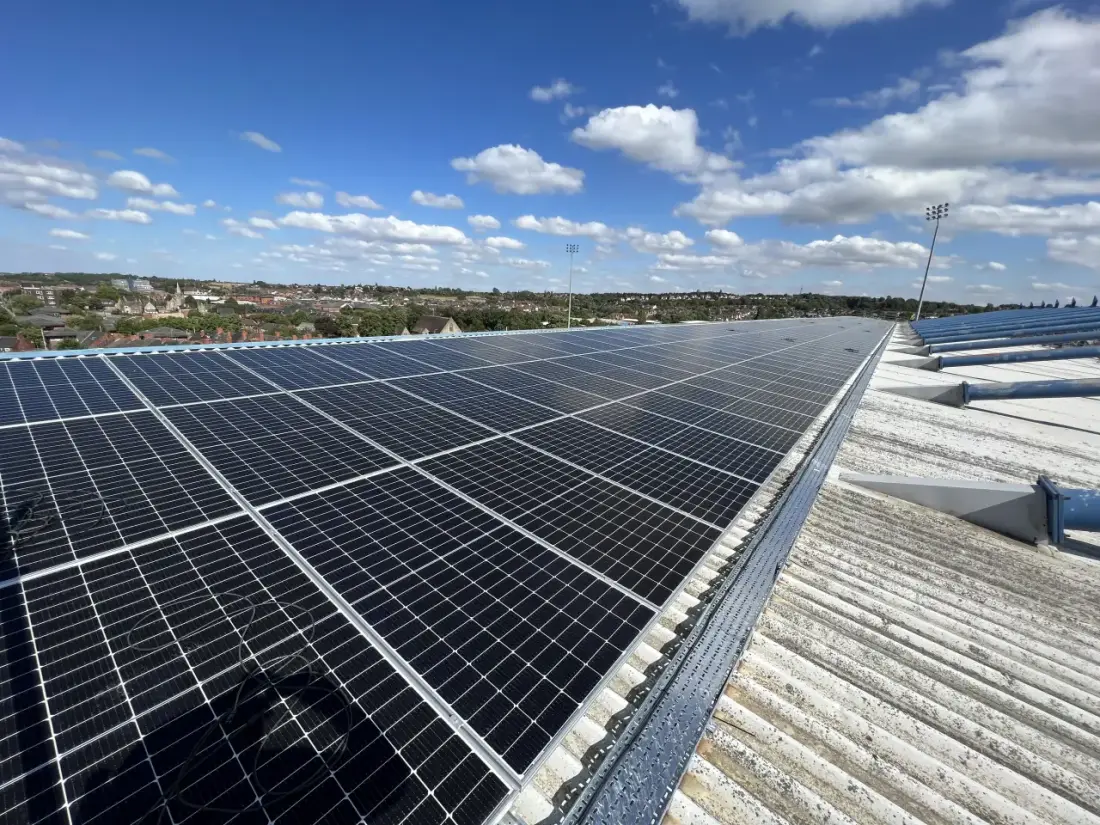
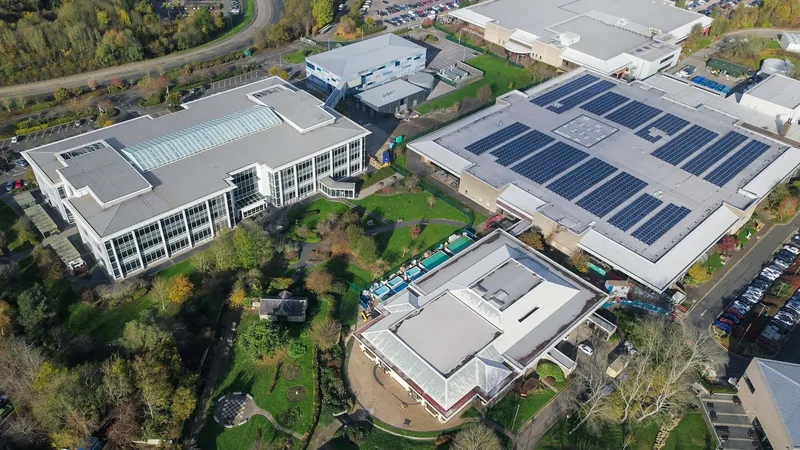
Commercial rooftop solar of the kind specified around Doncaster
The same drone survey and PV*SOL model we take across Yorkshire.
02 Local building stock

The commercial roofs around Doncaster

The defining feature of Doncaster's commercial property is scale. SEGRO's iPort at Rossington, on the M18 at junction 3, is one of the three largest logistics parks in the country, and the distribution units along that corridor are the single highest-value concentration of commercial roof in South Yorkshire. These are big-box sheds occupied by national logistics and retail operators, with vast unshaded membrane roofs and a daytime load profile dominated by lighting, conveyor and materials-handling plant. That load shape is close to ideal for rooftop solar, because the generation curve sits underneath a steady weekday demand and most of the output is consumed on site rather than exported.

Doncaster's industrial land also tells a mining-to-logistics story. Cleared colliery sites such as Hatfield have been redeveloped into modern distribution space, which means newer steel portal frames with predictable structural capacity, the kind of roof a drone survey can model cleanly. Closer to the centre, the traditional manufacturing corridor through Balby and Hexthorpe holds an older industrial-unit stock with different roof pitches, plant loads and three-phase arrangements, where the self-consumption case turns on matching the array to process electricity rather than just floor-area lighting.

Beyond the sheds, the district runs out onto the productive South Yorkshire plain, and that farmland carries a real stock of agricultural roofs, grain stores, poultry buildings and packhouses with year-round refrigeration and ventilation loads. Those rural sites often sit on weaker rural feeders, which makes the export position and any battery sizing part of the design conversation from the start.

03 The most accurate quote

We model your roof in 3D, before we quote.

Every Doncaster project starts with our own on-site drone survey. Our in-house pilot is fully insured and holds the A2 CofC and GVC, and flies a 3D survey of the actual roof, so the design is built on real geometry, real shading and real orientation rather than a satellite estimate. On the large iPort-scale membranes around Rossington and Hatfield that detail matters, because a few degrees of pitch or a run of rooflights changes the layout.

The captured roof is then modelled in PV*SOL against your half-hourly consumption to size the array to the load. That survey travels to Doncaster the same as anywhere we work, and Rossington, Hatfield, Balby and Hexthorpe are all an easy run from our Yorkshire base.

Indicative layout · a scaled 3D model built from a real drone survey.
04 Grid connection

Connecting to the grid in Doncaster

The distribution network operator for Doncaster is Northern Powergrid, and every system over 50 kWp connects through a G99 application to them. We handle that application as part of the design, sizing the inverters and any export limitation against what the local network will accept rather than assuming full export is available. On the larger iPort-scale roofs the connection question is the one that most often shapes the scheme, so we resolve it early.

Where a site's demand is high and steady, as it is on most Doncaster distribution and process roofs, a high self-consumption design keeps the bulk of the generation behind the meter, which eases the export side of the G99 position and improves the economics at the same time. We model that balance per site before the application goes in.

05 Operations & maintenance

Maintenance and older systems

Doncaster's logistics base has been generating solar for years. A number of the early commercial arrays on the M18 corridor and across the older industrial estates date from the FiT era of roughly 2012 to 2015, and many are now running with little or no monitoring, the original installer gone or no longer servicing them. Through our sister operation Solar Tech Support we take on independent operation and maintenance of existing commercial systems regardless of who built them or which inverter brand is on the wall.

That covers performance monitoring, fault diagnosis, inverter and string repair, panel cleaning on these large flat roofs and a proper assessment of an inherited array that may be underperforming. We will tell you honestly what a system is doing before we propose anything, and we do not invent service-level promises we cannot keep.

06 Local detail

Planning and permitted development on a Doncaster commercial roof

Doncaster became a city in 2022, and the local planning authority is City of Doncaster Council, which is the body that matters for any rooftop scheme over 50 kWp. For most commercial buildings a roof-mounted array is permitted development under the General Permitted Development Order, so a full planning application is often not needed, but that is never a safe assumption to design around. The protrusion limit above the roof plane, the proximity of a listed building and any conservation-area or Article 4 designation can all pull a scheme back into needing consent, and the historic core around the Minster, the Frenchgate and the Market Place quarter is exactly where that bites. Ground-mounted solar on a cleared site, of the kind Doncaster's brownfield colliery land lends itself to, is a different matter again and usually does need a planning application.

The practical point is that we check the planning position for your specific address before the design is fixed. A drone survey establishes the real roof height and any heritage sightlines on the day, and we factor the planning route into the programme alongside the G99 connection and the rest of the delivery sequence, so the consent question is resolved early rather than surfacing as a delay once the array is designed.

07 Beyond iPort

The wider Doncaster estate map

The logistics corridor draws the eye, but Doncaster's commercial roof stock spreads well past iPort. West Moor Park, off the M18 near Armthorpe, and the Doncaster Carr and Wheatley Hall Road estates closer to the centre carry a mix of distribution, trade-counter and industrial units across the DN2, DN3 and DN4 sectors, much of it modern steel-portal building with the broad, lightly shaded roofs a large array suits. Out at Auckley and Finningley in DN9, the land around Doncaster Sheffield Airport is being developed as the GatewayEast employment and innovation zone, the kind of newer scheme where roof specifications are written with energy use in mind. To the north and east, Thorne and Moorends and the Hatfield and Stainforth belt add the brownfield colliery redevelopment stock that runs out onto the agricultural plain.

Each of those settings carries a different demand curve, which is why we model every roof on its own half-hourly data rather than a single Doncaster template. A distribution shed, a trade unit and a packhouse on a rural feeder each want a different array and a different export position. If your operation sits in one of the district's warehousing and logistics clusters, that load-led design is the work that turns roof area into a system sized to what the building actually uses.

08 The work

Engineering, on real roofs.

  • Sports venues

    Nottinghamshire football stadium

    How the team engineers rooftop solar for a football stadium, matching a large venue roof to an event-driven match-day load. A representative example of the team’s stadium work.

    Read the case study
  • Warehousing & logistics

    Yorkshire distribution centre

    A representative large flat-roof distribution-centre array designed to a daytime logistics load, using half-hourly modelling, an in-house drone survey and an export-limited G99 design to maximise self-consumption.

    Read the case study

All case studies

09 FAQ

Commercial solar in Doncaster: common questions

Yes. The distribution sheds along the M18, A1(M) and M180, including the iPort logistics park at Rossington, are exactly the kind of large flat roof our work is built for. We design systems over 50 kWp for that building stock, surveyed by drone and modelled against the site's own demand. The occupiers named around iPort describe the local economy, they are not our clients, and we make no claim to have installed there yet.

We are Yorkshire-based and quick to your Doncaster site, working across the DN postcode districts and out to Rossington, Hatfield, Balby and Hexthorpe. We do not yet have completed installations in the town, so we lead on coverage, engineering capability and the on-site drone survey rather than a local track record we have not earned.

The network operator for Doncaster is Northern Powergrid, and any system over 50 kWp connects through a G99 application that we manage as part of the design. We size the inverters and any export limitation against what the local network will accept, which on the larger logistics roofs is often the factor that shapes the scheme.

Yes. Through Solar Tech Support we provide independent operation and maintenance and take over existing commercial arrays whatever the original installer or inverter brand. That suits Doncaster's FiT-era logistics and manufacturing installs from around 2012 to 2015, many now poorly monitored. We assess and report honestly on what a system is doing before proposing any work.

We do not quote a per-kilowatt or a from-price for a Doncaster site, because at this scale the figure is genuinely site-specific. A system over 50 kWp on an M18-corridor distribution shed, a Wheatley Hall Road industrial unit or a rural packhouse near the South Yorkshire plain each carries different roof loading, inverter strategy, grid-connection terms and self-consumption, and those are what move the number. The cost comes out of the drone survey and the PV*SOL model we build against your half-hourly demand, not a rate card. We are Yorkshire-based, so reaching your Doncaster site adds nothing to that figure. You get a single engineered design and price once we have seen the roof and your load, which is the only honest way to put a number on a project this size.

Quickly. We are Yorkshire-based, so Rossington, Hatfield, Armthorpe, Balby and the wider DN districts are an ordinary run for us, and the on-site drone survey comes to you rather than the other way round. The survey itself is usually a single visit. The overall programme, though, is set mostly by the G99 connection with Northern Powergrid and by any planning step, not by travel time. Northern Powergrid has a defined window to assess and approve a connection of this size, and on the larger iPort-scale roofs that connection position is often the factor that shapes both the design and the timeline. We submit and manage the G99 application as part of the project and give you a realistic programme once we have the roof, the load and the connection answer, rather than a generic lead time.

Get a commercial quote

Tell us where the site is.

Wherever you are in the region, the on-site drone survey comes to you and the PV*SOL model sets the figure. Send us the site and the half-hourly load, and we will come back with a designed system.

  • On-site 3D drone survey, fully insured in-house pilot
  • We confirm your DNO and handle the G99 connection
  • Over 50 kWp, outside MCS
  • PV*SOL bankable-grade modelling