Skip to content

Alectrona

Commercial guide

Can on-site solar evidence your carbon and social-value claims?

A credible carbon claim rests on metered self-consumption rather than a modelled estimate. The kWh your array generates and you actually use on site is auditable evidence that lowers reported Scope 2 emissions and feeds public-sector social-value and Carbon Reduction Plan bids.

  • Commercial scale, over 50 kWp
  • On-site 3D drone survey + PV*SOL
  • Engineer-led, outside MCS
Reviews

The feedback we work to earn

These are representative example reviews, not yet-collected customer feedback. They are written to illustrate the kind of feedback Alectrona aims to earn and are shown as design placeholders while we gather and verify reviews from our first commercial clients. Alectrona is the commercial solar trading brand of RVTC LTD.

What set Alectrona apart was the documented design pack. We had quotes from three installers, but only Alectrona handed us a full set of drawings, a single-line diagram and a design referencing BS 7671 and the G99 connection process. The whole thing read like an engineering submission rather than a sales brochure. Our M&E consultant reviewed it and signed it off without a single query. That gave the board the confidence to release the capital.

Estates Manager, academy trust (Yorkshire)

Other firms priced our roof off a satellite image and a desktop guess. Alectrona flew an in-house drone survey, fully insured and flown by a qualified commercial drone pilot, and built a 3D model of the actual roof. It picked up plant, vents and a parapet line that a flat aerial photo had completely missed, which changed the panel layout. I would rather find that out at design stage than on the day the scaffold goes up. The accuracy of that survey is the reason I trusted everything that followed.

Facilities Manager, distribution centre (East Midlands)

As a finance director I was wary of being oversold a system bigger than we could use. Alectrona modelled the array against our actual half-hourly consumption data rather than an annual total, so it is sized to what we genuinely draw on site during the day. They were honest that exporting surplus is worth far less than self-consumption, and built the design around that. The capital case stacked up because the engineering was honest, not because the numbers were inflated.

Finance Director, logistics group (North West)

We were undecided between buying outright, leasing and a PPA. Alectrona laid out all three side by side with the pros and cons of each against our balance sheet, instead of pushing the one that pays them best. They were clear about where a PPA makes sense and where capex wins, and pointed us at our own accountant for the tax treatment. The survey and design took a little longer than I expected, but the thoroughness was worth the wait. Genuinely consultative.

Property Director, retail park (West Midlands)

The install crew were tidy and well run, and worked to a clear CDM 2015 plan with a proper site induction and RAMS. What impressed me most was the handover. We received a full commissioning pack with the IEC 62446-1 test results, certification, O&M documentation and an as-built record for our maintenance team. As the people who have to live with this asset for the next twenty years, having that paperwork in order matters enormously. Nothing was left loose.

Operations Director, food manufacturer (Lincolnshire)

I expected the usual hard sell and got the opposite. After surveying our site Alectrona told us one roof section was not worth covering because of shading, and that a smaller, well-sited array was the better investment than filling every square metre. There was no commission-driven upselling and no pressure. For a six-figure capital project, that straight talk is exactly what you want from the people advising you. We will be using them again on our second site.

Managing Director, engineering firm (Sheffield)

  • The evidence Metered self-consumption, recorded rather than modelled
  • Carbon effect Self-consumed kWh lowers reported Scope 2, location- and market-based
  • No double counting Exported power and sold REGOs cannot also be your own benefit
  • SECR Shows as reduced Scope 2 and a named efficiency action
  • Public bids Feeds social-value weighting and a Carbon Reduction Plan
01 The short version

Social value and carbon reporting

OrientationThis is an orientation, not formal advice. SECR, the GHG Protocol, the Social Value Model and Carbon Reduction Plan requirements carry thresholds and weightings that are revised over time. Confirm the current position with the relevant body, your accountants and your bid team before relying on any figure here.

A solar array does more than cut a bill. For a large organisation it produces data that has to stand up in a carbon report and, increasingly, in a bid. The question a finance or sustainability lead should ask is not how much carbon a supplier claims the system saves, but whether the claim can be evidenced when an auditor or an evaluator pushes on it.

The answer comes down to metering. A credible carbon claim rests on the kWh your array generates and you actually consume on site, recorded by a meter, not inferred from a design model. That metered self-consumption is the auditable basis that SECR disclosures, ESG questionnaires and public-sector Carbon Reduction Plans are built to accept. What follows is a plain-English orientation to how on-site solar lowers the carbon you report, where the no-double-counting line sits, and how the same evidence scores in social-value and Carbon Reduction Plan bids. It is a guide, not formal advice; your accountants and bid team confirm the specifics for your organisation.

Commercial rooftop solar, the subject of this guide: Social value and carbon reporting
An on-site drone survey and a PV*SOL model behind every quote.
02

Why metered generation is the claim that stands up

The difference between a defensible carbon claim and a challengeable one is the meter. A modelled figure says what the array should produce; a metered figure records what it actually generated and what you actually consumed on site. Reporting frameworks, auditors and tender evaluators expect the second.

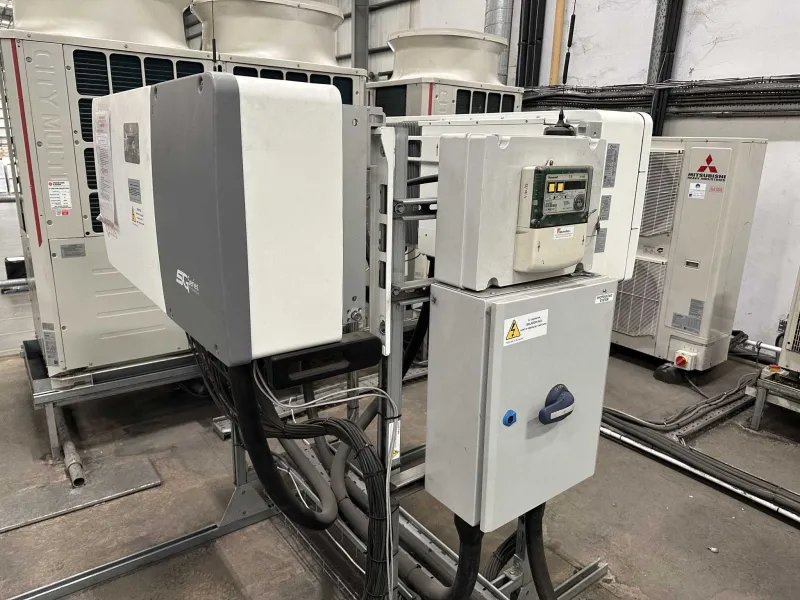
A generation meter, and ideally import and export metering alongside it, lets you evidence the kWh that were genuinely used on site rather than estimated from a design assumption. That self-consumed figure is the auditable basis SECR disclosures, ESG questionnaires and public-sector Carbon Reduction Plans are built to accept. An estimate is weaker and can be questioned; metered self-consumption stands up. The practical implication is that the metering setup is not an afterthought, it is the part of the project that makes the reporting claim real, which is why we specify it as part of the system rather than leaving it to chance.

Two ways to make the claim

A modelled estimate, or a metered figure

The page turns on one distinction: a modelled figure says what the array should produce; a metered figure records what it actually generated and what you actually consumed on site. Reporting frameworks, auditors and tender evaluators expect the second.

Option A

A modelled estimate

A design figure that says what the array should produce, inferred from a design assumption rather than recorded.

  • Forecast at the design stage from a PV*SOL yield study
  • Inferred from a design model rather than recorded by a meter
  • Weaker, and can be questioned by an auditor or evaluator
  • A forecast, not the reported number
03

How self-consumed solar lowers reported Scope 2

On-site solar has no direct emissions, so it is not itself a line in your inventory. What it does is reduce the grid electricity you purchase, and purchased electricity is the heart of Scope 2 under the Greenhouse Gas (GHG) Protocol. Every kWh you self-consume is a kWh you do not import, so the Scope 2 figure you report falls.

The Protocol asks you to report Scope 2 two ways, and self-consumed solar reduces both. On a location-based basis, your grid power is valued at the published grid-average carbon factor (the UK government's DESNZ conversion factors), so less import means a lower number. On a market-based basis, the self-generated portion you consume carries no separate purchase, so it sits at a zero factor for that electricity. One caution matters here. Only the portion you self-consume reduces your own emissions; electricity you export cannot be claimed as your carbon benefit beyond having reduced import. And if the certificates (REGOs) attached to your generation are sold or transferred, those same certificates cannot also be claimed against your own emissions. Claiming both is double counting, so retaining the certificates for the self-consumed share keeps the market-based claim clean.

04 SECR and ESG

Where the number lands

SECR, Streamlined Energy and Carbon Reporting, is the UK's mandatory minimum for large companies. Qualification turns on tests such as turnover, balance-sheet total and employee numbers, and quoted companies are caught regardless of size. Those thresholds are set in the regulations and revised over time, so your accountants confirm whether you are in scope rather than a fixed figure quoted here. If you are large enough to be weighing a commercial array, there is a fair chance one applies.

Where it does, SECR asks for your energy use, your Scope 1 and Scope 2 emissions, at least one intensity ratio, the methodology and a narrative of the energy-efficiency action taken in the year. On-site solar shows up twice in that disclosure: as a reduced Scope 2 figure, and as a named decarbonisation action in the narrative. The same metered evidence also feeds the voluntary and expanding regimes around SECR, such as TCFD-aligned disclosures, CDP and science-based targets, and the ESG sections of tender questionnaires. One well-specified generation-metering setup serves carbon reporting, social-value bids and ESG disclosure at the same time, which is the efficiency of getting the metering right once.

05 Public-sector bids

Social value and Carbon Reduction Plans

If you bid for public contracts, on-site solar is direct, evidenced material against two distinct mechanisms, and it helps to keep them apart.

  • The Social Value Model. For in-scope central-government procurement, social value carries a minimum 10% weighting at award, scored against themes that include fighting climate change. On-site solar is a concrete, metered contribution a bidder can offer, and it is assessed at the level of the specific contract or project, rather than the organisation as a whole.
  • The Carbon Reduction Plan. For individual central-government contracts above a value threshold, bidding suppliers must publish a Carbon Reduction Plan committing to Net Zero by 2050 and reporting their Scope 1, Scope 2 and a defined subset of Scope 3 emissions. This is a pass or fail condition of taking part, not a scored comparison. On-site solar is evidence of a credible reduction measure and lowers the Scope 2 baseline the plan reports.

One scope point matters. These central-government rules did not formally bind local authorities, many of which use the privately maintained National TOMs framework or their own social-value scheme instead. National TOMs is a voluntary measurement system that assigns a financial proxy value to each measure, including carbon reduction, and it favours genuine on-site reduction over offset claims. Frameworks and thresholds move, so check which one the specific contracting authority uses, and confirm the current position with that body before relying on a weighting or threshold here.

06

What evidence pack does an auditor or evaluator actually want to see?

A carbon claim is only as strong as the file you can produce when someone asks to see it. For on-site solar feeding a SECR disclosure or a bid, the evidence pack is a short, specific set of records rather than a single headline number, and assembling it at handover is far easier than reconstructing it a year later under audit.

The core records are the half-hourly or interval data that shows generation against site demand, so the self-consumed share can be derived rather than assumed; the import and export figures from the supply meter, which reconcile against your electricity invoices; and the calculation note that states which emission factors were applied and for which reporting period. Where a market-based Scope 2 claim is made on the self-consumed share, the REGO position for that generation belongs in the file too, with a clear statement that the certificates were retained and not sold. The Energy Savings Opportunity Scheme (ESOS) and SECR both reward an auditable trail, and our ESOS and SECR guide sets out how the two regimes intersect. The data itself comes off the metering described in the half-hourly metering guide. We hand over the generation data and the methodology behind it; your accountants and assurance provider turn that into the disclosed figure.

07

Where do the carbon numbers come from, and which factors apply?

A reported reduction is generation in kWh multiplied by an emission factor, so the credibility of the number rests on using the right factor for the right purpose and naming it. The figures are not invented for the report; they come from published government data and the GHG Protocol's two-method structure.

For a location-based Scope 2 figure, UK organisations apply the annual greenhouse gas conversion factors published by the Department for Energy Security and Net Zero (DESNZ), formerly issued by BEIS. These are revised each year, so a multi-year trend has to be read with the factor that applied in each reporting year rather than back-applying a single value. For a market-based figure, the relevant factor reflects your actual contracts: a supply backed by retained REGOs on the self-consumed solar share carries no separate purchased emissions for that electricity. The methodology that turns metered generation into a defensible figure is set out in our carbon savings methodology guide. One honesty point sits underneath all of this. We model expected generation from a PV*SOL yield study at the design stage, but a modelled estimate is a forecast, not the reported number. Once the array is running, the metered output replaces the model, and it is the metered figure that goes into the disclosure. Confirm with your accountants which factor set and reporting boundary apply to your organisation before any number is published.

08

Does carbon evidence matter in private-sector procurement as well as government bids?

The public-sector mechanisms are explicit, but the same metered evidence increasingly decides private-sector contracts too, and a sustainability lead should expect to use one evidence pack across both. Large customers are pushing their own Net Zero commitments down through their supply chains, and a credible on-site reduction is a direct answer to that pressure.

This shows up in several forms. CDP, the disclosure system many large buyers run their suppliers through, scores the strength and evidence of emissions data, and metered on-site generation is stronger material than a purchased-offset narrative. Suppliers reporting against science-based targets, validated through the Science Based Targets initiative (SBTi), need genuine reductions in their own footprint rather than claims that net off elsewhere, and self-consumed solar is exactly that kind of reduction. Customer ESG questionnaires and prequalification frameworks ask for the same Scope 1 and Scope 2 data that SECR asks for. The practical consequence is a competitive edge: an organisation that can evidence a real Scope 2 reduction is better placed in a tender than a competitor that cannot. The pattern is sector-specific, so the case made to a public buyer differs from the one made to a corporate customer; our public-sector and councils sector page covers the procurement angle, and the feasibility study is where the modelled generation that underpins any of these claims first gets quantified.

09

How does battery storage and the Scope 3 question change the reporting picture?

Two refinements come up once the basic Scope 2 claim is understood, and both affect how much you can honestly report. The first is storage. Because only self-consumed electricity reduces your own emissions, anything you would otherwise export at midday earns no carbon benefit to you beyond having cut import. Battery storage can lift the self-consumed share by holding midday surplus for evening or early-morning demand, which raises the reported Scope 2 reduction rather than letting it spill to export. Whether storage earns that place is a modelling question against your own load shape, not a default, and the commercial finance hub is where the economics of adding storage are weighed.

The second is Scope 3. The Carbon Reduction Plan required for in-scope central-government contracts asks for a defined subset of Scope 3 alongside Scope 1 and Scope 2, and corporate buyers increasingly ask suppliers to report their value-chain emissions. On-site solar acts directly on Scope 2, the electricity you purchase, so it does not by itself clear a Scope 3 obligation. It is honest to present it as a Scope 2 measure that strengthens the overall plan, rather than as a fix for value-chain emissions. The embodied carbon of the panels and mounting system is itself a Scope 3 item for you and is reported by responsible manufacturers in an environmental product declaration, which is worth requesting where embodied-carbon reporting matters to the buyer. Treat all of this as orientation and confirm the current scope boundaries and thresholds with your bid team and the contracting authority before relying on them.

10 How we quote

Past the guide, this is how your figure actually gets set.

  1. Survey

    On-site 3D drone survey

    Our own insured pilot flies your roof and captures the real geometry and shading, so the design starts from your building instead of a satellite guess.

    Booked to suit your operating hours

  2. Model

    PV*SOL design and proposal

    We model the array in bankable-grade software, size it around your daytime load, and set out generation, savings and payback across three funding routes.

    Modelled, not promised

  3. Install

    Engineered and installed

    Designed and installed to BS 7671, commissioned to IEC 62446-1, connected under G99 and run under CDM 2015. Alectrona is typically the Principal Contractor.

    Outside MCS, assured by the non-MCS stack

  4. Aftercare

    Operations and maintenance

    A 12-month defects period backed by an Insurance-Backed Guarantee, then ongoing operations and maintenance so the asset keeps earning for its full working life.

    Kept performing, year on year

11 FAQ

Social value and carbon reporting: common questions

Indirectly, yes. On-site solar has no direct emissions, so it is not a line in your inventory by itself. It reduces Scope 2 because every kWh you self-consume is a kWh of grid electricity you do not buy, and purchased electricity is the core of Scope 2 under the GHG Protocol. Importing less lowers the figure you report, on both the location-based and market-based methods. The reduction applies only to the share you consume on site, not to any electricity you export.

Because a credible carbon claim rests on what was actually generated and consumed, not on what a design model predicted. A generation meter, with import and export metering alongside it, evidences the self-consumed kWh that SECR, ESG questionnaires and public-sector Carbon Reduction Plans expect. An estimate is weaker and can be challenged by an auditor or evaluator. Metered self-consumption is the auditable basis that stands up, which is why we specify the metering as part of the system.

No, not as your own emissions reduction beyond having reduced your import. Only the self-consumed portion of generation lowers your Scope 2. Exported electricity benefits whoever uses it, and if the certificates (REGOs) attached to your generation are sold or transferred, those same certificates cannot also be claimed against your emissions. Claiming both is double counting. Retaining the certificates for the self-consumed share keeps a market-based claim clean.

In two separate ways. For in-scope central-government procurement, social value carries a minimum 10% weighting at award, and on-site solar is evidenced material against the climate-change theme, assessed at the level of the specific contract. Separately, for individual contracts above a value threshold, bidders must publish a Carbon Reduction Plan committing to Net Zero by 2050; that is a pass or fail condition, and solar lowers the Scope 2 baseline it reports. Local authorities often use the National TOMs framework instead, so check which the authority uses.

No. We design and build the array, specify the metering and give you the metered self-consumption and the carbon methodology behind it. Your accountants prepare the SECR disclosure, your bid team prepares the social-value or Carbon Reduction Plan submission, and your sustainability advisers confirm how the figure lands in your ESG reporting. We provide the engineering evidence; the reporting and the claims stay with the parties accountable for them. Frameworks and thresholds change, so confirm the current position with the relevant body.

There is no fixed figure, because the generation and import or export metering needed to evidence a carbon claim is specified as part of the wider array, and the cost depends on the system size, the metering arrangement and your site. We do not quote a price online for that reason; the figure is established by survey for your project. The metering is a small element of the overall capital cost rather than a separate reporting fee, and we do not charge to prepare your SECR or social-value submission, since those stay with your accountants and bid team. Our commercial solar cost guide explains how the survey-led price is built up.

Metered generation data begins accumulating from the moment the system is commissioned and energised, so usable carbon evidence exists from day one of operation. A full reporting year matters more than the start date, because SECR and most ESG frameworks disclose against a financial year, and a complete twelve-month dataset captures the seasonal swing between summer and winter generation. If a bid deadline falls before a full year has run, the modelled PV*SOL forecast can support the intent while the metered record builds behind it. We confirm the commissioning timeline and the data handover for your project during design.

Get a commercial quote

Get the numbers for your roof.

A guide can only take you so far. The figure you get is modelled from your own half-hourly load and a system sized from the on-site drone survey. No obligation, and systems this size sit outside the domestic MCS scheme, so the assurance is the engineering stack.

  • On-site 3D drone survey, fully insured in-house pilot
  • Half-hourly load modelled in PV*SOL before anything is specified
  • Engineer-led, assured to the non-MCS standard (CDM 2015)
  • Capex, lease-purchase or PPA, whichever suits you