What set Alectrona apart was the documented design pack. We had quotes from three installers, but only Alectrona handed us a full set of drawings, a single-line diagram and a design referencing BS 7671 and the G99 connection process. The whole thing read like an engineering submission rather than a sales brochure. Our M&E consultant reviewed it and signed it off without a single query. That gave the board the confidence to release the capital.
Alectrona
Commercial guideCommercial solar panel cleaning and bird-proofing: what a roof actually needs
On a commercial roof, cleaning is a bigger line in the plan than most buyers expect, and bird-proofing is a fault-prevention measure rather than a cosmetic one. Both are set by what a survey finds on your array rather than by a fixed calendar or a headline price.
- Commercial scale, over 50 kWp
- On-site 3D drone survey + PV*SOL
- Engineer-led, outside MCS
The feedback we work to earn
These are representative example reviews, not yet-collected customer feedback. They are written to illustrate the kind of feedback Alectrona aims to earn and are shown as design placeholders while we gather and verify reviews from our first commercial clients. Alectrona is the commercial solar trading brand of RVTC LTD.
Other firms priced our roof off a satellite image and a desktop guess. Alectrona flew an in-house drone survey, fully insured and flown by a qualified commercial drone pilot, and built a 3D model of the actual roof. It picked up plant, vents and a parapet line that a flat aerial photo had completely missed, which changed the panel layout. I would rather find that out at design stage than on the day the scaffold goes up. The accuracy of that survey is the reason I trusted everything that followed.
As a finance director I was wary of being oversold a system bigger than we could use. Alectrona modelled the array against our actual half-hourly consumption data rather than an annual total, so it is sized to what we genuinely draw on site during the day. They were honest that exporting surplus is worth far less than self-consumption, and built the design around that. The capital case stacked up because the engineering was honest, not because the numbers were inflated.
We were undecided between buying outright, leasing and a PPA. Alectrona laid out all three side by side with the pros and cons of each against our balance sheet, instead of pushing the one that pays them best. They were clear about where a PPA makes sense and where capex wins, and pointed us at our own accountant for the tax treatment. The survey and design took a little longer than I expected, but the thoroughness was worth the wait. Genuinely consultative.
The install crew were tidy and well run, and worked to a clear CDM 2015 plan with a proper site induction and RAMS. What impressed me most was the handover. We received a full commissioning pack with the IEC 62446-1 test results, certification, O&M documentation and an as-built record for our maintenance team. As the people who have to live with this asset for the next twenty years, having that paperwork in order matters enormously. Nothing was left loose.
I expected the usual hard sell and got the opposite. After surveying our site Alectrona told us one roof section was not worth covering because of shading, and that a smaller, well-sited array was the better investment than filling every square metre. There was no commission-driven upselling and no pressure. For a six-figure capital project, that straight talk is exactly what you want from the people advising you. We will be using them again on our second site.
- Applies to Commercial solar over 50 kWp, outside MCS
- Cleaning approach Condition-led: deionised water and soft brush, no abrasives
- Soils faster on Shallow-pitch and coastal roofs that do not self-clean
- Bird-proofing Perimeter mesh to stop nesting and DC-cable disturbance
- The hidden risk Birds pulling DC cables from clips: a fault and an RC62 fire concern
Cleaning and bird-proofing
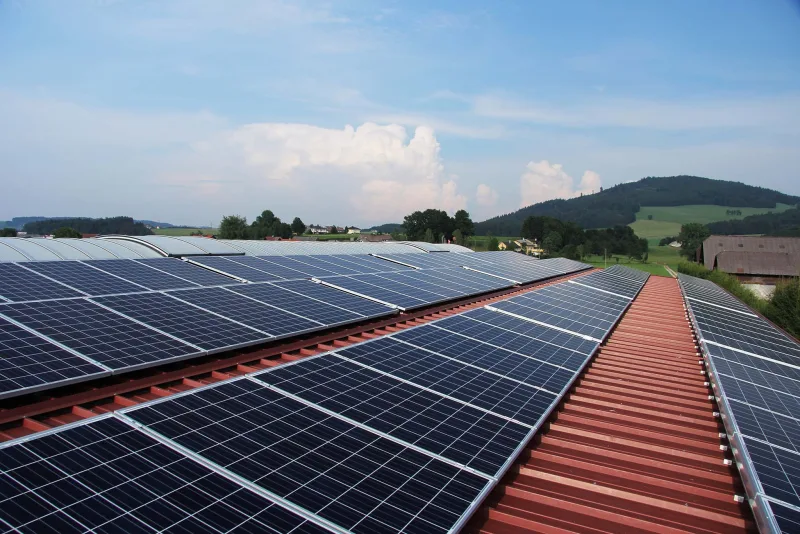
Ask whether a commercial solar array needs cleaning and the honest answer is that it depends on the roof, and on more roofs than buyers expect the answer is yes, more often than they think. A low-pitch warehouse roof does not let rain sheet the dirt away the way a steep domestic roof does, so soiling builds and output drifts down. A coastal site adds salt and more airborne dust on top. Birds foul the glass, nest in the gap under the modules and pull the DC cabling out of its clips. None of this shows up in a brochure, but all of it shows up on a real roof.
This guide is a plain-English orientation to two of the most under-served jobs in commercial operations and maintenance: condition-led panel cleaning, and perimeter bird-proofing. It is grounded in what an engineer-led team actually finds and fixes on commercial arrays over 50 kWp across Yorkshire and the wider north. It covers why arrays soil, how cleaning is surveyed rather than scheduled to a calendar, what bird fouling and bird nesting cost in output and in fault risk, how cracked or shattered modules are identified and replaced, and how all of it sits inside an O&M plan. It is a guide rather than a quote; we confirm the specifics for your site.
Why commercial arrays soil, and why shallow-pitch and coastal roofs soil more
Soiling is the slow, quiet erosion of yield. Dust, pollen, salt, agricultural and industrial fallout and bird droppings settle on the glass, block a share of the light reaching the cells, and the system generates a little less every day until something puts it right. The reason it matters more on commercial roofs than on houses comes down to physics.
A steep domestic roof lets rain run off fast and sheet most of the dirt away with it, so it largely self-cleans. A commercial array on a flat or low-tilt warehouse, factory or barn roof does not. At a shallow pitch the rain pools and dribbles rather than sheeting, so it carries less soiling off and can leave tide-lines and a dirt band along the bottom edge of each module where water sits. The lower the tilt, the less the roof cleans itself, and the more cleaning becomes a deliberate job rather than something the weather does for free.
Coastal sites compound it. Salt in the air settles on the glass and is sticky and hygroscopic, so it holds dust rather than washing cleanly away, and these sites tend to carry more airborne soiling generally. Agricultural settings add their own load from muck-spreading, harvest dust, pollen and ammonia; sites near quarries, cement works, busy roads or heavy industry pick up a steady fallout of fine particulate. On those roofs cleaning is a bigger line in the maintenance plan than a finance director typically budgets for, which is exactly why we survey it rather than guess at it.
Surveyed, gentle, and set by the site
We do not put a fixed cleaning interval on a live page, and we are wary of any provider who quotes one before seeing the roof, because the right frequency is a property of your site rather than a number that applies everywhere. A coastal, low-tilt array under a flight path soils on a completely different curve from a steep, inland roof with clean air around it. The honest approach is condition-led: the monitoring shows the output trend, a survey confirms what is actually on the glass and why, and the cleaning schedule is set from that. UK rain does some of the work for free on some roofs, so the job is to clean where it earns its keep and not to bill for cleaning a roof that does not need it.
How the cleaning is done matters as much as how often. Solar glass has an anti-reflective coating, and the wrong method scratches it, leaves a permanent haze and can void the panel warranty, so we clean with soft brushes and purified, deionised water rather than abrasive pads, harsh detergents or anything that could mark the surface. Deionised water dries without leaving the mineral spotting that ordinary tap water leaves behind, so the glass dries clear. Work at height on a commercial roof is also a managed operation under the relevant safety regime, planned with proper access and fall protection rather than treated as a quick job. The output is a measured improvement in generation, with the before and after visible in the performance data, rather than only a roof that looks tidier.
Droppings, carcasses and hot spots
Birds are one of the most common things an O&M team finds on a commercial roof, and the damage runs in two directions. The first is fouling. Pigeons and gulls leave droppings across the glass, and dead birds are found lying on the modules. Droppings are not like dust: they are opaque, they bond hard to the glass, and they sit as concentrated blobs rather than an even film, so a patch of cells gets fully shaded while the rest of the panel stays in full sun.
That uneven shading is where fouling stops being cosmetic. When part of a module is shaded but the rest is driving current through it, the shaded cells stop generating and start dissipating that current as heat. The result is a hot spot: a small area of the panel that runs hot enough, over time, to discolour the backsheet, damage the encapsulant and permanently degrade or fail the affected cells. A bypass diode limits the worst of it, but repeated, concentrated fouling is a genuine route to module damage, beyond simply lost light. A thermal or infrared scan during a survey shows these hot spots as bright patches, which is how we tell ordinary soiling apart from fouling that is actually cooking a section of a panel. Clearing the fouling and cleaning the glass recovers the output; catching it early is what stops it turning into a module that needs replacing.
Birds nesting under the panels and pulling out the DC cabling
The fouling on top of the glass is visible. The more serious problem is underneath, and it is one most buyers have never been told about. The gap between the modules and the roof is a sheltered, warm, predator-free cavity, and pigeons and other birds move into it to nest. Once they are in there they disturb the wiring, and the specific failure we find repeatedly on real roofs is birds pulling the DC cables out of the clips that hold them tidy and clear of the roof surface.
That is two problems at once. First, it is a fault: a cable dragged out of its clip can be chafed, pinched, pulled on its connector or left lying where water collects, which is exactly how a string develops a fault or drops out, and how connections degrade. Second, and more seriously, it is a fire and DC-arc risk. A loose or damaged DC connection in a high-voltage string is one of the recognised origins of a DC arc, and DC arcs do not self-extinguish the way an AC fault can, which is why roof-mounted PV fire is taken seriously in the insurer-facing guidance that frames how these systems are assessed for fire safety. Birds turning a tidy, clipped cable run into a disturbed one moves the array in the wrong direction on exactly that risk. Our guide to commercial PV fire safety covers that thinking in full.
The fix is a physical one: perimeter bird-proofing. We clip a galvanised mesh, sometimes called pigeon mesh or critter guard, around the edge of the array so the under-panel gap is sealed off and birds cannot get in to nest in the first place. It is fitted to the module frames without penetrating the roof or shading the cells, and it keeps the cabling clipped, tidy and undisturbed for the life of the system. It is a genuine commercial measure we fit rather than an upsell, because preventing the nest is far cheaper than chasing the intermittent string fault, the hot spot and the fire-risk inspection it causes.
Finding them and replacing them
Glass and silicon do not last forever on an exposed roof. Modules crack and shatter from impact, from hail, from thermal cycling as the panel heats and cools every day, and from the microcracks that can form in the cells and spread over years until a section of the panel stops contributing. Some of this is obvious, a shattered front sheet you can see from the ground. Much of it is not: a microcracked cell or a failed solder bond looks like a clean panel to the eye while it quietly drags the whole string down.
This is where the survey earns its place. A visual inspection catches the shattered and visibly cracked modules; a thermal scan finds the ones that look fine but are running hot or have gone open-circuit; and the monitoring flags the string-level shortfall that points the engineer at the right row in the first place. Once a failed module is identified, it is isolated and replaced, with the replacement matched to the existing string as closely as the original specification allows, because a badly mismatched replacement can hold back the whole string it sits in. If the output has dropped and you are not sure why, our guide on spotting an underperforming system walks through how that is diagnosed before anything is replaced.
How cleaning and bird-proofing sit inside an O&M plan
None of this is a standalone visit. Cleaning, bird-proofing and module replacement are the physical, on-roof side of a structured operations and maintenance arrangement, and they work because the monitoring tells you when they are needed and the survey tells you what is actually wrong. Monitoring shows the output trend that signals soiling or a dropped string; a periodic survey, with a thermal scan, separates ordinary dirt from fouling, hot spots, disturbed cabling and failed modules; and the work is then scoped from real findings rather than sold on a generic schedule.
For a building over 50 kWp this matters more than buyers expect, because a commercial array sits outside MCS. MCS is the domestic certification scheme and it does not apply at this scale, so there is no consumer certificate standing behind the asset. What stands behind it instead is the commercial engineering stack and a real maintenance regime: design and wiring to BS 7671, commissioning to IEC 62446-1, the G99 connection with Northern Powergrid as the network operator across Yorkshire, work managed under CDM 2015, and fire thinking aligned to RC62. Cleaning and proofing are how that regime keeps the asset producing what the finance model assumed. Our wider guide to commercial solar maintenance sets out the whole O&M picture, and the O&M service page covers how we run it.
Past the guide, this is how your figure actually gets set.
-
Survey On-site 3D drone survey
Our own insured pilot flies your roof and captures the real geometry and shading, so the design starts from your building instead of a satellite guess.
Booked to suit your operating hours
-
Model PV*SOL design and proposal
We model the array in bankable-grade software, size it around your daytime load, and set out generation, savings and payback across three funding routes.
Modelled, not promised
-
Install Engineered and installed
Designed and installed to BS 7671, commissioned to IEC 62446-1, connected under G99 and run under CDM 2015. Alectrona is typically the Principal Contractor.
Outside MCS, assured by the non-MCS stack
-
Aftercare Operations and maintenance
A 12-month defects period backed by an Insurance-Backed Guarantee, then ongoing operations and maintenance so the asset keeps earning for its full working life.
Kept performing, year on year
Last updated June 2026
Cleaning and bird-proofing: common questions
Often, yes, and more often than buyers expect on commercial roofs. A steep domestic roof largely self-cleans because rain sheets the dirt off, but a low-pitch warehouse or factory roof does not, so soiling builds and output drifts down. Coastal sites add salt and extra airborne dust, and agricultural or industrial settings add their own fallout. Whether your roof needs cleaning, and how often, is set by surveying the array and watching the monitoring, not by a fixed calendar. On some clean, steeper inland roofs UK rain does most of the work; on shallow-pitch and coastal arrays it does not, and cleaning becomes a real line in the plan.
There is no universal interval, and we are cautious of anyone who quotes one before seeing the roof. The right frequency is a property of your site: a coastal, low-tilt array under a flight path soils far faster than a steep, inland roof in clean air. We set the schedule condition-led, using the output trend from the monitoring and what a survey finds on the glass, so you clean where it earns its keep and not on a generic calendar. That is also why we do not put a fixed cleaning frequency on this page.
Bird-proofing is a galvanised mesh, sometimes called pigeon mesh or critter guard, clipped around the perimeter of the array to seal the gap between the panels and the roof. You need it where birds are nesting in that gap, which is common on commercial roofs. Once birds get under the panels they disturb the wiring, and the failure we find repeatedly is birds pulling the DC cables out of their clips. That causes string faults and raises the fire and DC-arc risk, so sealing the gap prevents both. The mesh fits to the module frames without penetrating the roof or shading the cells. A survey tells us whether your array needs it.
Because of what the birds do to the cabling. When they nest in the gap under the modules they pull the DC cables out of the clips that hold them tidy and clear of the roof. A dragged, chafed or pinched DC cable, or a connector left where water collects, is exactly how a loose or damaged high-voltage DC connection develops, and a damaged DC connection is one of the recognised origins of a DC arc. DC arcs do not self-extinguish the way an AC fault can, which is why roof-mounted PV fire is taken seriously in the RC62 insurer-facing fire-safety thinking. Perimeter bird-proofing keeps the cabling undisturbed and removes that pathway.
They can, beyond simply blocking light. Bird droppings sit as opaque, concentrated blobs rather than an even film, so they fully shade a small patch of cells while the rest of the panel stays in full sun. The shaded cells then dissipate the string current as heat, creating a hot spot that, over time, can discolour the backsheet, damage the encapsulant and permanently degrade the affected cells. A thermal scan during a survey shows these as bright patches, which is how we tell ordinary soiling apart from fouling that is actually damaging a module. Clearing it early recovers the output and avoids a replacement.
Some cracks are obvious from the ground; many are not. Microcracks, failed solder bonds and open-circuit cells look like a clean panel to the eye while quietly dragging the string down. We find them with a combination of visual inspection, a thermal scan that shows modules running hot or gone open-circuit, and the string-level shortfall flagged by the monitoring. Once a failed module is identified it is isolated and replaced, matched to the existing string as closely as the original specification allows so the replacement does not hold back the rest of the string. Diagnosis comes first, so nothing is replaced before the real cause is confirmed.
We price it from a survey rather than a headline figure, because the cost depends on the size of the array, the roof pitch and access, how the site soils, whether there is fouling or hot-spot damage, and how much of the perimeter needs proofing. A flat quote sight-unseen either pads in a margin for the worst case or misses what the roof actually needs. We survey the array, scope the work from real findings, and set the cleaning frequency and any bird-proofing from the condition of your site. As a system over 50 kWp sits outside MCS, that survey, rather than a certificate, is what establishes the true condition of the asset. Contact us to arrange one.
We start with a survey to scope the work, then schedule the clean or bird-proofing from real findings rather than a fixed slot. Lead time depends on the array size, roof access and whether height equipment is needed, since work at height on a commercial roof is a planned operation under CDM 2015 rather than a same-day job. Many sites book cleaning into spring, to clear the winter soiling before the high-summer yield, and bird-proofing ahead of the nesting season. We confirm timing for your site once the survey is done; an O&M plan fixes these visits into a schedule.
Get the numbers for your roof.
A guide can only take you so far. The figure you get is modelled from your own half-hourly load and a system sized from the on-site drone survey. No obligation, and systems this size sit outside the domestic MCS scheme, so the assurance is the engineering stack.
- On-site 3D drone survey, fully insured in-house pilot
- Half-hourly load modelled in PV*SOL before anything is specified
- Engineer-led, assured to the non-MCS standard (CDM 2015)
- Capex, lease-purchase or PPA, whichever suits you